220 Grad Rupertinum
The first location of Salzburg's 220 Grad specialty coffee brand, in the Rupertinum building on Wiener-Philharmoniker-Gasse. A natural stop on a museum visit.
Drink · Austrian
An espresso extended with hot water to filter-coffee strength, served in a porcelain cup with a small glass of sparkling water. The answer to the question every visitor asks: “How do I order a regular coffee in Austria?”
The Austrian coffee house menu can be intimidating. There are Melange and Kapuziner, Mokka and Brauner, Einspänner and Fiaker, and enough variation in each to fill a separate reference. The Verlängerter cuts through this. It is a single espresso pulled slightly long and diluted with hot water to approximately the strength of a filter coffee, served in a standard white porcelain cup. Milk on the side if requested. Sparkling water alongside as a standard companion, which is how all coffee is served in Austrian coffee houses.
The name means “extended.” The logic is simple: the espresso base is lengthened with water until it becomes something closer to what most visitors grew up calling a regular coffee. The Verlängerter is stronger than an Americano (which uses more water and produces a flatter result) and more characterful than a drip coffee (which is rarely available in Austrian coffee houses at all). It occupies the middle ground that Austrians who drink coffee daily actually occupy.
In Salzburg, the Verlängerter is the daily order at Cafe Tomaselli and Cafe Bazar, where it arrives with the full coffee house ceremony: cup on a saucer, small spoon, glass of water, perhaps a cube of sugar on the side. At Kaffee Alchemie and 220 Grad Rupertinum, which work with specialty beans, the same word produces a more technically considered result. Either version is worth ordering. The ritual is the same.
Where to find it
The first location of Salzburg's 220 Grad specialty coffee brand, in the Rupertinum building on Wiener-Philharmoniker-Gasse. A natural stop on a museum visit.
Opened 1930
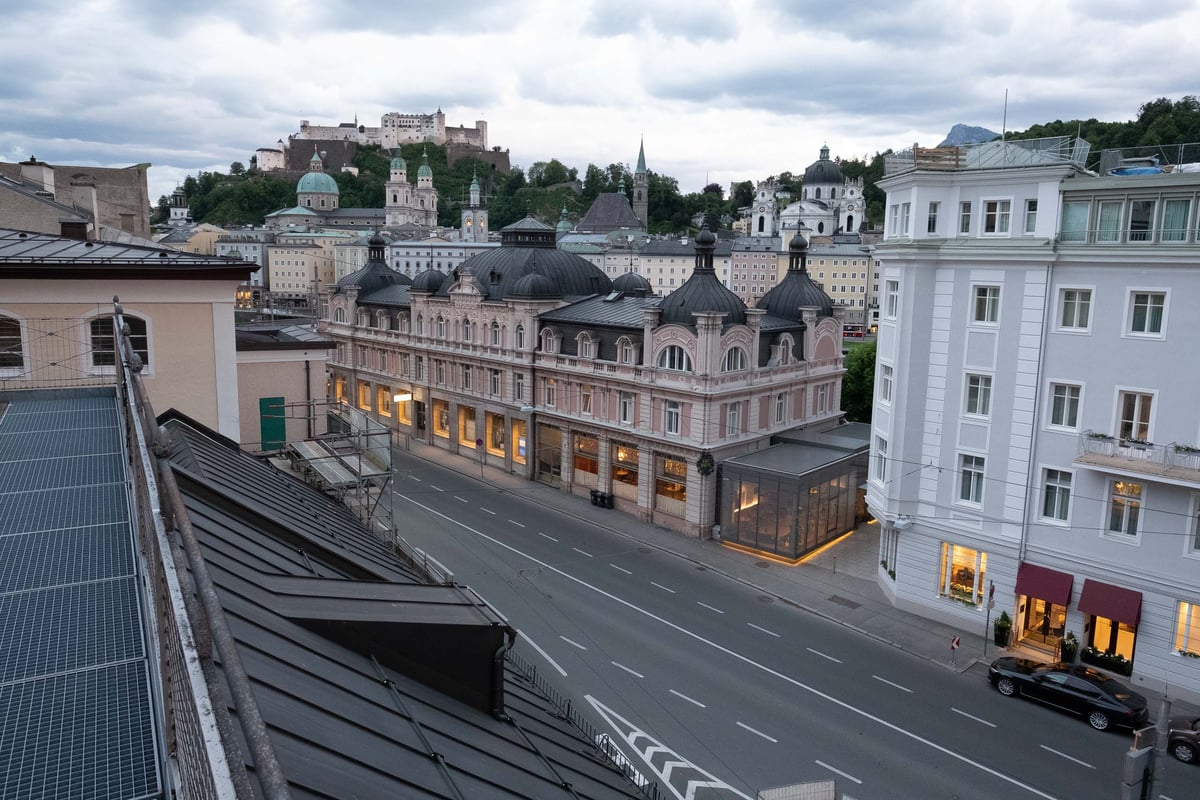
Stefan Zweig, Max Reinhardt, and Hugo von Hofmannsthal used to sit at these marble tables, and the view across the Salzach toward the Altstadt and fortress hasn't changed since. Cafe Bazar is the literary coffeehouse that locals recommend when tourists ask about Tomaselli.
Established 1703
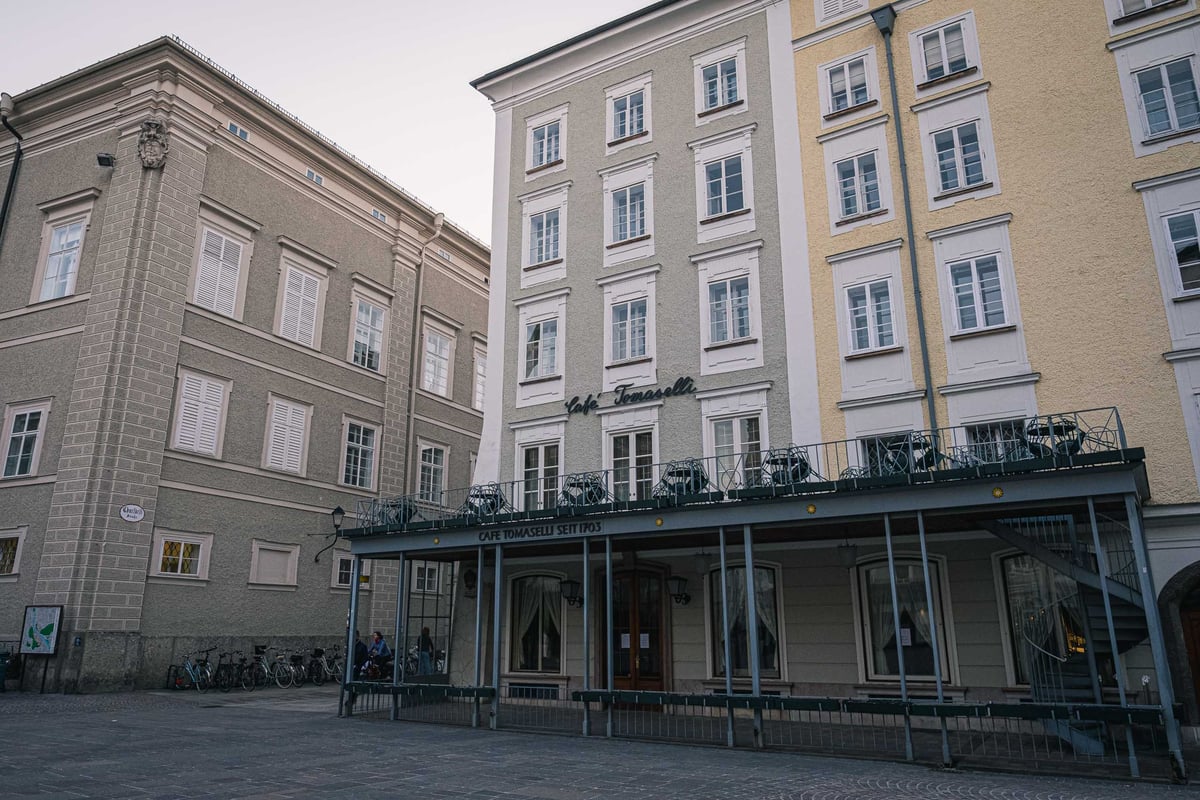
Austria's oldest coffeehouse by documented record, Tomaselli has been on the Alter Markt since 1700. The pastry trolley wheeled to your table is the signature move. The terrace on the square is the most photographed coffeehouse seat in Salzburg, which means you will be competing for it with everyone who has read a travel article about the city.
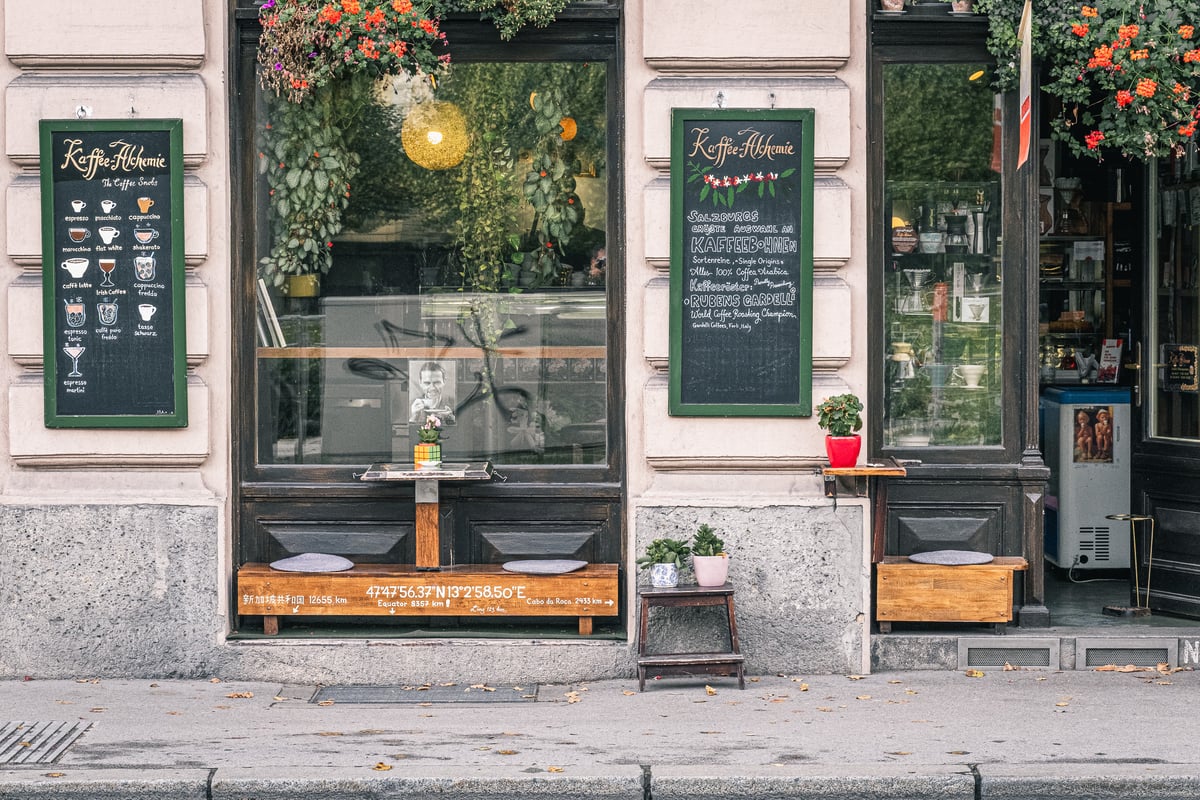
Salzburg's leading specialty coffee shop. A third-wave café for visitors who find the grand cafés too formal or the tourist cafés too generic.