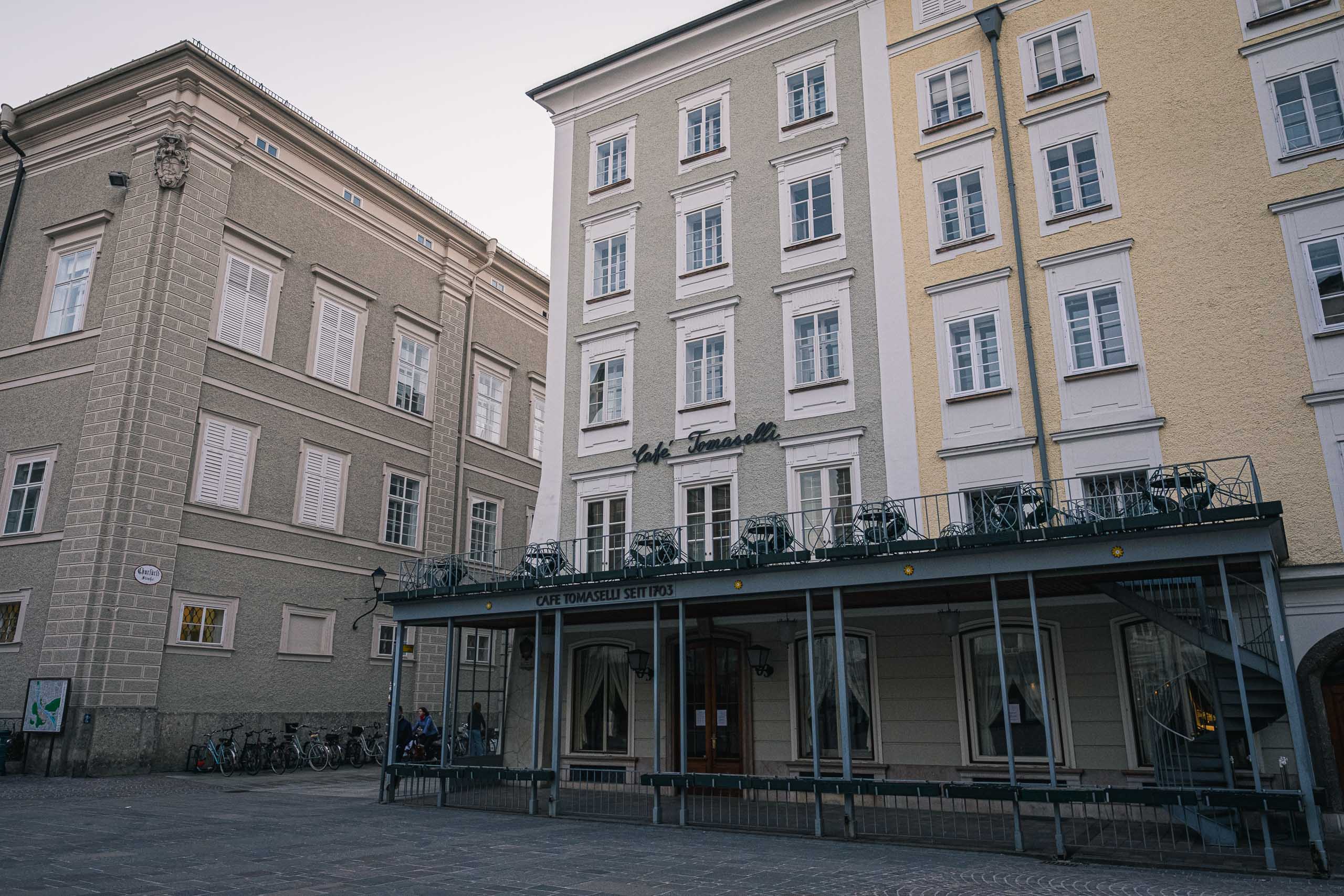
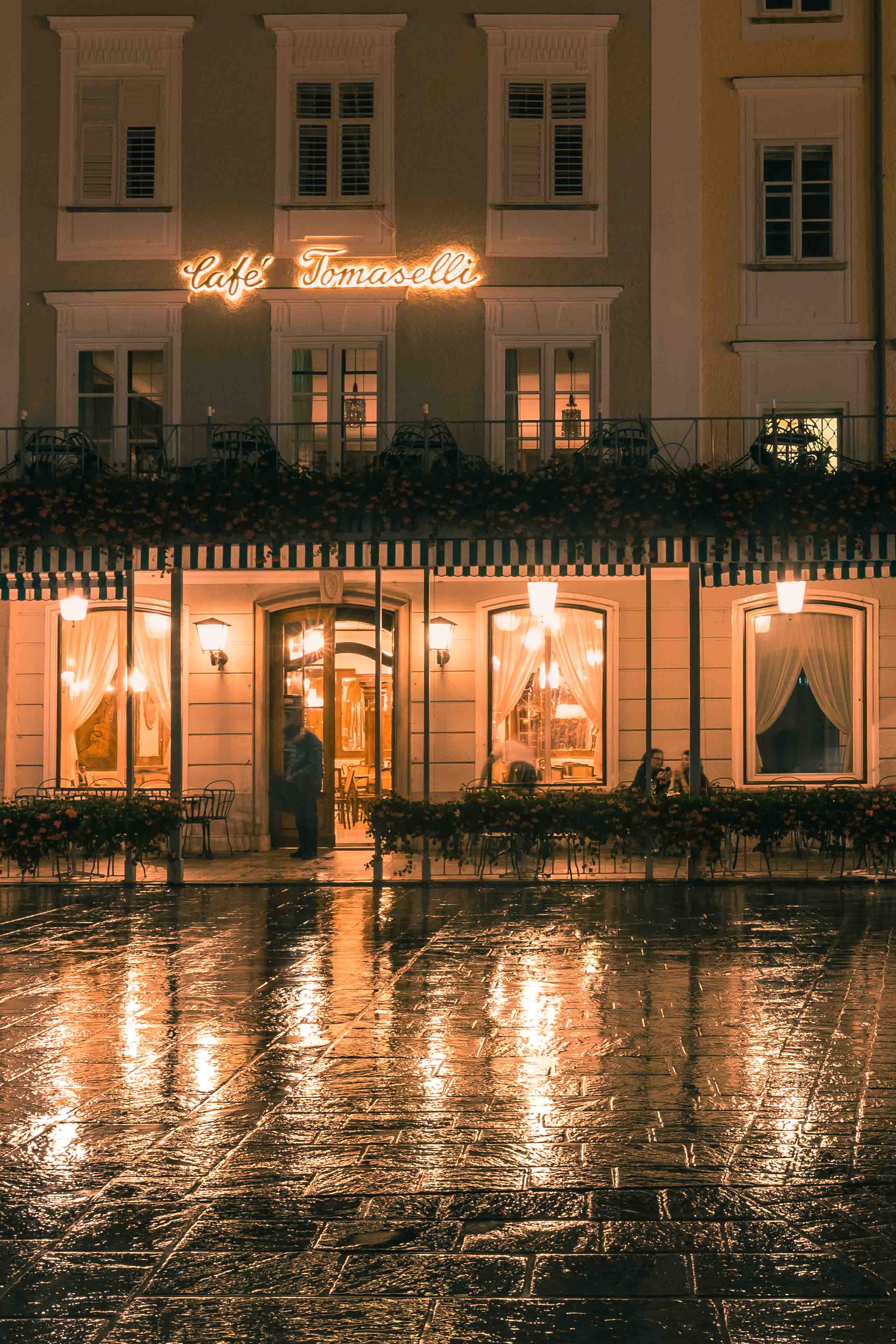
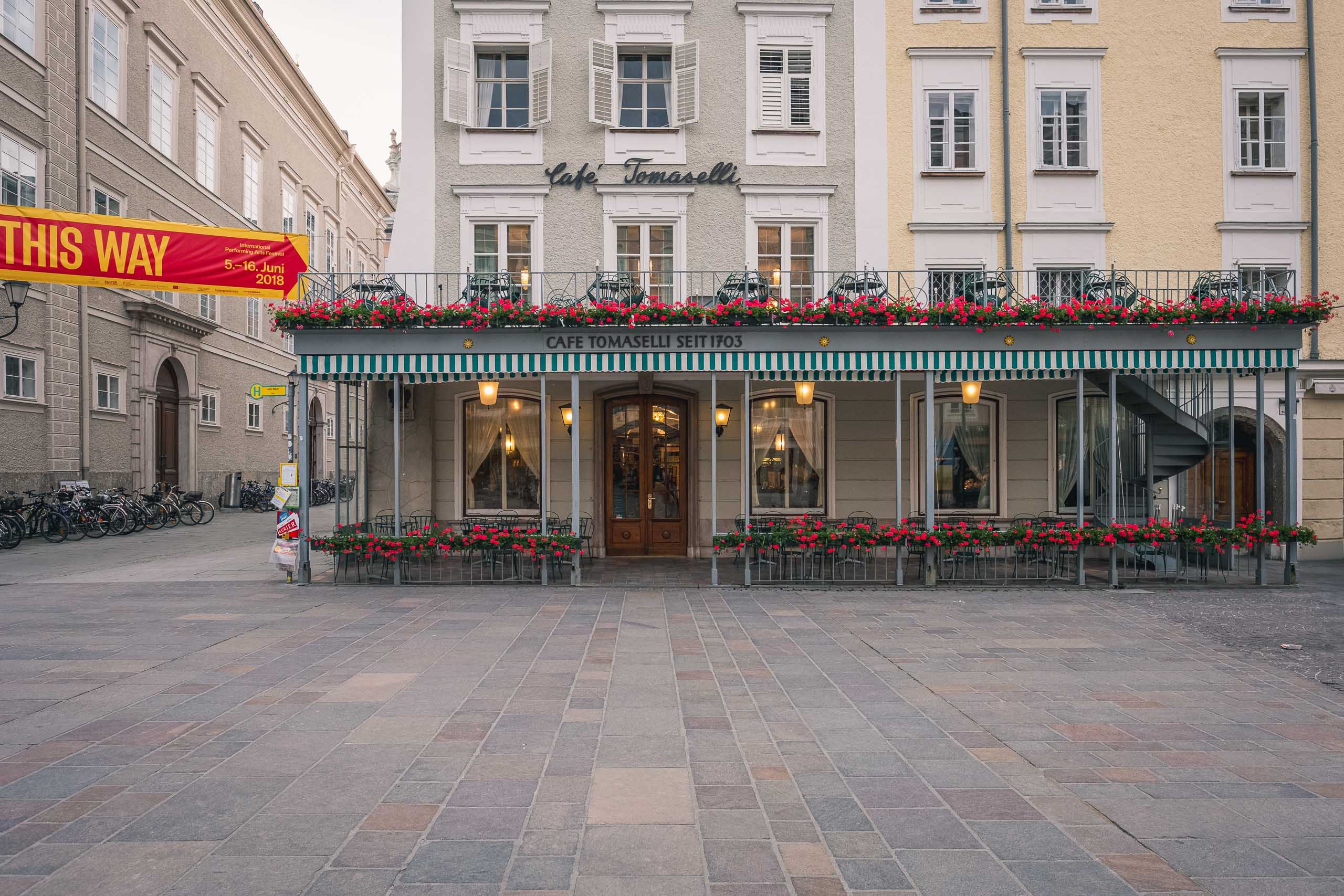
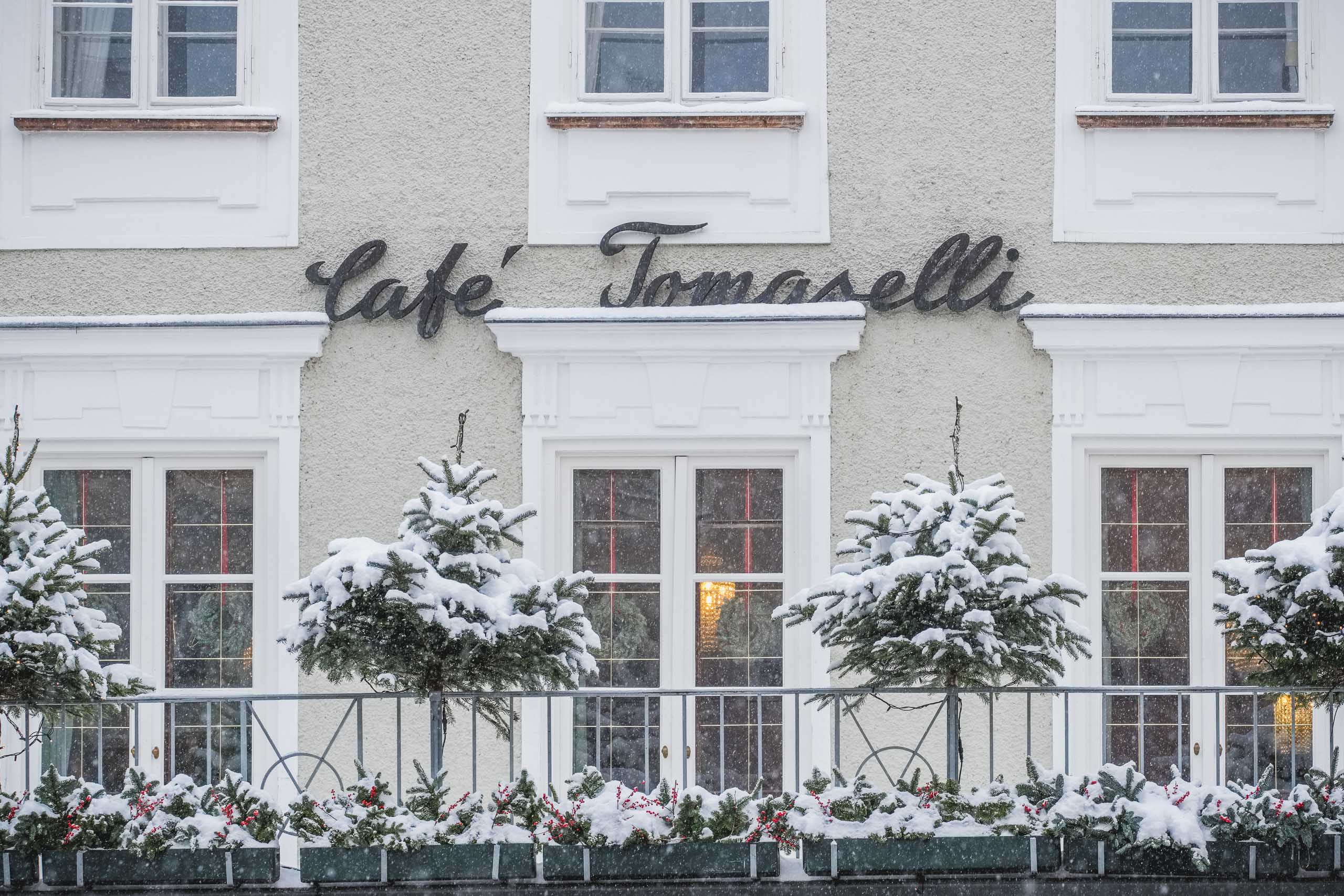
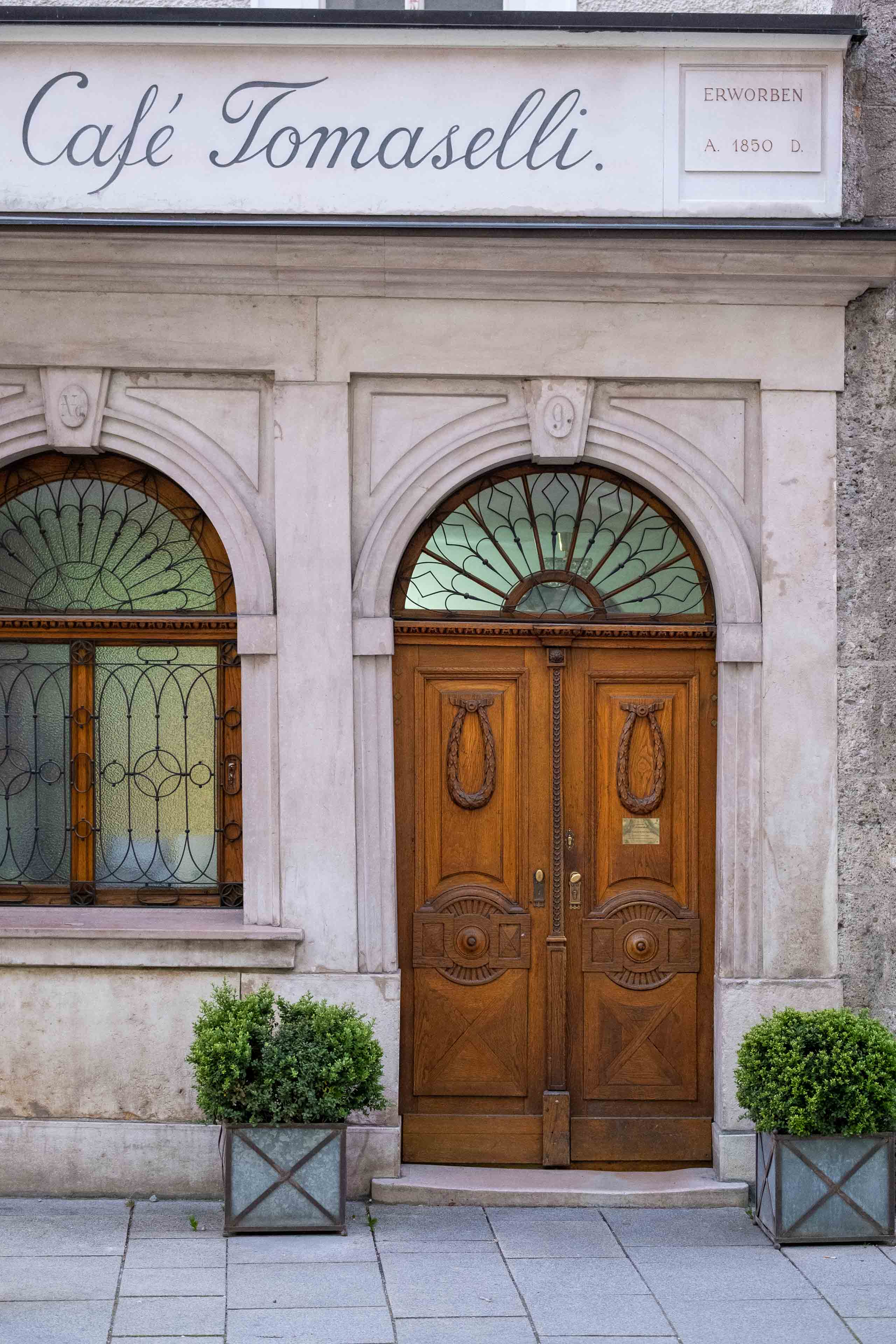
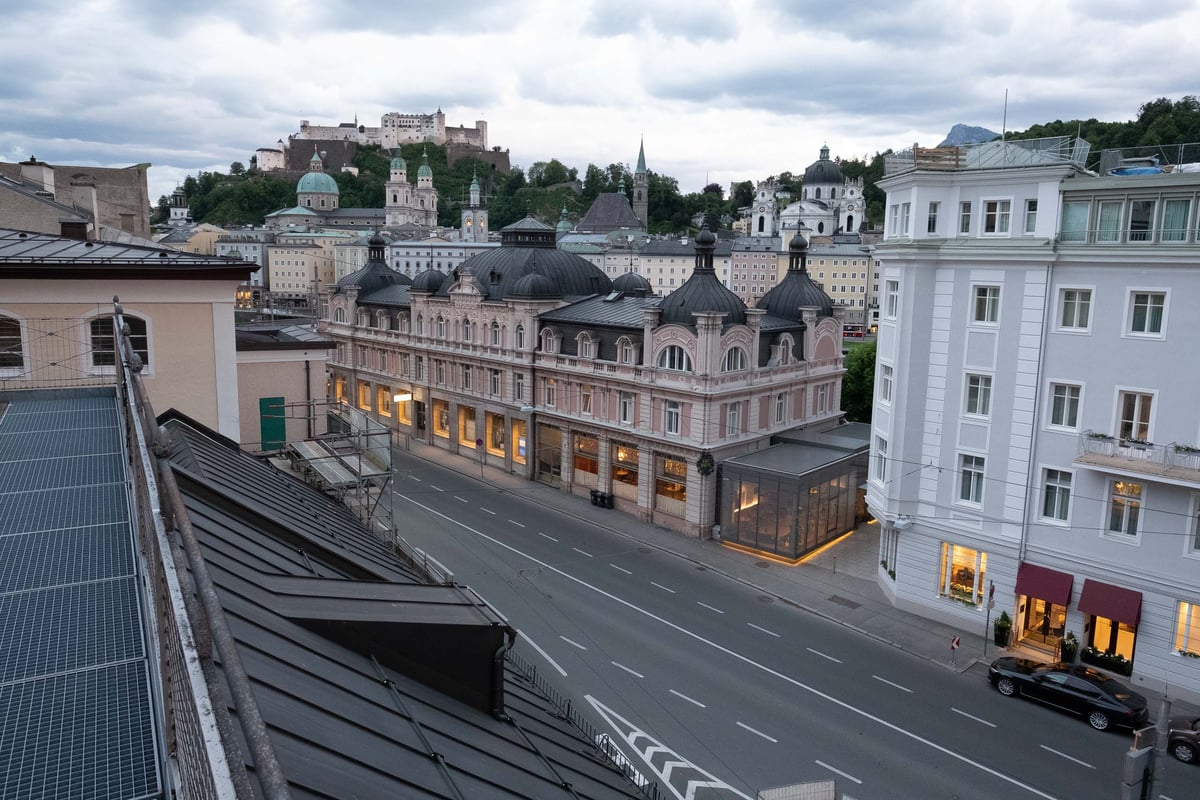
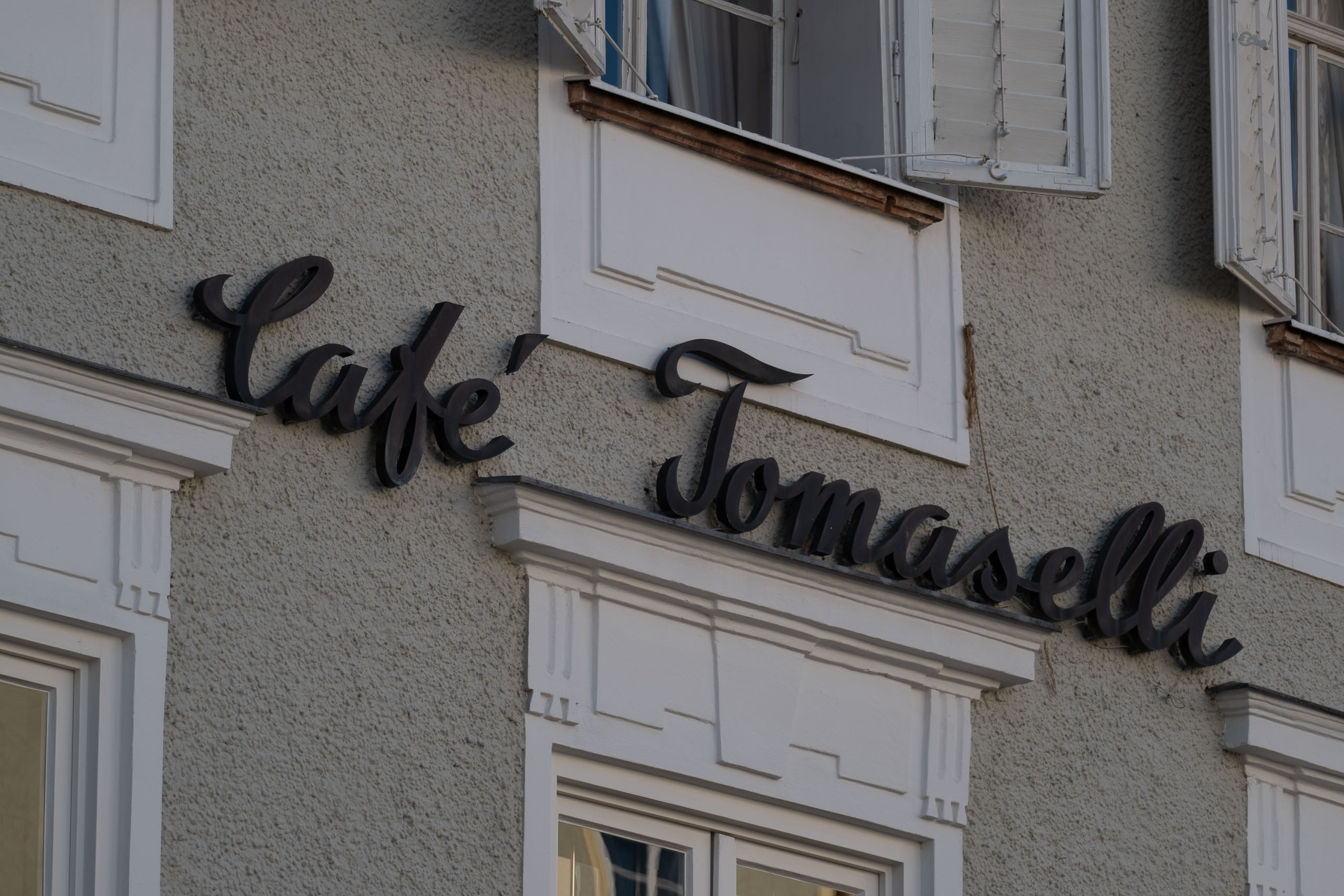
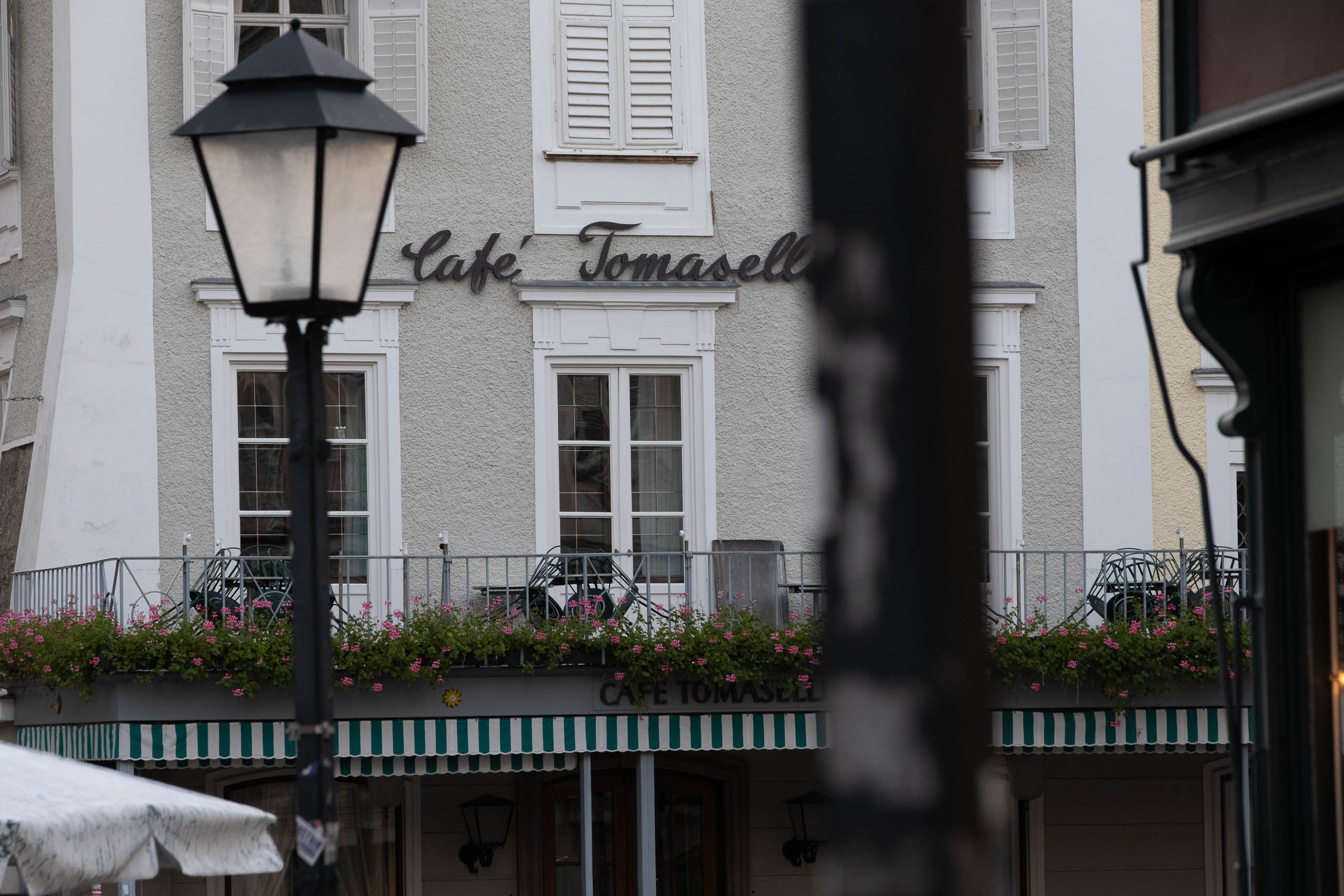
Café Tomaselli, on Alter Markt since 1703, is the oldest café in Austria by most accounts and the one Salzburg institution that rewards the price premium. The tiered cake stands brought to your table are the ritual; the terrace is the best seat in the old town.
The Story
The story most Salzburgers will tell you is that coffee has been served on this corner of Alter Markt since 1703, making Café Tomaselli the oldest coffeehouse in Austria. The exact chain of ownership through the 18th century is difficult to pin down, but the claim is widely accepted and the building has looked something like this for a very long time.
Carl Tomaselli gave the café its lasting name and identity in the early 19th century. By then it was already a gathering point for Mozart’s city, the kind of place where the Salzburg elite, visiting musicians, and the Archbishop’s court would sit across tables from one another. That social geography has not entirely disappeared. The interior still has the panelled walls and marble table tops of a 19th-century coffeehouse, and the service follows its own unhurried rhythm.
The ritual is the cake stand. Waitstaff carry tiered displays of pastries and tortes to your table; you point, they note it, and the selection changes daily. The quality is solid rather than revelatory, but the presentation and the setting justify the visit.
Prices run higher than comparable cafés in Salzburg. The terrace on Alter Markt draws crowds in summer; arriving before 10am or after 4pm avoids the worst of the wait.
Visiting
Café Tomaselli is on Alter Markt 9, in the middle of the Altstadt. Open Mon-Sat 7am-7pm, Sun and holidays 8am-7pm. No booking needed, but expect a short wait for terrace tables in peak season. Budget EUR 8-15 for coffee and cake. Pairs naturally with a walk along Alter Markt or a visit to Konditorei Furst a few doors away for comparison. Getreidegasse is a two-minute walk.
Paper-thin hand-pulled pastry around sliced apples, sugar, cinnamon, raisins, and buttered breadcrumbs. Baked golden. Served warm with vanilla sauce or cream. One of the great achievements of Austrian pastry. The Cafe Tomaselli version, in the oldest coffee house in Austria, has a particular authority.
Strong black coffee in a tall glass topped with a dome of unsweetened whipped cream (Schlagobers). Named after one-horse carriage coachmen who needed to drink with one hand. Cold sweetness meets hot bitterness in each sip.
THE Austrian coffee. Espresso + steamed milk + milk foam in a wide porcelain cup. Like a cappuccino but lighter, less foamy, lower temperature. Sipped slowly while reading a newspaper. Ordering a Melange marks you as someone who knows where they are.
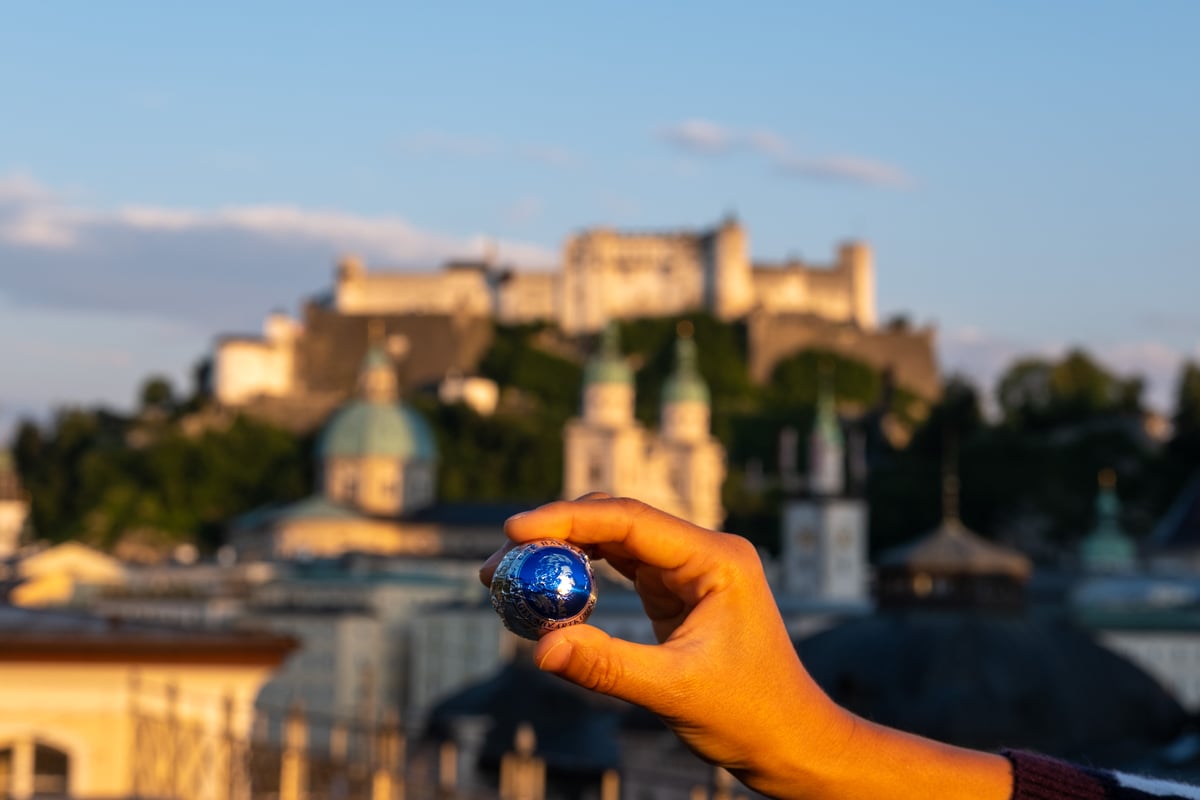
Salzburg's most recognisable export. Pistachio marzipan around nougat, enrobed in dark chocolate. Created 1890 by Paul Furst. The Fürst family still hand-rolls the original at Alter Markt. Silver-and-blue foil. Fürst never patented it. If you buy them at a supermarket, you are not eating what Paul Fürst made.
Austrian crepes. Apricot jam, Nutella, Topfen, or ice cream. On every menu. The word comes from Romanian via Hungarian: Austrian cuisine absorbed freely from across the empire. Children order without hesitation. Adults pretend to hesitate.
The sister dish to Apfelstrudel. Curd cheese (Topfen), raisins, lemon zest in hand-pulled pastry. Creamy and rich where Apfelstrudel is tart and fruity. Often the better choice.
The "extended" coffee. What Austrians actually drink daily. Espresso diluted with hot water. The answer to "How do I order a regular coffee?" Stronger than an Americano.
drinkaustrian
People
People connected to this place
Each person below explicitly names this place in their authored connections.
The man whose name Salzburg's most famous cafe still carries. When Carl Tomaselli took over the cafe on Alter Markt in the mid-18th century, it became Cafe Tomaselli, the oldest cafe in Salzburg. Mozart was a customer. The cafe remains in the same location today, a direct living link to 18th-century Salzburg.
Two things get confused in Salzburg, and once you separate them the cafés sort themselves out. Good coffee is one thing. The Austrian coffee house is another. They overlap far less than you would expect.