Snapshot
Elisabeth Schwarzkopf performed at the Salzburg Festival for seventeen consecutive seasons, from 1947 to 1964. Her Marschallin in Der Rosenkavalier under Herbert von Karajan is still cited as the benchmark interpretation of that role. She had studied with Lotte Lehmann, making her the living connection between Salzburg’s interwar golden era and its postwar revival.
The Story
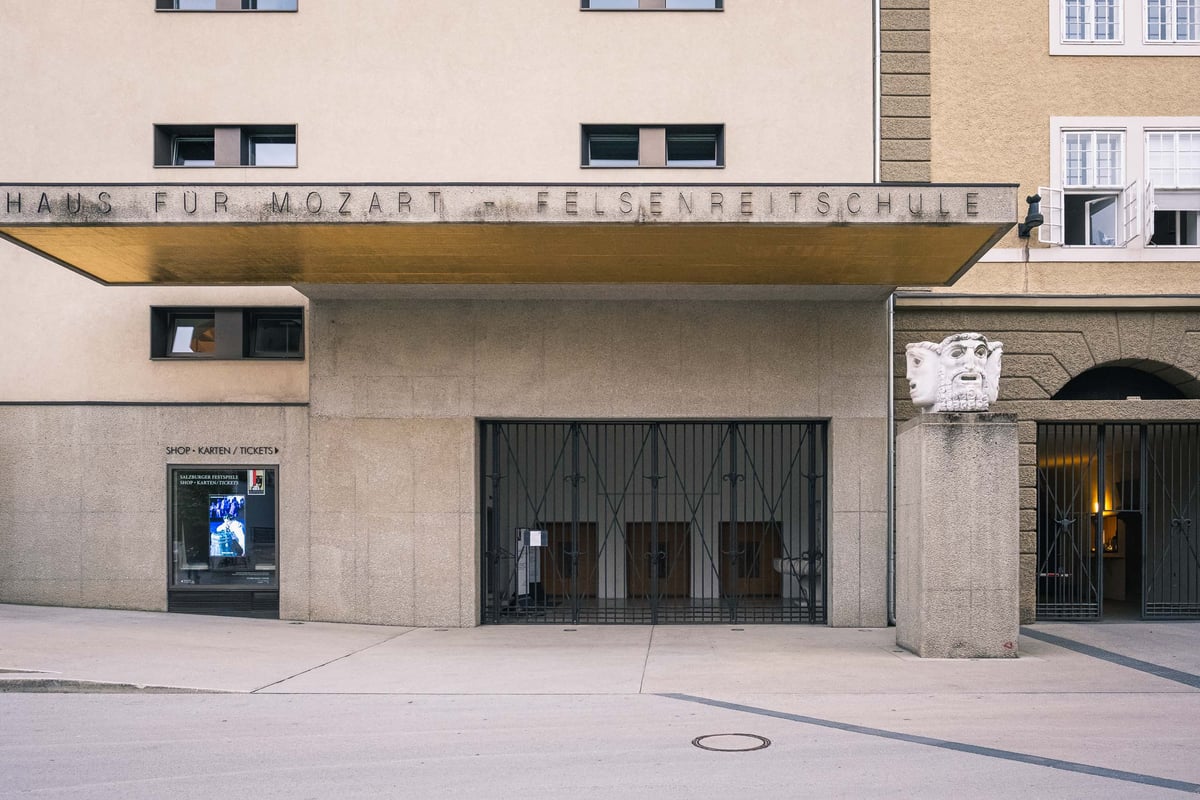
Elisabeth Schwarzkopf made her Salzburg Festival debut in 1947, singing Susanna in Mozart’s Le nozze di Figaro at the Felsenreitschule. She arrived fresh from a triumphant Vienna State Opera season, her light, agile soprano drawing praise for its crystal-clear diction and youthful lyricism. She was invited back. She returned every year until 1964.
The collaboration that defined her Salzburg career was with Herbert von Karajan. Together they built the postwar Festival’s identity around a particular ideal of precision and beauty in Mozart and Richard Strauss. Her Countess in Le nozze di Figaro became a signature, and her Marschallin in Der Rosenkavalier remains the recording that all interpreters of the role are still measured against. Her husband Walter Legge produced the EMI recordings that preserved these performances.
The deeper context is the chain of tradition. She had studied with Lotte Lehmann, the great interwar Salzburg soprano who fled the Nazi regime in 1938. Through that personal transmission, Schwarzkopf carried a living thread from the Festival’s founding era into its postwar renaissance. Her own relationship with the Nazi period is complicated: she joined the party in 1940, initially denied it after the war, and was placed on the Gottbegnadeten-Liste of protected artists in 1944. The facts are documented and contested at the same time. What is not contested is the quality of the performances she gave at the Salzburg Festival across seventeen seasons, or the significance of the tradition she embodied and passed on. She died in Vorarlberg, Austria in 2006.