
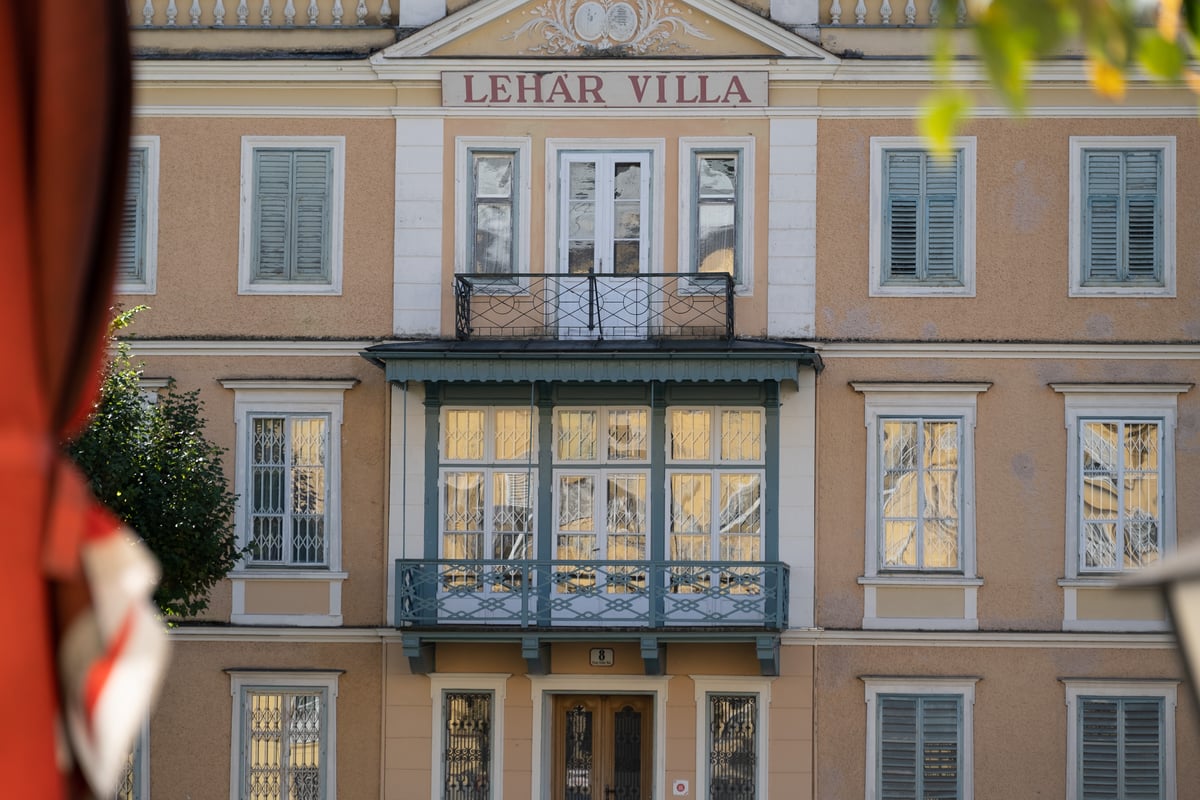
Lehárvilla Bad Ischl
The villa where Franz Lehar lived and died in 1948, preserved as a museum. Lehár spent his summers in Bad Ischl and composed many operettas here, including revisions to The Merry Widow.
Composer
30 April 1870, Komarom, Hungary (now Komarno, Slovakia) - 24 October 1948, Bad Ischl, Upper Austria
Franz Lehar spent his summers in Bad Ischl for over four decades, composing in the same Salzkammergut spa town where Emperor Franz Joseph I summered and Brahms wrote. The Merry Widow (1905) made him one of the most performed composers alive. He died in Bad Ischl in 1948, and his villa there is now a museum.
Franz Lehar was born in Hungary to a military bandmaster father and spent his early career as a conductor in various imperial garrisons before his operettas made him famous across Europe. Die lustige Witwe (The Merry Widow), which premiered in Vienna in 1905, became one of the most performed works in music theatre history almost immediately and transformed operetta into an international commercial phenomenon.
From early in his career he joined the tradition of summering in Bad Ischl in the Salzkammergut, a practice that placed him in the company of Emperor Franz Joseph I, Brahms, and Johann Strauss II in the town that served as the informal summer capital of Habsburg cultural life. He eventually bought a villa there, the Leharvilla Bad Ischl, which became his primary creative home. Many of his later operettas were written at Bad Ischl.
His final decades were complicated. He remained in Austria through the Nazi annexation while his principal librettist, Fritz Löhner-Beda, was deported and murdered in a concentration camp. Lehar’s personal intervention to protect his Jewish wife was one of the few things that kept his reputation from complete collapse after the war. He died in Bad Ischl in 1948. The villa is now open to the public, and the town still holds an annual Lehar Festival.
On the map
The 2 places on this page, where they actually stand.
Locations
The villa where Franz Lehar lived and died in 1948, preserved as a museum. Lehár spent his summers in Bad Ischl and composed many operettas here, including revisions to The Merry Widow.
The most famous inn in the Salzkammergut, on the Wolfgangsee at St. Wolfgang. Documented since the 14th century. World fame through Benatzky's 1930 operetta Im weißen Rößl. Still operating as hotel and restaurant.