Snapshot
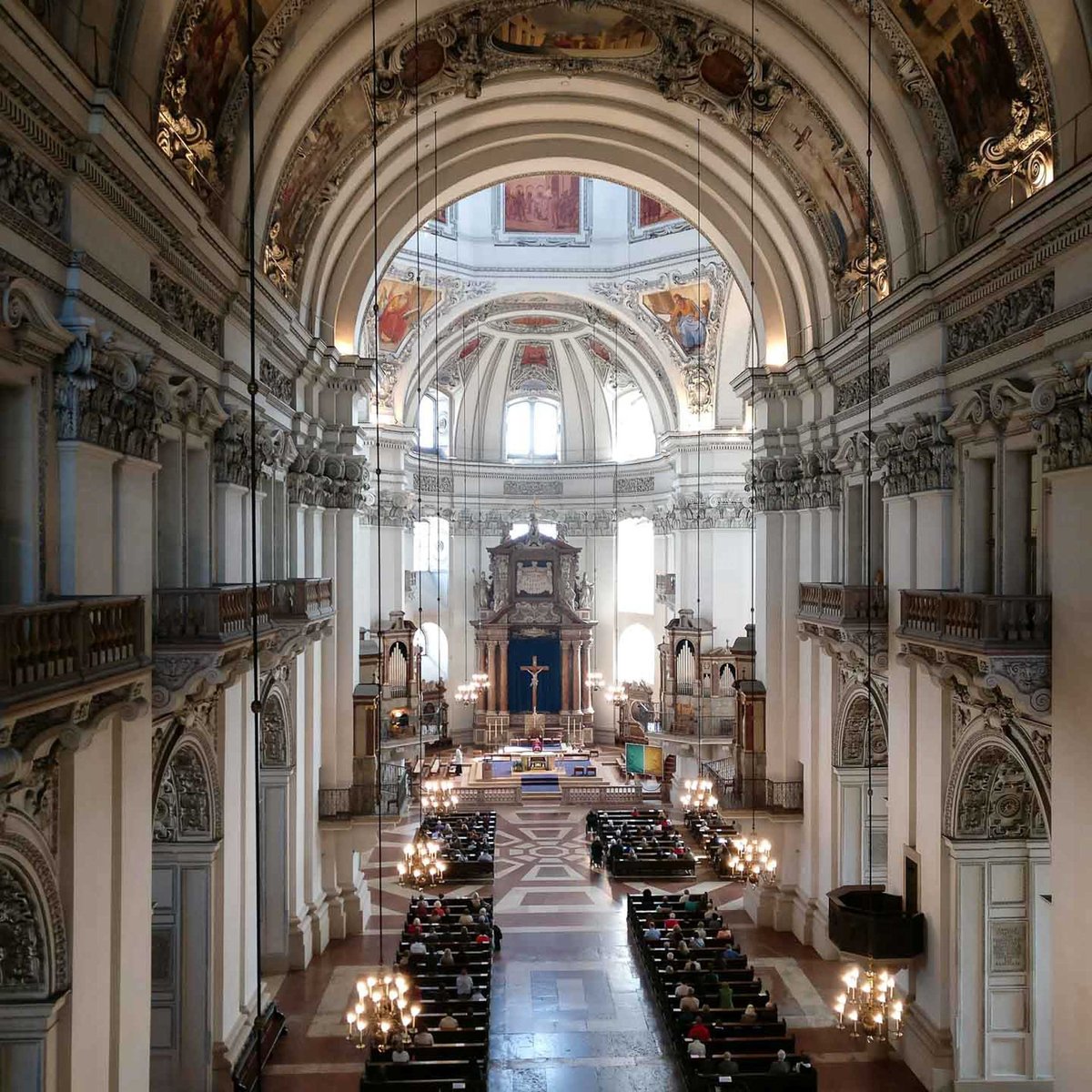
Georg Muffat spent twelve years as court organist at Salzburg Cathedral, playing the great Baroque instrument daily and composing for the Archbishop’s private concerts at the Residenz. The Armonico Tributo he published in 1682 was among the first collections of Italian concerto grosso music to appear north of the Alps. Salzburg was where the Italian and French Baroque streams first merged into the Central European tradition.
The Story
Muffat was born in 1653 in Megeve, a village in Savoy with Scottish roots on his father’s side, at the intersection of French, Italian, and German influences. He left for Paris at around age ten and spent six years studying under Jean-Baptiste Lully, the dominant figure of French court music. Lully’s orchestral textures, his French dance rhythms, his precise approach to ornamentation: all of this went into Muffat’s ear in those Paris years and stayed there.
After positions in Alsace and Ingolstadt, he arrived in Salzburg around 1678 and was appointed court organist under Archbishop Max Gandolph von Kuenburg. The Salzburg Cathedral organ was one of the great instruments of the age, and Muffat played it for daily masses and liturgical services. Alongside his cathedral duties he served as chamber musician for the Archbishop’s private concerts at the Residenz, performing secular music for an audience that expected both quality and novelty.
In 1681 the Archbishop granted Muffat leave to travel to Rome, where he encountered Arcangelo Corelli and Bernardo Pasquini. What he heard in Rome was the concerto grosso style: the interplay between a small group of soloists and the full ensemble, the clarity of texture, the Italians’ way of making strings sing. He returned to Salzburg and immediately began work on what would become the Armonico Tributo, five sonatas for strings published in 1682 and dedicated to the Archbishop. They are among the earliest concerto grosso works to appear north of the Alps, a direct transplanting of the Roman style into the Central European court tradition.
He left Salzburg in 1690 for Passau, where he spent the rest of his career. His Florilegium suites of 1695 and 1698, blending French dance forms with German orchestration, are among the most detailed practical guides to Baroque performance practice ever written: Muffat specified exact bowings, ornamentation types, and tempos with a thoroughness that performers still consult. His son Gottlieb became organist to the Holy Roman Emperor. Handel later borrowed from the Muffat tradition. The Salzburg decade was where this synthesis was first forged.