Palace

Residenz

Snapshot

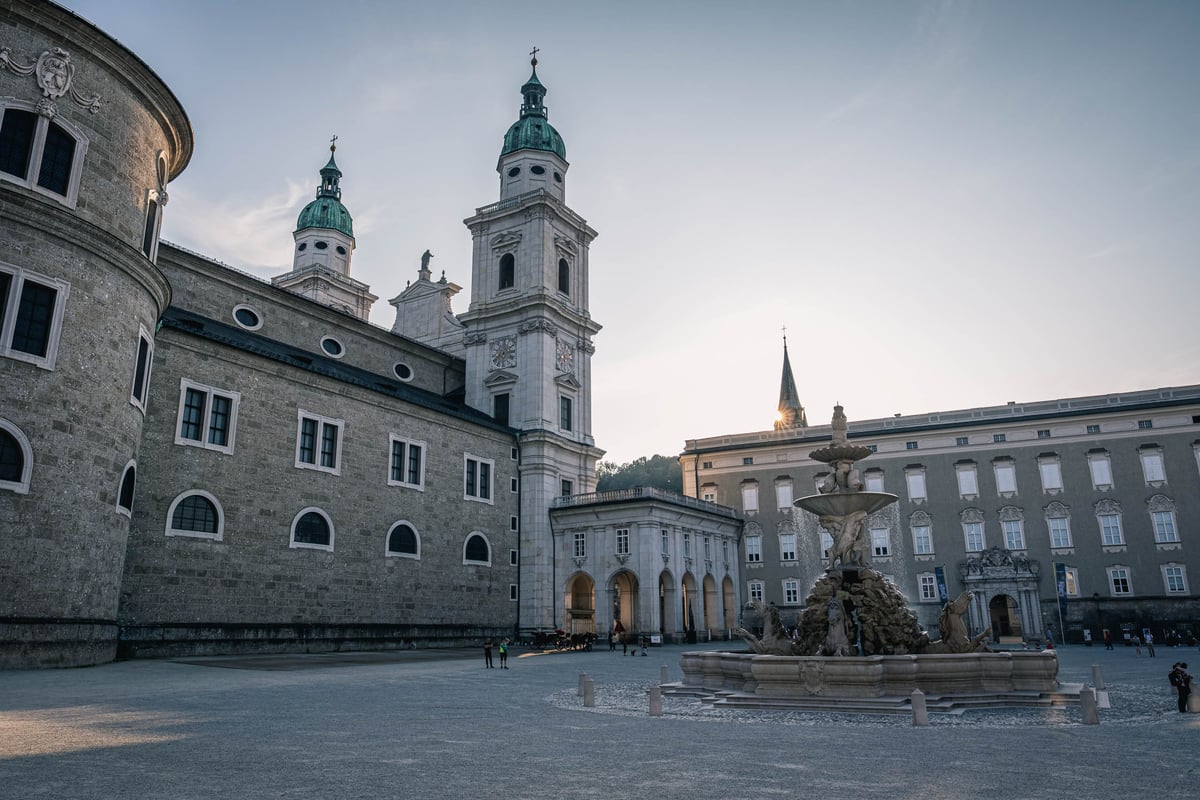
The Residenz on Residenzplatz was the seat of power of the Prince-Archbishops for over two centuries and the room where Mozart performed for Archbishop Colloredo. Paul Troger’s ceiling frescoes and the Residenzgalerie are the main draws. Wednesdays cost EUR 5.

The Story

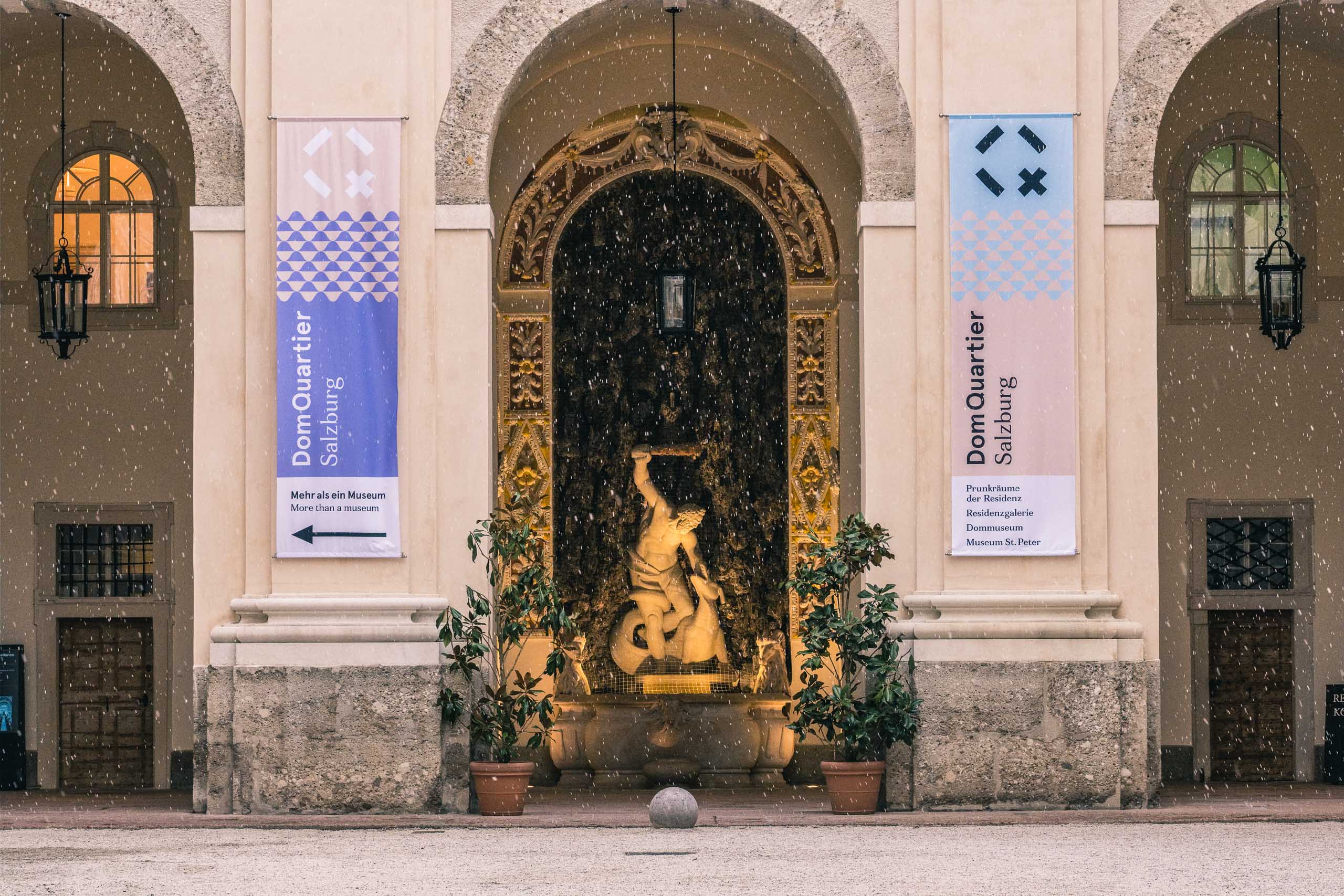
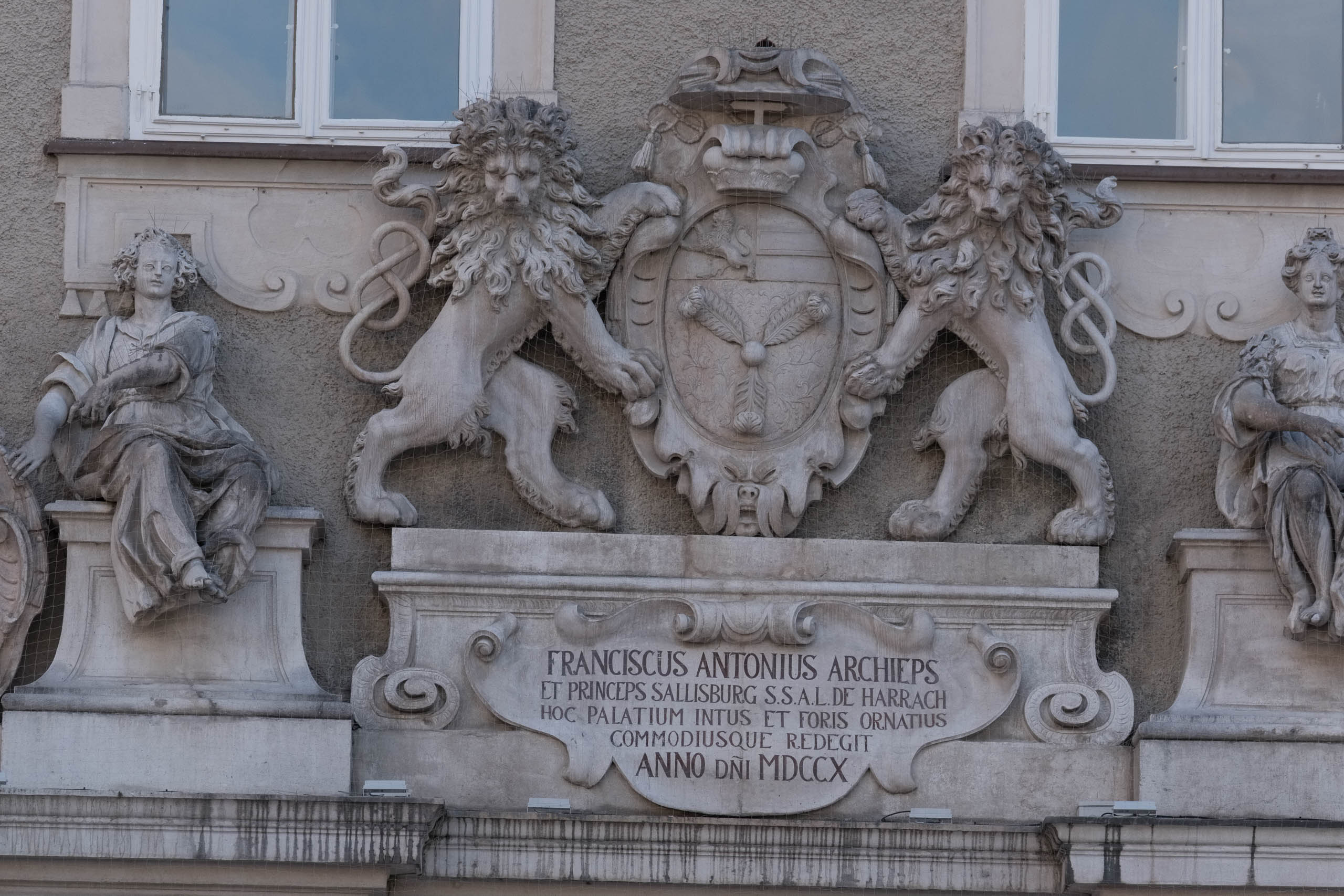
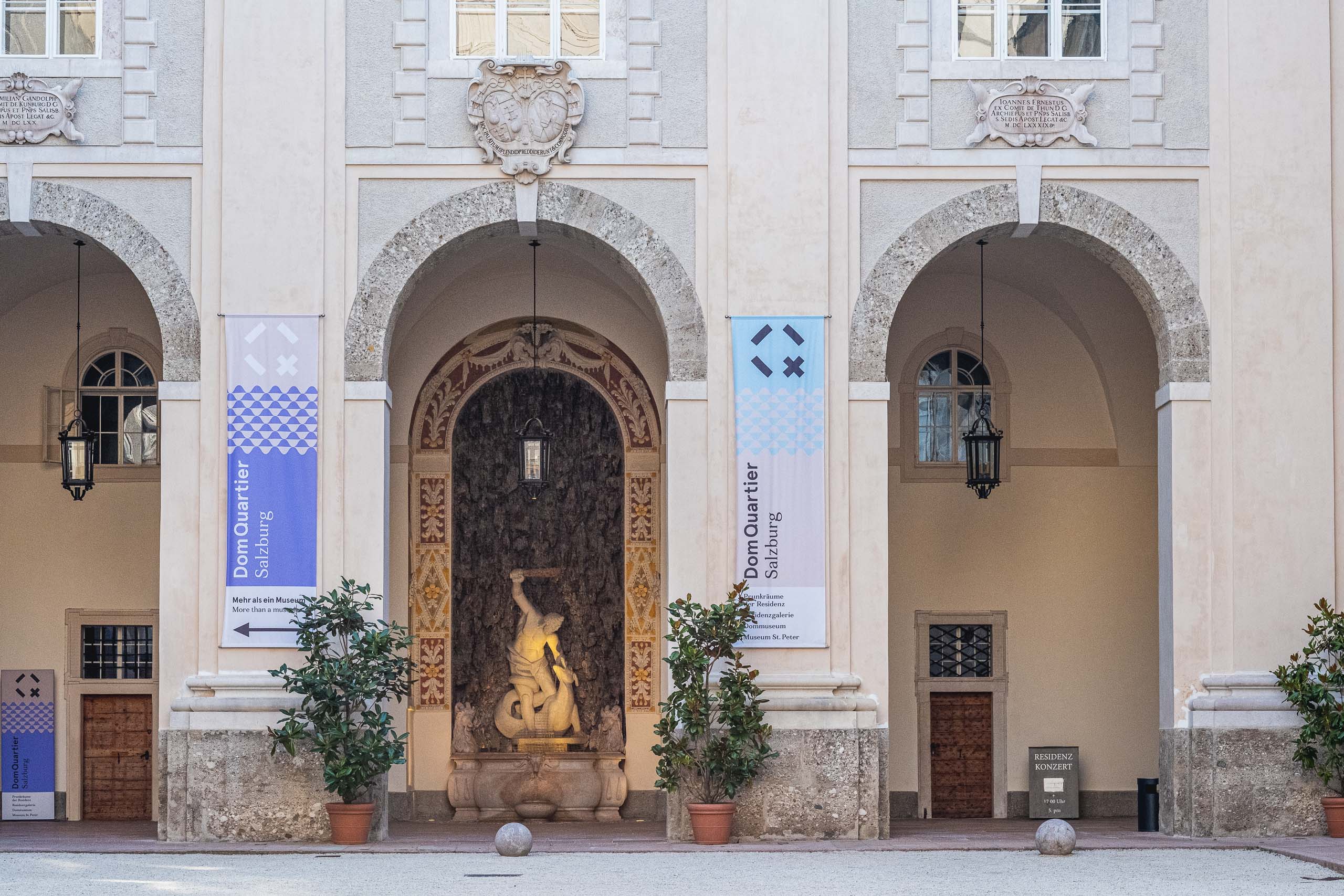
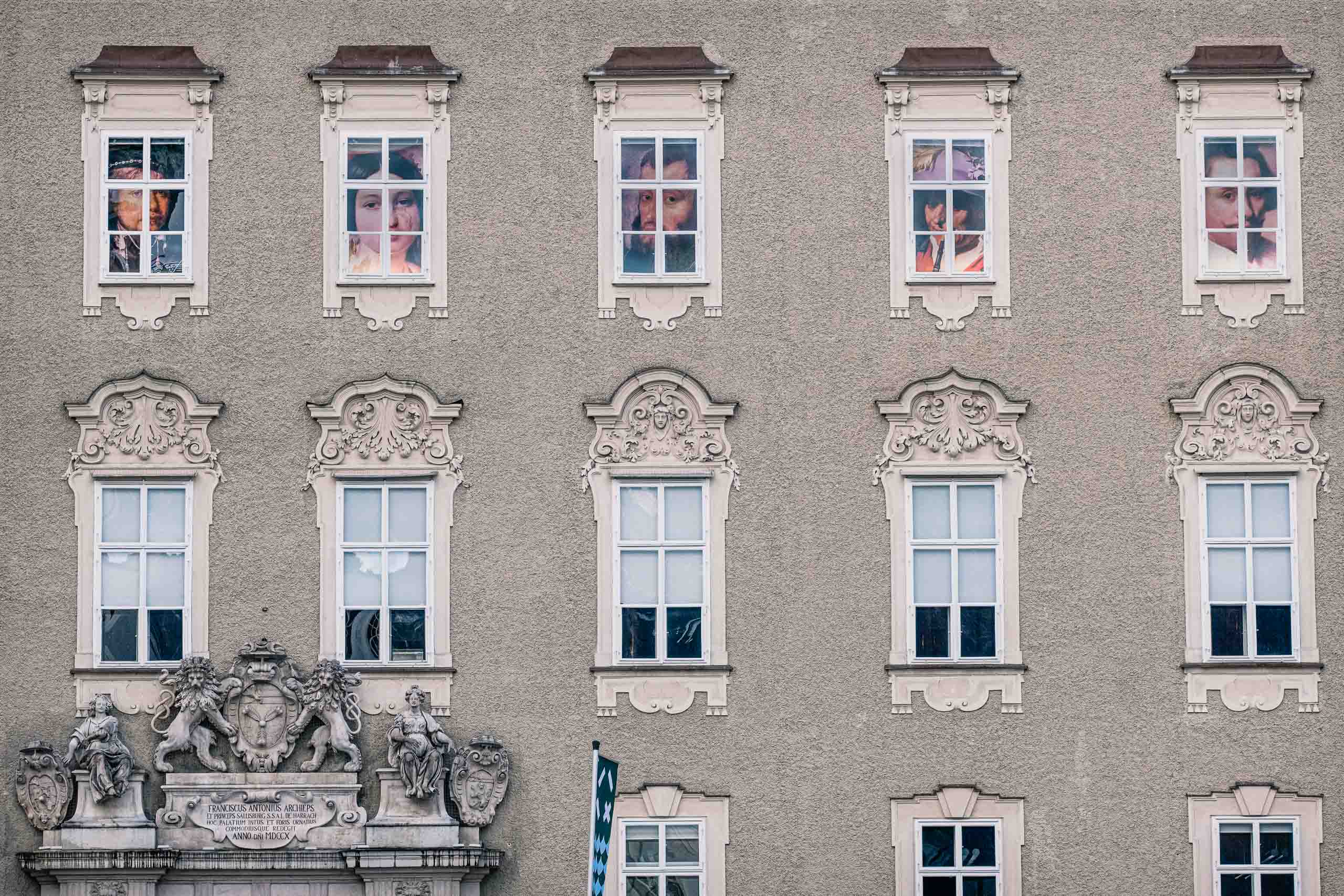
The Residenz on Residenzplatz is where Salzburg’s princely archbishops actually lived and ruled. Wolf Dietrich von Raitenau, the archbishop who remade much of the old town in baroque style around 1600, initiated the palace’s transformation; early designs are attributed to the Italian architect Vincenzo Scamozzi, though the final building evolved through successive contributions over more than a century. The result is one of the most substantial princely residences in the German-speaking world outside Vienna.

The state rooms (Prunkraume) are the core of the visit. Paul Troger’s ceiling frescoes fill the audience halls with illusionistic painted heavens and allegories of power. Below them, the architecture is designed to impress: doorways lead into progressively grander rooms, each one signalling another step in the hierarchy of access that governed court life. Wolfgang Amadeus Mozart performed in these rooms for Archbishop Hieronymus von Colloredo and visiting dignitaries. This is not a generalised claim; Mozart’s service under Colloredo is well-documented and the Residenz was the formal setting for those performances.

The Residenzgalerie, on the upper floor, holds a collection of European paintings from the 16th to the 19th century. The quality is uneven by major-museum standards, but several works are genuinely strong, and the setting, a sequence of furnished palace rooms, gives the paintings a different context than a conventional gallery would.

The state rooms are accessed via the DomQuartier ticket, which also includes Salzburg Cathedral and a series of passageway exhibition rooms connecting the two buildings. On Wednesdays the full circuit drops to EUR 5.00, a price that makes it the most straightforward cultural value in the Altstadt.

Visiting

The Residenz is at Residenzplatz 1, at the centre of the Altstadt, directly on Residenzplatz. Open daily except Tuesday 10am-5pm; July-August open daily until 6pm; closed December 24. Access via the DomQuartier ticket (EUR 15.00 standard, EUR 5.00 on Wednesdays). Allow 1-1.5 hours for the state rooms alone, or 2-3 hours for the full DomQuartier circuit including Salzburg Cathedral. No booking needed.

People

People connected to this place

Each person below explicitly names this place in their authored connections.
  • Archbishop Guidobald von Thun

    archbishop1616 - 1668

    A baroque patron from the same aristocratic Thun family as the great builder Johann Ernst von Thun. Guidobald's careful stewardship (1654-1668) set the conditions for the explosive building campaign his kinsman would later unleash with Johann Bernhard Fischer von Erlach.

  • The archbishop Mozart famously fell out with. Colloredo's reforming austerity drove Mozart to leave Salzburg permanently for Vienna in 1781. Under his rule, Salzburg's temporal authority as a prince-archbishopric effectively ended with secularisation in 1803.

  • The great patron behind Salzburg's high baroque building campaign. Johann Ernst von Thun gave Johann Bernhard Fischer von Erlach his most important commissions, transforming Salzburg into one of the most magnificent baroque cities in the German-speaking world.

  • The immediate predecessor of Wolf Dietrich von Raitenau. His 26-year archiepiscopate (1560-1586) provided institutional continuity during the Counter-Reformation before the explosive baroque transformation that followed his death.

  • The archbishop most responsible for Hohensalzburg Fortress as visitors see it today. During his reign (1495-1519), Keutschach transformed the fortress from a functional stronghold into an opulent princely residence. His personal symbol, three turnips, appears throughout the fortress carved in stone.

  • The archbishop behind the Protestant Expulsion of 1731-1732, one of the most dramatic episodes in Salzburg's history. Firmian ordered roughly 20,000 Protestants to convert or leave, triggering one of the most significant forced migrations of the early modern era.

  • Prince-Archbishop of Salzburg from 1612 to 1619, and a cousin of Wolf Dietrich von Raitenau, whom he deposed with Bavarian military backing. In seven years he built Hellbrunn Palace, planted the Hellbrunner Allee, renamed Wolf Dietrich's "Altenau" to Mirabell, and laid the cornerstone of the Salzburg Cathedral. He died before completing any of them.

  • One of the most powerful men in the Holy Roman Empire before becoming Archbishop of Salzburg. A cardinal, imperial chancellor to Emperor Maximilian I, and the archbishop who survived a months-long siege inside Hohensalzburg Fortress during the Peasants' War of 1525.

  • A Counter-Reformation hardliner who in 1684 ordered the expulsion of the Protestants of the Defereggen Valley, then part of Salzburg's territory in East Tyrol. He also commissioned the Kajetanerkirche in the Altstadt.

  • Paris Lodron coat of arms set into the wall of the Toscaninihof courtyard in Salzburg

    Archbishop Paris Lodron

    archbishop1586 - 1653

    The "Father of the Fatherland." Paris Lodron kept Salzburg neutral and unscathed throughout the Thirty Years' War, oversaw the consecration of Salzburg Cathedral in 1628, and founded the University of Salzburg in 1622.

  • Mozart's first employer. Far more benevolent than his successor Colloredo, Schrattenbach allowed Leopold Mozart repeated extended leaves of absence for the family's European concert tours, effectively subsidising the education of a genius.

  • The most transformative Archbishop in Salzburg's history. Wolf Dietrich demolished the old Romanesque cathedral, created Mirabell Palace, rebuilt the Residenz, and began reshaping the city along Italian baroque lines. Deposed and imprisoned in Hohensalzburg Fortress until his death.

  • Count Karl von Arco

    official1743 - 1830

    The man who kicked Mozart out the door. In June 1781, Count Arco, chief steward of Archbishop Colloredo's household in Vienna, literally kicked Mozart when Mozart sought to resign. The rupture ended Mozart's employment in Salzburg permanently. A minor figure who achieved lasting fame through a single act at a critical moment.

  • Emperor Franz II/I

    royal figure1768 - 1835

    The emperor who made Salzburg Austrian. The last Holy Roman Emperor and first Emperor of Austria. Under his reign, the Congress of Vienna (1814-1815) confirmed Salzburg's permanent incorporation into the Austrian Empire in 1816, a union that has lasted to the present day.

  • Emperor Joseph II

    royal figure1741 - 1790

    Son of Empress Maria Theresia, Enlightenment reformer, and the emperor who commissioned Mozart's Die Entfuhrung aus dem Serail and Le nozze di Figaro. Archbishop Colloredo was deeply aligned with his reformist ideology.

  • Emperor Maximilian I

    royal figure1459 - 1519

    Holy Roman Emperor known as "the Last Knight." Matthäus Lang von Wellenburg served as his chief secretary and chancellor, making Salzburg's future archbishop one of the most powerful men in the Empire.

  • Georg Muffat

    composer1653 - 1704

    A crucial bridge between Italian baroque and the German-Austrian tradition. Muffat studied in Rome with Corelli and in Paris with Lully, then brought the Italian concerto grosso style to the Salzburg court (1678-1690) under Max Gandolph von Kuenburg. His Armonico Tributo (1682) is a landmark of early baroque chamber music.

  • Heinrich Ignaz Franz Biber

    composer1644 - 1704

    The greatest violinist of the 17th century and one of the most important composers of the baroque era. Biber spent almost his entire career at the Salzburg court, rising to Hofkapellmeister in 1684. His Mystery (Rosary) Sonatas are among the most technically and spiritually demanding pieces in the baroque repertoire.

  • Johann Ernst Eberlin

    composer1702 - 1762

    Leopold Mozart's direct professional superior and the central musical figure in Salzburg in the generation immediately before the Mozarts. Court Kapellmeister from 1749, Eberlin contributed over 6,000 works to the Salzburg court repertoire. Almost entirely forgotten today, but the young Wolfgang studied several of his works.

  • Leopold Mozart

    composer1719 - 1787

    Court musician, Vice Kapellmeister, and the father and first teacher of Wolfgang Amadeus Mozart. Author of the influential Versuch einer grundlichen Violinschule (1756). Lived with his family at Getreidegasse 9 and later at Makartplatz 8. Buried in St. Sebastian's Cemetery.

  • Michael Gaismair

    official1490 - 1532

    One of the most radical leaders of the German Peasants' War (1525-1526). Gaismair led the Tyrolean and Salzburg peasant forces and besieged Hohensalzburg Fortress, where Archbishop Matthäus Lang was sheltering. The fortress held. Gaismair was assassinated in Padua in 1532, almost certainly on Habsburg orders.

  • Napoleon Bonaparte

    royal figure1769 - 1821

    The man who ended 1,200 years of the Prince-Archbishopric. Napoleon's armies occupied Salzburg in 1800 and 1809. The political consequences of the Napoleonic era erased Salzburg's status as an independent ecclesiastical state forever.

  • Vincenzo Scamozzi

    architect1548 - 1616

    A pupil of Palladio hired by Wolf Dietrich von Raitenau to design a monumental cathedral on the scale of St. Peter's in Rome. The project was never realised after Wolf Dietrich's downfall, but Scamozzi's influence on Salzburg's baroque ambitions is part of the city's architectural DNA.

  • Wolfgang Amadeus Mozart

    composer1756 - 1791

    One of the most celebrated composers in the history of Western music. Born at Getreidegasse 9 in Salzburg's Altstadt on 27 January 1756. Salzburg's entire cultural identity is shaped around his legacy.

Curated routes

Routes that stop here

These curated collections include this place as an authored stop.
  • Panoramic sunrise view of Salzburg old town with cathedral domes and Hohensalzburg Fortress on snowy hills.

    Salzburg in Fifteen Stops

    The fifteen sights we mark on the map we hand every guest, in the order I would walk them. It starts on the right bank, crosses into the old town, climbs to the fortress, and comes back over the Mozartsteg. Half a day at a stroll, or a full one if you go inside things.

    trip plan15 stops

Read more

Stories that go deeper

The longer pieces where this comes up.