Snapshot
Georg Solti’s Salzburg story is one of the great full-circle narratives in the history of the Salzburg Festival. He arrived in 1937 as a 24-year-old playing glockenspiel under Arturo Toscanini’s baton. He came back as one of the most decorated conductors in history.
The Story
Solti first stood inside the Salzburg Festival in 1937 as Toscanini’s assistant and glockenspiel player in Die Zauberflöte. The role was tiny, just a few bars of bright metallic notes, but standing near the podium while Toscanini dissected the score line by line was a master class in discipline that stayed with him for the rest of his career. He called it one of the defining experiences of his early formation.
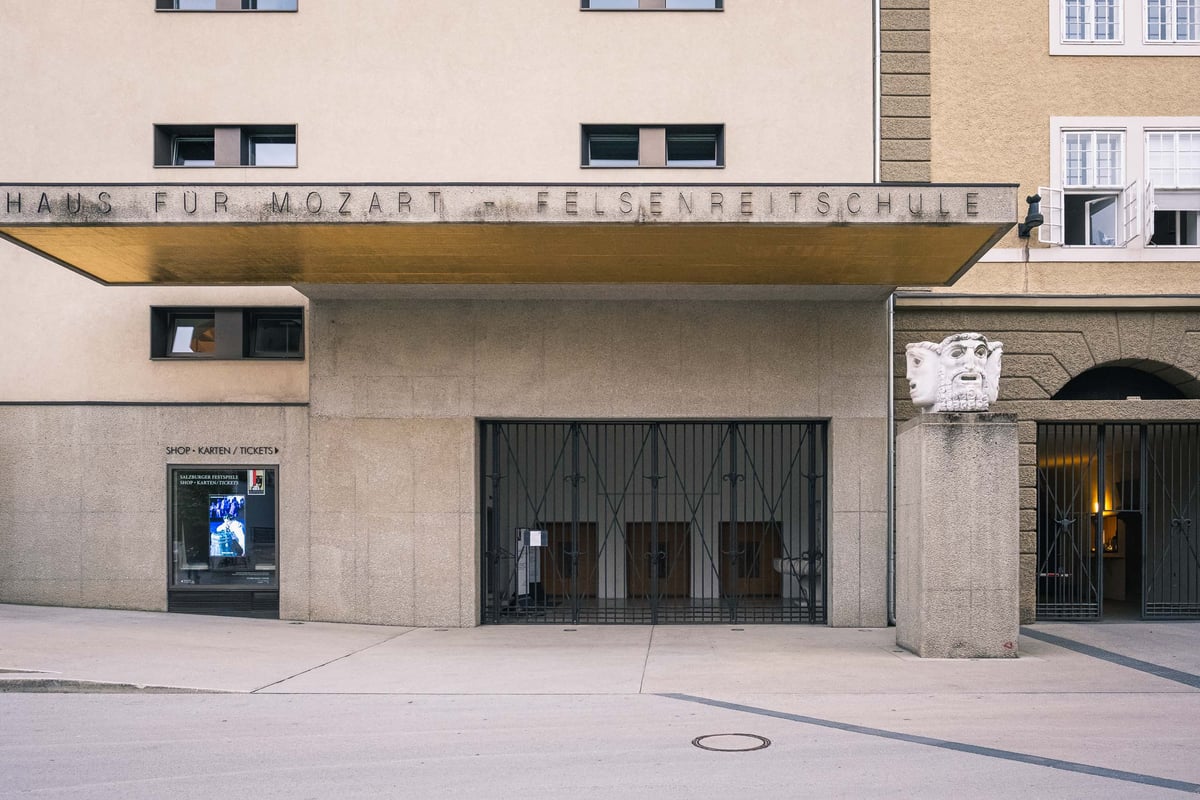
The next year, antisemitic laws forced him to flee Hungary. He spent the war years in Switzerland, barred from conducting, and won the Geneva International Piano Competition in 1942 as the only career path available to him. After the war, he was invited to conduct Beethoven’s Fidelio in Munich in 1946, his first conducting breakthrough on a major European stage. By 1951 he was back at Salzburg as a conductor in his own right, leading Mozart’s Idomeneo at the Felsenreitschule in a production praised for its energy and precision. He returned for Die Zauberflöte again in 1955 and 1956, conducting the same opera he had played glockenspiel in nearly two decades earlier.
His broader legacy rests on the Decca Ring Cycle recordings with the Vienna Philharmonic, made between 1958 and 1965. They were the first complete opera cycle recorded in stereo, and they remain the standard against which every subsequent Ring is measured. He accumulated 31 Grammy Awards over his career, the most of any classical musician, and was knighted Sir Georg Solti in 1972 after becoming a British citizen. He died in Antibes in September 1997.