Snapshot
The conductor who turned the Salzburg Festival into an act of resistance. Between 1934 and 1937, Arturo Toscanini made Salzburg the most contested stage in the world, programming works he chose not for prestige but for what they said about freedom, and then refusing to return once the Nazis arrived.
The Story
Toscanini first appeared at the Salzburg Festival in 1934, sharing the music directorship with Bruno Walter from 1935 onward. His debut sparked immediate demand for an opera, and he delivered Verdi’s Falstaff the following year, bringing singers from La Scala and a production that stayed in the repertoire until 1939. Ticket occupancy rose from 53% in 1934 to 89% by 1937. He called Salzburg “the most perfect musical event in the world.”
The programming was never neutral. He conducted Beethoven’s Fidelio every season, a work about a woman who rescues her political prisoner husband from a tyrant. In 1936 he programmed Wagner’s Die Meistersinger von Nürnberg at Salzburg rather than Bayreuth, using brisk tempos that shocked Bayreuth purists and framing the work as a rebuke of the Nazi co-option of Wagner’s legacy. In 1937 he opened Mozart’s Die Zauberflöte and dedicated the night to Mozart’s genius loci. A young Georg Solti, then 24, played glockenspiel in that production. It was one of the defining moments of Solti’s early formation.
His opposition to fascism stretched back to 1933, when he refused to conduct at Bayreuth after protesting the treatment of Jewish musicians. He sent a telegram to Hitler demanding artistic freedom. When the Anschluss came in March 1938, Toscanini refused to return to Salzburg. The Nazi press in Salzburg had already called him a “German hater, a Freemason, a friend of Jews.” His departure cost the Festival its greatest draw and marked the end of the pre-war golden era. He spent eight years in exile and died in New York in January 1957.
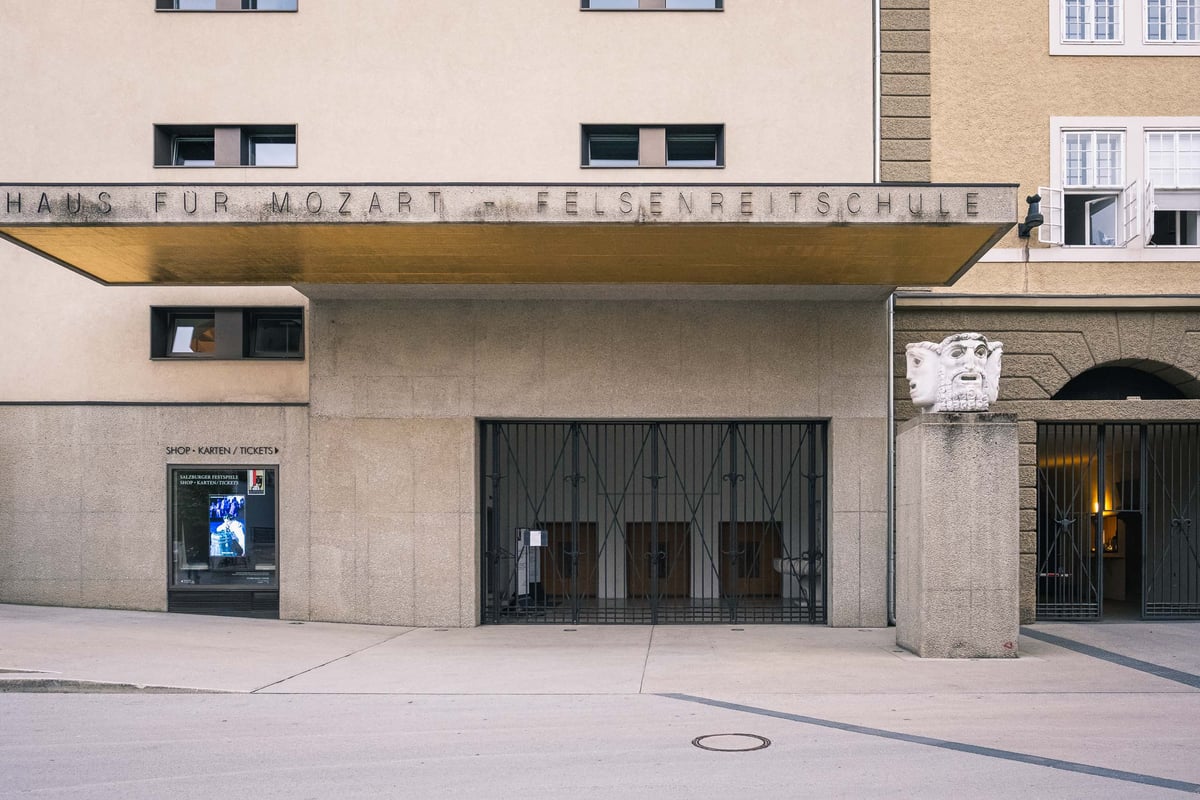
His physical trace in Salzburg is the Toscaninihof, the stone courtyard tucked between Stift St. Peter and the Felsenreitschule, built in the 1930s by Clemens Holzmeister with a staircase climbing directly to the Monchsberg. The courtyard carries his name, and the Felsenreitschule where he conducted still stands.