
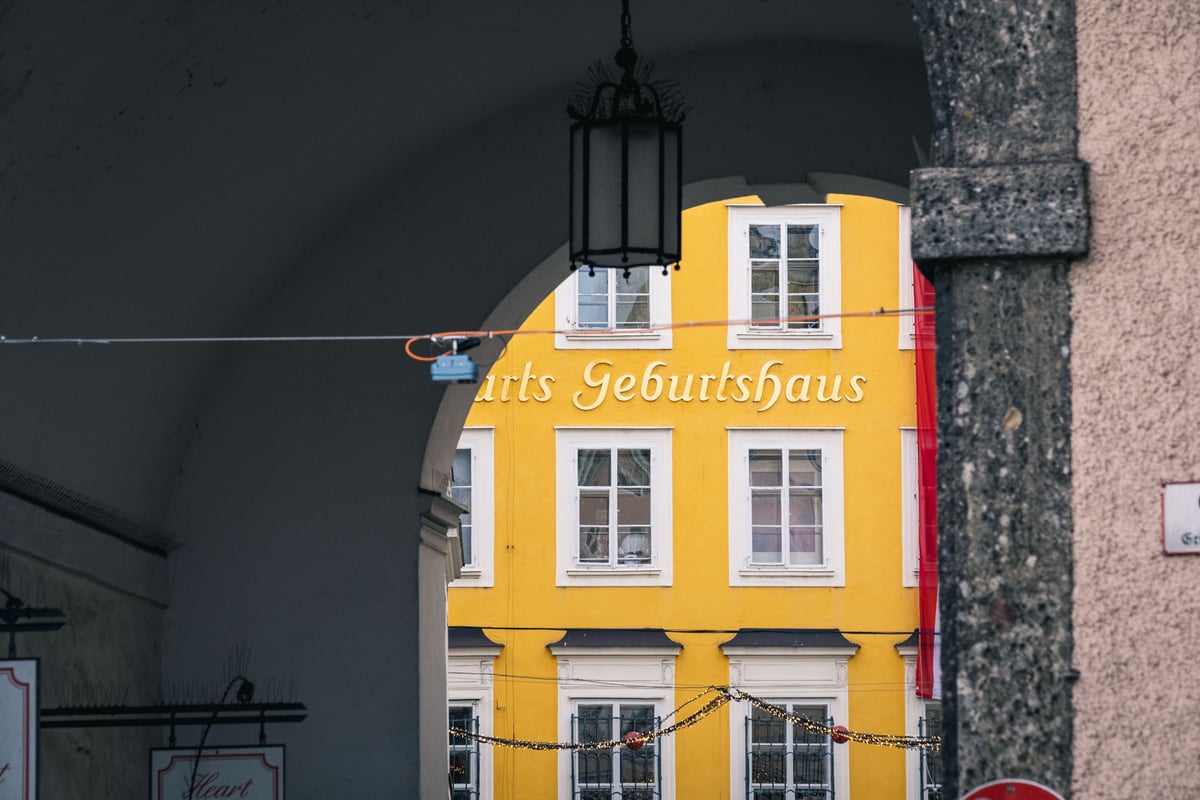
Mozart's Birthplace
Baroque
The third floor of Getreidegasse 9 is where Wolfgang Amadeus Mozart was born on 27 January 1756, and where he spent the first seventeen years of his life.
Merchant
1712, Salzburg - August 1792, Salzburg
The Mozart family’s landlord, banker, and closest family friend. Lorenz Hagenauer owned Getreidegasse 9 and used his merchant network to finance the tours that made the prodigy’s reputation. Without him, the story might never have left Salzburg.
Lorenz Hagenauer was a Salzburg spice and grocery merchant who owned the building at Getreidegasse 7-9 in the heart of the old town. He rented the third-floor flat to the Mozart family from 1747, and Wolfgang was born there on 27 January 1756. That building is now Mozarts Birthplace, and every visitor who walks through it is, in a sense, walking through Hagenauer’s property.
The relationship between Hagenauer and Leopold Mozart went far beyond landlord and tenant. They were close friends, and when Leopold wanted to take his prodigy children on extended concert tours across Europe, it was Hagenauer who made it financially possible. His wholesale business reached Paris, Hamburg, Trieste, and Amsterdam, giving him access to letters of credit and banking contacts in every major city. For the grand tour of 1763 to 1766, Hagenauer arranged a deposit with the Paris firm Tourton and Baur, provided introductions to merchants in Augsburg and The Hague, and effectively served as the family’s remote banker, managing currency exchanges and ensuring funds were available wherever Leopold happened to be.
The correspondence between the two men, covering those tour years in particular, has become one of the most important primary sources in Mozart scholarship. Leopold wrote to Hagenauer from every city, reporting on concerts, fees, the children’s health, and the behaviour of European courts. The letters are precise, personal, and full of detail that would otherwise be lost.
Hagenauer’s children extended the family’s reach into Salzburg’s institutions. His son Dominicus Hagenauer became Abbot of Stift St. Peter, and Mozart composed the Dominicus Mass (K. 66) for his first solemn mass. His cousin Johann Baptist Hagenauer became a significant sculptor whose work appears in the city. The family ran through Salzburg’s cultural and religious life in multiple directions at once, and Lorenz was the quiet centre of it.
Locations
Baroque
The third floor of Getreidegasse 9 is where Wolfgang Amadeus Mozart was born on 27 January 1756, and where he spent the first seventeen years of his life.