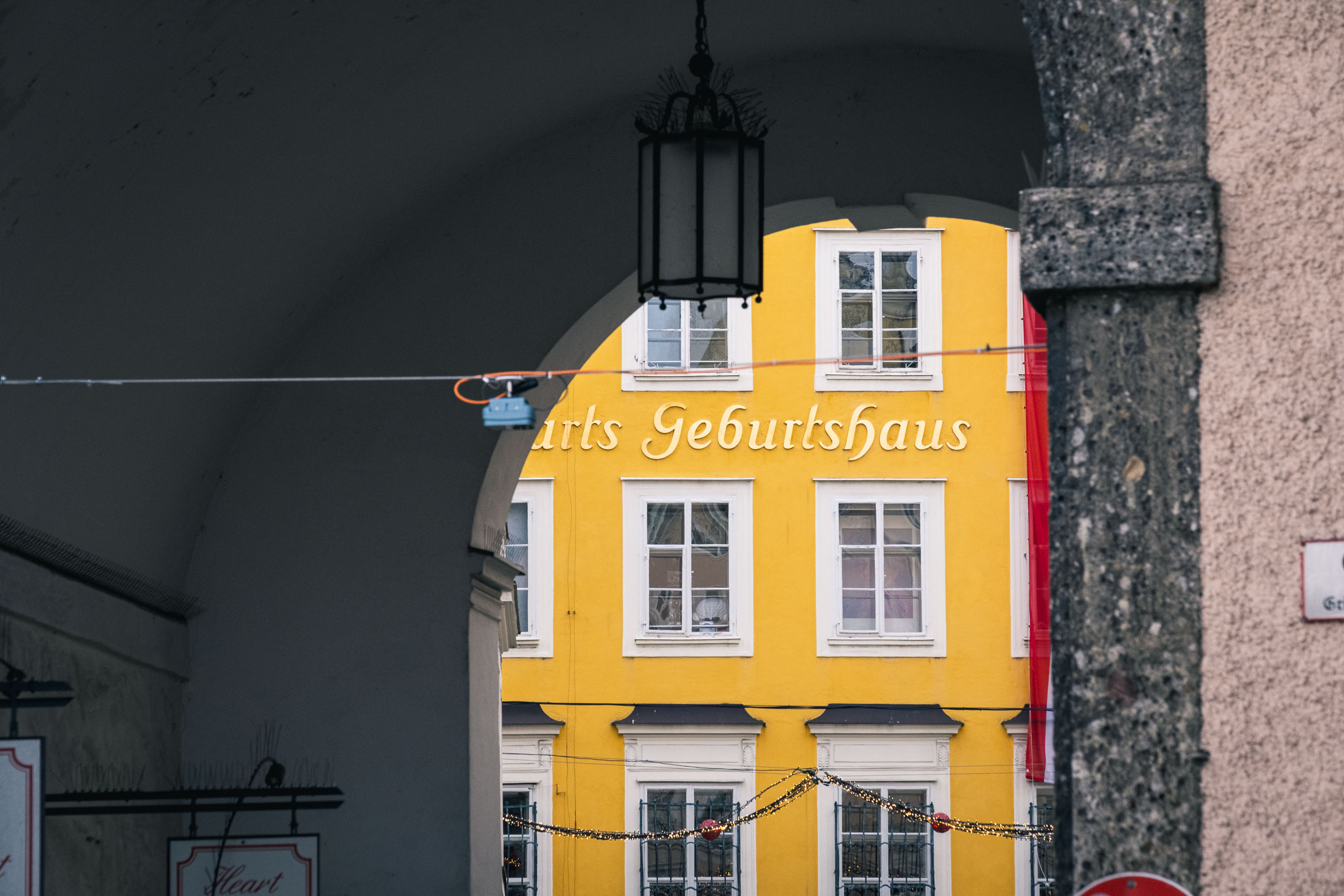
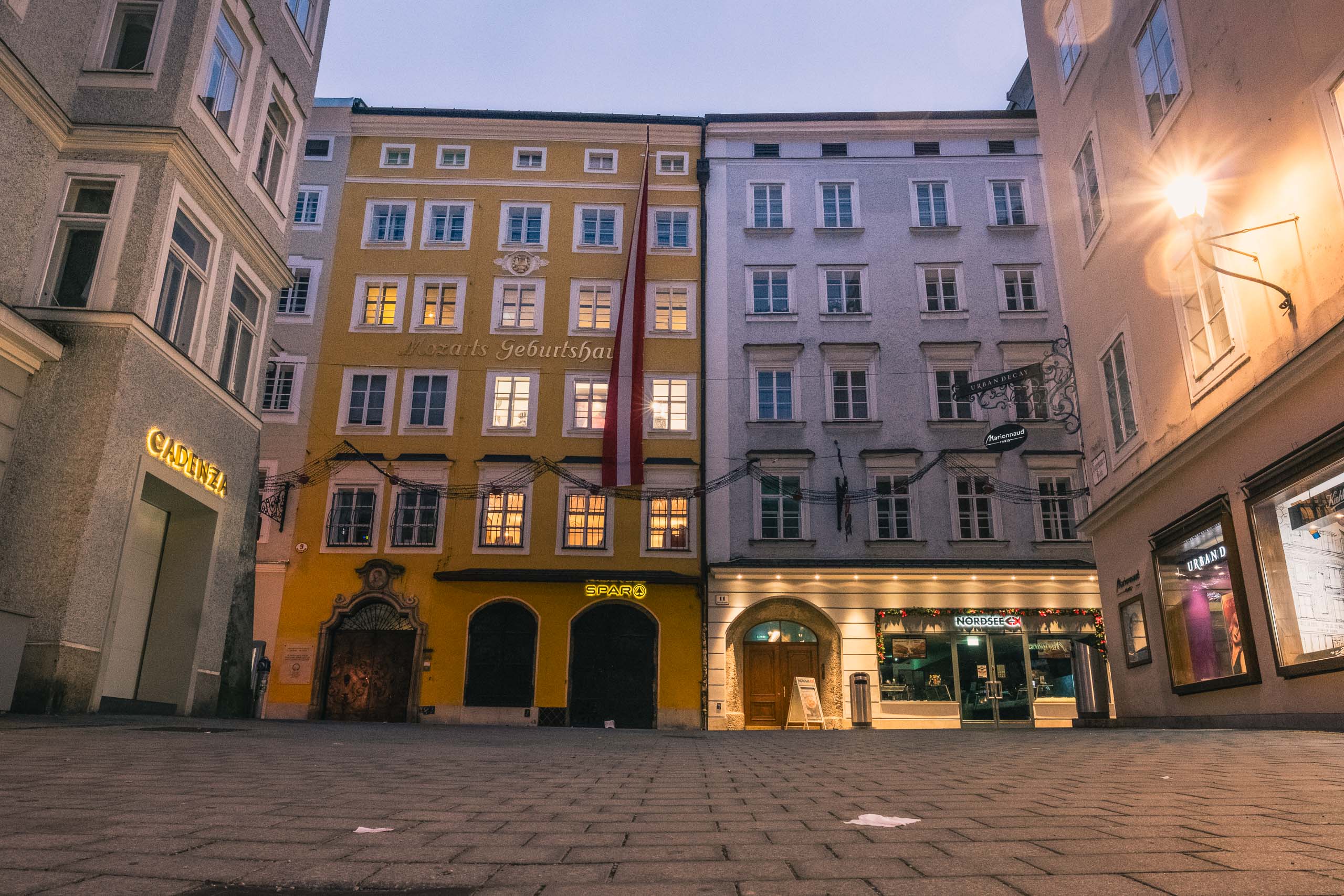
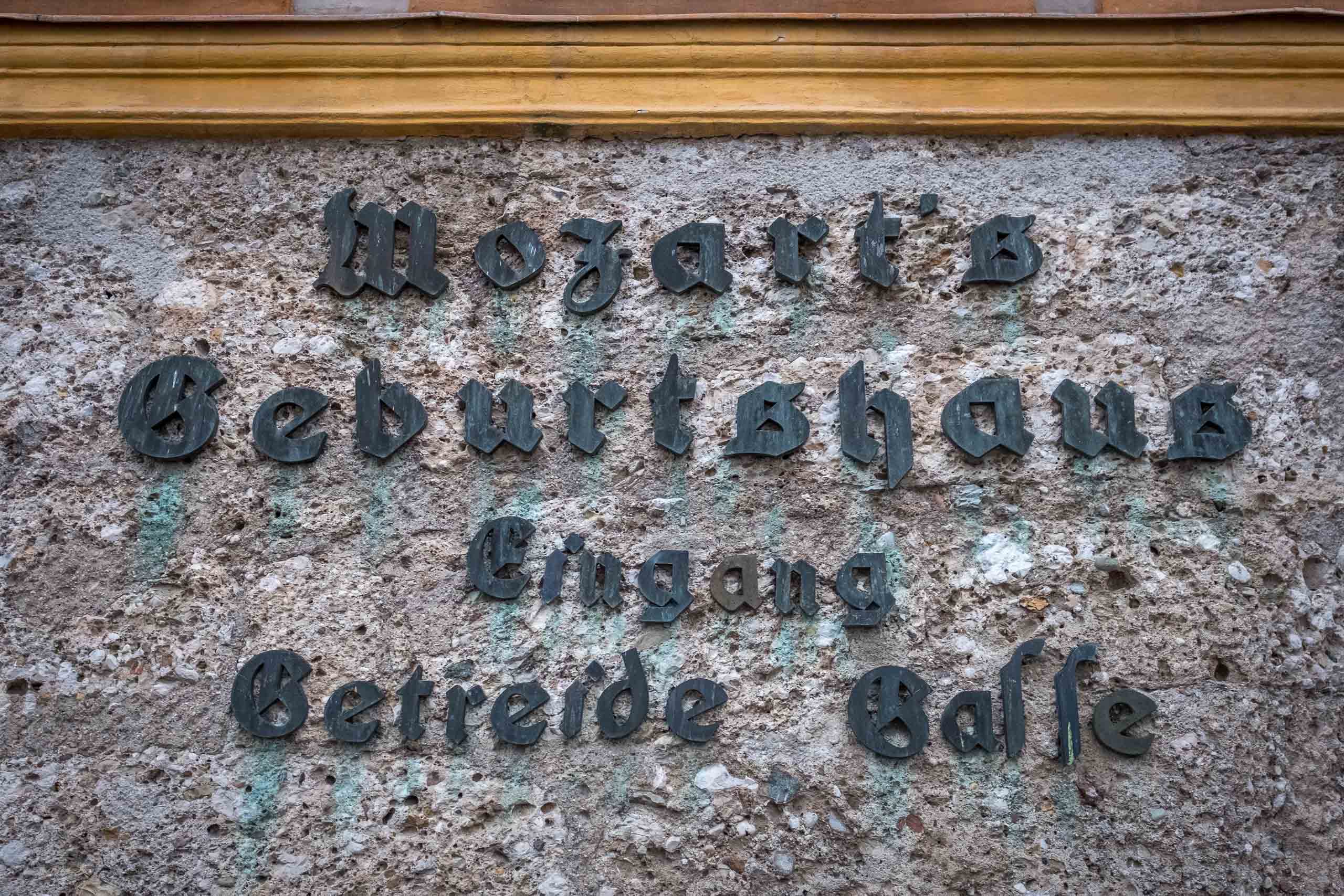
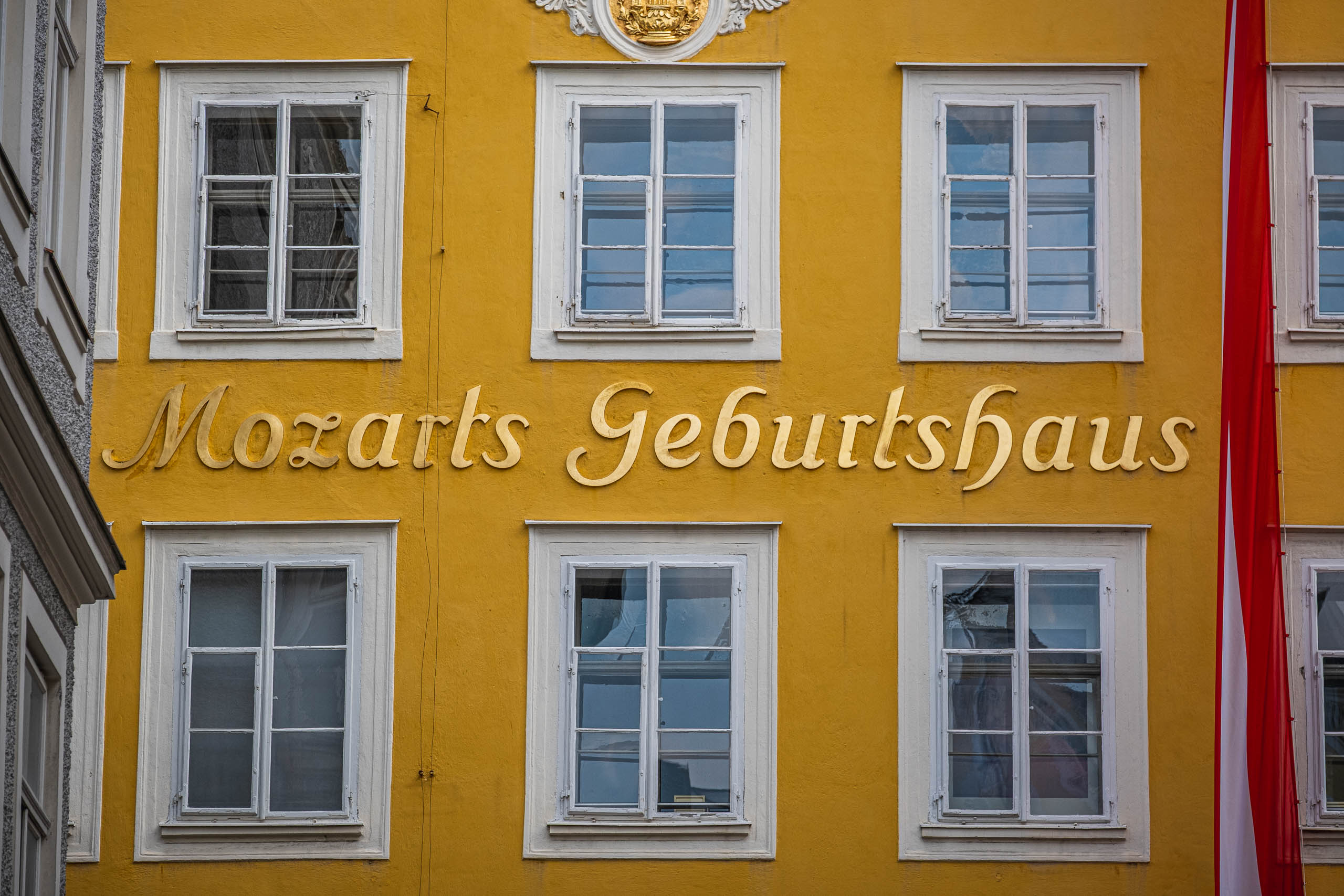
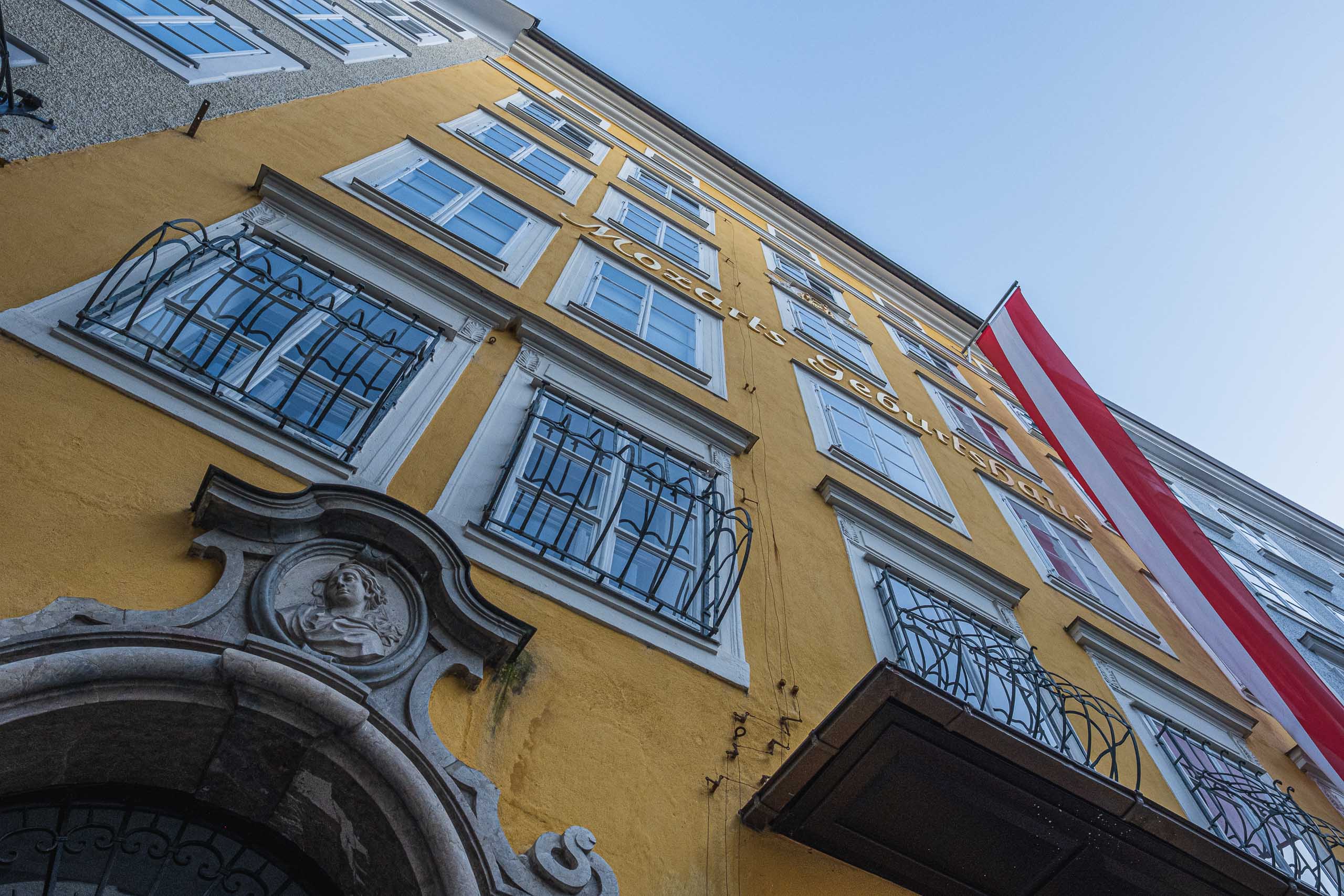
The third-floor apartment at Getreidegasse 9 is the room where Wolfgang Amadeus Mozart was born on 27 January 1756. It is exactly that: a real apartment in a real building, on Salzburg’s main shopping street, where a family of musicians lived for over two decades.
The Story
The building has a longer history than Mozart. In 1585 the court apothecary Chunrad Fröschmoser carved a Rod of Asclepius, the coiled serpent of healing, above the entrance door. It is still there. The Hagenauer family acquired the building in the early 18th century, and Lorenz Hagenauer was already the landlord when Leopold Mozart and Anna Maria moved into the third-floor apartment as newlyweds in November 1747. The rent was 20 gulden a year. The friendship between Leopold Mozart and Hagenauer was worth far more: when the family needed to finance their touring years across Europe, Hagenauer provided letters of credit that kept them solvent in Augsburg, Paris, and London.
Seven children were born in those five rooms. Five died in infancy. Nannerl Mozart (Nannerl) arrived in 1751; Wolfgang in 1756. Both were gifted in ways that seemed to alarm even their proud father. By the time Wolfgang was six, Leopold Mozart had him performing for the Prince-Archbishop. The family left for larger quarters on Makartplatz in 1773. The building became a museum in 1880.
A note on orientation: two Mozart museums exist in Salzburg. This is the Birthplace. The Mozarts Residence, ten minutes’ walk away on Makartplatz, shows the family’s later years. They are run by the same foundation and a combined ticket covers both. If you visit only one, this is the one: the rooms here have the weight of actual origin.
Visiting
Hours: Daily 9am-5:30pm. Dec 24: 9am-1pm. Jan 1: noon-5:30pm.
Cost: EUR 18.00 adults; combined ticket with Mozarts Residence EUR 25.00. Youth and children discounted.
Duration: 45-60 minutes.
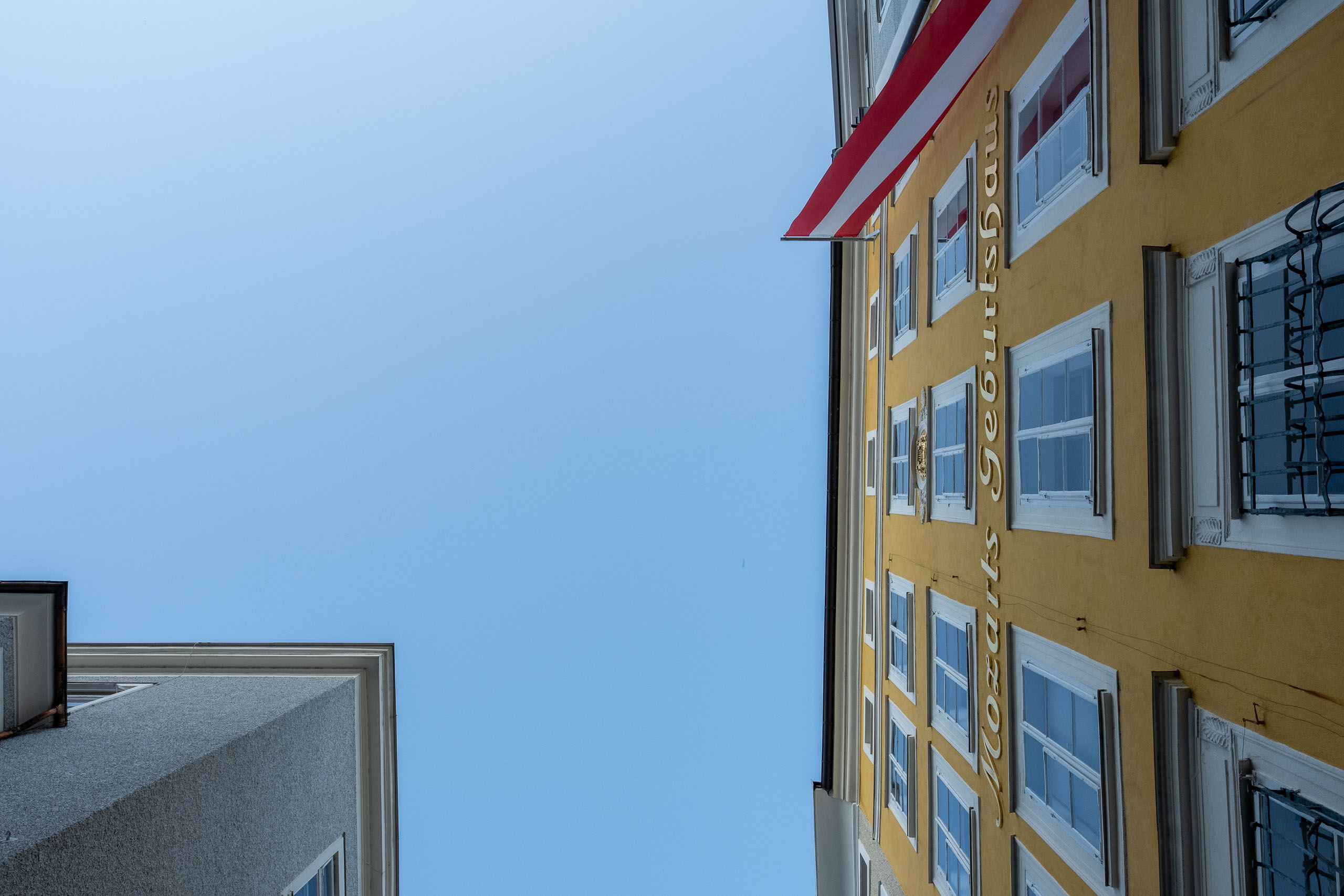
Getting there:Getreidegasse 9, in the heart of the Altstadt. The yellow facade and wrought-iron guild signs are impossible to miss.
Tips: Come early or late to avoid peak crowds. Last admission 30 minutes before closing. The Salzburg Card includes entry.
Do it here
See it on a tour
These experiences include this place in their authored route.
One of the world's great chamber music festivals, entirely Mozart, each January around his birthday (27 January). Organised by the Stiftung Mozarteum. January is low season in Salzburg: a genuine insider reason to visit outside the crowds.
A private guided walking tour of Salzburg's Altstadt. All the essential sights in about two hours, with the pace, emphasis, and questions shaped to your group. Meets at the entrance to Schloss Mirabell. Run by Free Walking Tour Salzburg, Gerhard Reus's own brand.
Salzburg10 stops
People
People connected to this place
Each person below explicitly names this place in their authored connections.
The painter who created the most widely reproduced image of Mozart. Her 1819 posthumous portrait, painted nearly three decades after Mozart's death, became the face most people picture when they think of Mozart.
Sculptor and son of Lorenz Hagenauer, the Mozart family's landlord and Leopold's closest friend. He grew up in the same house as the young Mozart family (Getreidegasse 9) and created works that are still seen in Nonnberg Abbey and Salzburg Cathedral.
Court musician, Vice Kapellmeister, and the father and first teacher of Wolfgang Amadeus Mozart. Author of the influential Versuch einer grundlichen Violinschule (1756). Lived with his family at Getreidegasse 9 and later at Makartplatz 8. Buried in St. Sebastian's Cemetery.
The Mozart family's landlord at Getreidegasse 9 and Leopold Mozart's closest friend. The extensive correspondence between Leopold and Lorenz is one of the most important primary sources for Mozart biography. Father of Abbot Dominicus Hagenauer and cousin of sculptor Johann Baptist Hagenauer.
Wolfgang's elder sister, herself a child prodigy who toured Europe to enormous acclaim. Her talent was considered equal to Wolfgang's in their early years. Convention curtailed her performing career. She married and moved to St. Gilgen, returned to Salzburg, outlived Wolfgang by nearly 38 years, and is buried at St. Peter's Cemetery.
One of the most celebrated composers in the history of Western music. Born at Getreidegasse 9 in Salzburg's Altstadt on 27 January 1756. Salzburg's entire cultural identity is shaped around his legacy.
Organizations
Organizations connected here
These organizations explicitly list this place in their authored location connections.
Custodian of Mozart's legacy. Founded 1841. Manages Mozarts Birthplace and Mozarts Residence. World's most important Mozart archive. Organises the annual Mozartwoche. Bernhard Paumgartner shaped its identity for decades.
foundationFounded 1841
Curated routes
Routes that stop here
These curated collections include this place as an authored stop.
The fifteen sights we mark on the map we hand every guest, in the order I would walk them. It starts on the right bank, crosses into the old town, climbs to the fortress, and comes back over the Mozartsteg. Half a day at a stroll, or a full one if you go inside things.