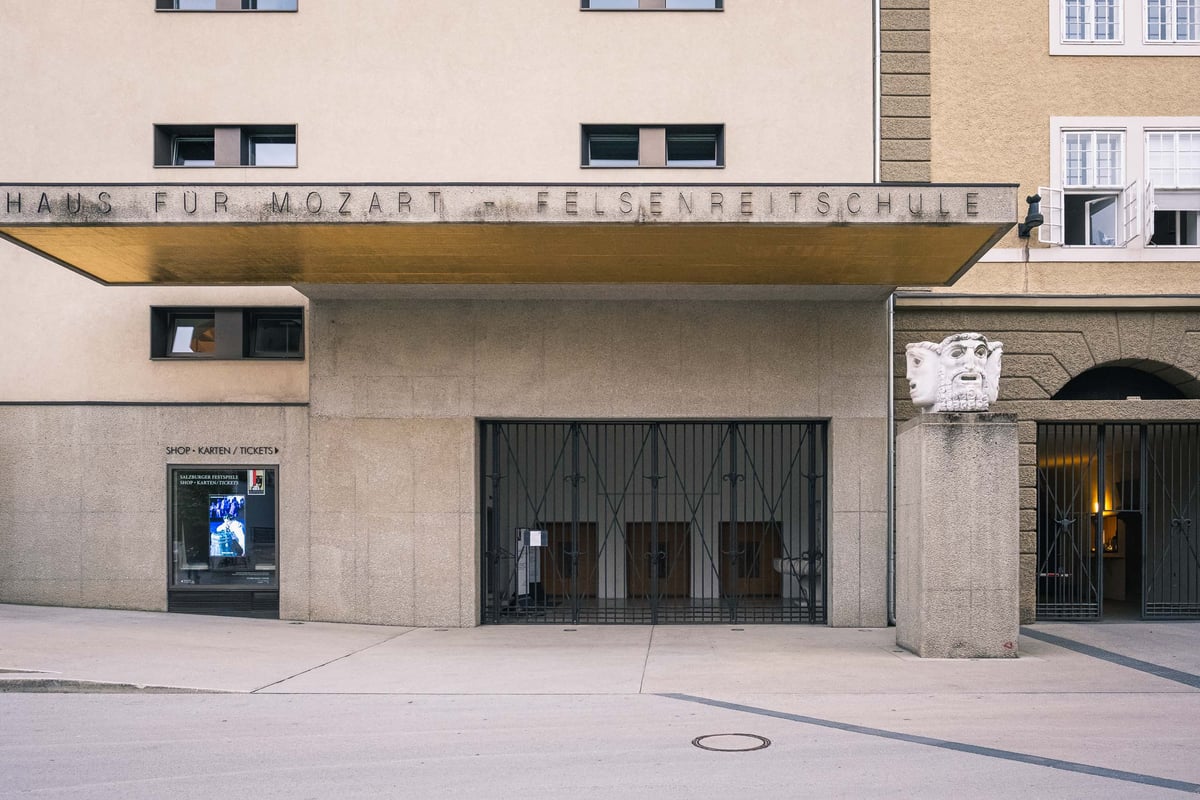
The defining soprano of the 20th century, and the great Salzburg performance that never happened. Despite her famous partnership with Herbert von Karajan, Maria Callas never actually sang at the Salzburg Festival: the productions once attributed to her here took place elsewhere. The Callas-Karajan Lucia di Lammermoor was a La Scala staging taken to Berlin in 1955 and Vienna in 1956, her Medea of 1959 was at Covent Garden, and her Norma of 1960 was at Epidaurus.
The persistent belief that she sang here is itself the interesting fact. Karajan ran the Salzburg Festival through its postwar golden era, Callas was his most famous collaborator, and the two facts fused in public memory into a Salzburg season that never took place. She belongs to Salzburg’s mythology, not to its stage.
Born in New York to Greek immigrant parents and trained in Athens, Callas built her career in Italy before reaching the international stage. Her voice combined dramatic soprano power with bel canto coloratura agility in a range that has never been replicated. The 1949 Venice substitution, singing I Puritani eleven days after Brunnhilde in Die Walkure, sparked the bel canto revival of the 1950s. Her recordings, above all the 1953 EMI Tosca with Tito Gobbi under Victor de Sabata, remain among the most-studied in the operatic repertoire. She died in Paris in 1977, at 53.