Domplatz
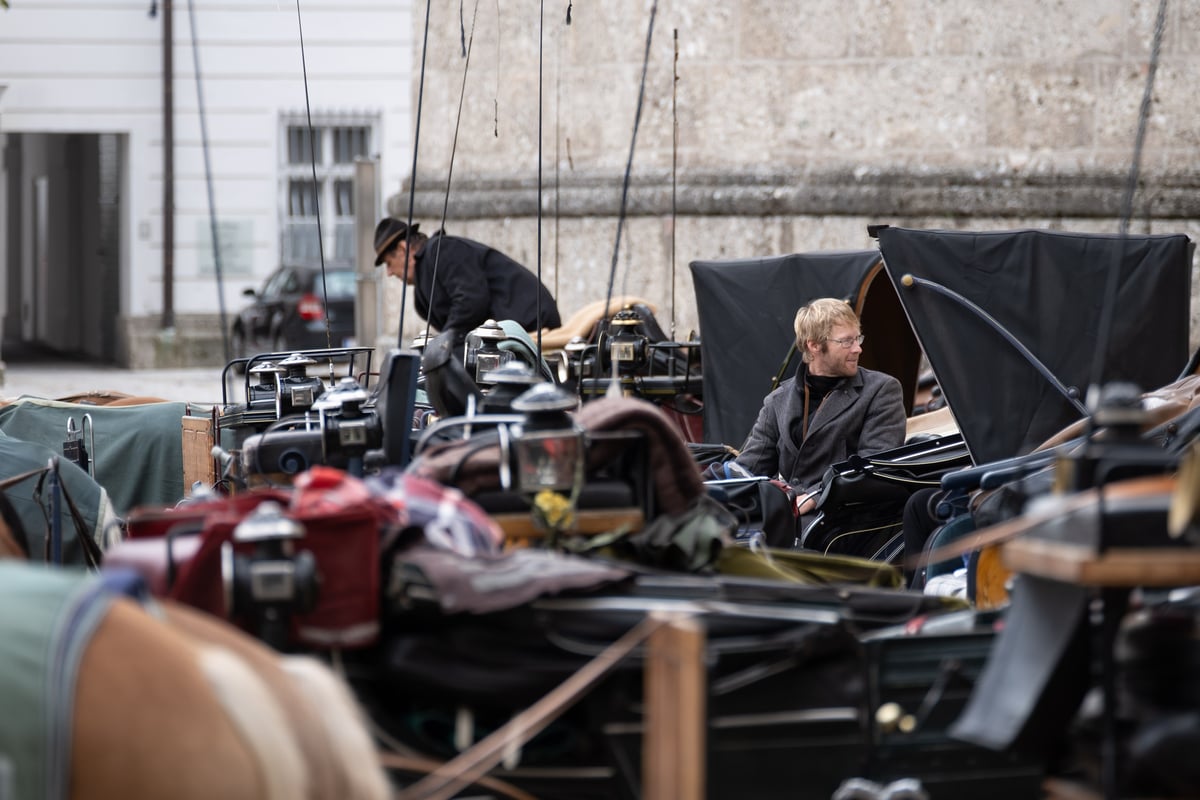
The square directly in front of the Salzburg Cathedral, flanked by the Cathedral arches and the DomQuartier buildings. Site of the famous annual Jedermann performance during the Salzburg Festival.
Director
10 September 1914, Winchester, Indiana, USA - 14 September 2005, Los Angeles, California, USA
Robert Wise directed The Sound of Music (1965) with roughly 70% of the film shot on location in and around Salzburg. That single decision made Salzburg’s landmarks recognisable to hundreds of millions of people who have never visited. The film won Best Picture and Best Director at the Academy Awards, and remains among the highest-grossing films in history when adjusted for inflation.
Wise came to the project with one of the strongest track records in Hollywood. He had edited Citizen Kane under Orson Welles, an experience that gave him a deep understanding of how visual composition could carry narrative. He had directed West Side Story (1961), which won him his first directing Oscar and convinced 20th Century Fox he could be trusted with an expensive, ambitious musical. His reputation was for precision, efficiency, and a calm authority that held large productions together.
The location decision was the one that changed Salzburg. Rather than building the von Trapp villa on a soundstage, Wise brought his crew to Austria and negotiated with city officials for permits to film in the historic centre. The production manager secured access to Mirabell Gardens for the “Do-Re-Mi” sequence, to Domplatz and Nonnberg Abbey for convent scenes, and to the grounds of Schloss Leopoldskron for the lakeside exterior. The church at Mondsee provided the wedding sequence. Helicopter shots captured the Alps. The result was that Salzburg’s baroque skyline became a backdrop embedded permanently in the global imagination.
Julie Andrews described Wise as extraordinarily patient, willing to wait hours at Nonnberg Abbey for the right light. Charmian Carr remembered him revising scripts daily and encouraging improvisation during the gazebo dance. Christopher Plummer noted his “precise yet flexible” direction, though Plummer remained unconvinced that the project was worth the effort. Wise kept the shoot together through weeks of Alpine rain and a production schedule that stretched to 130 days.
He died in Los Angeles in September 2005. His contribution to Salzburg’s identity is embedded in every sound-of-music tour, every photograph taken on the steps of Mirabell Gardens, and every visitor who arrives in the city because they recognise it from a film made sixty years ago.
On the map
The 4 places on this page, where they actually stand.
Locations
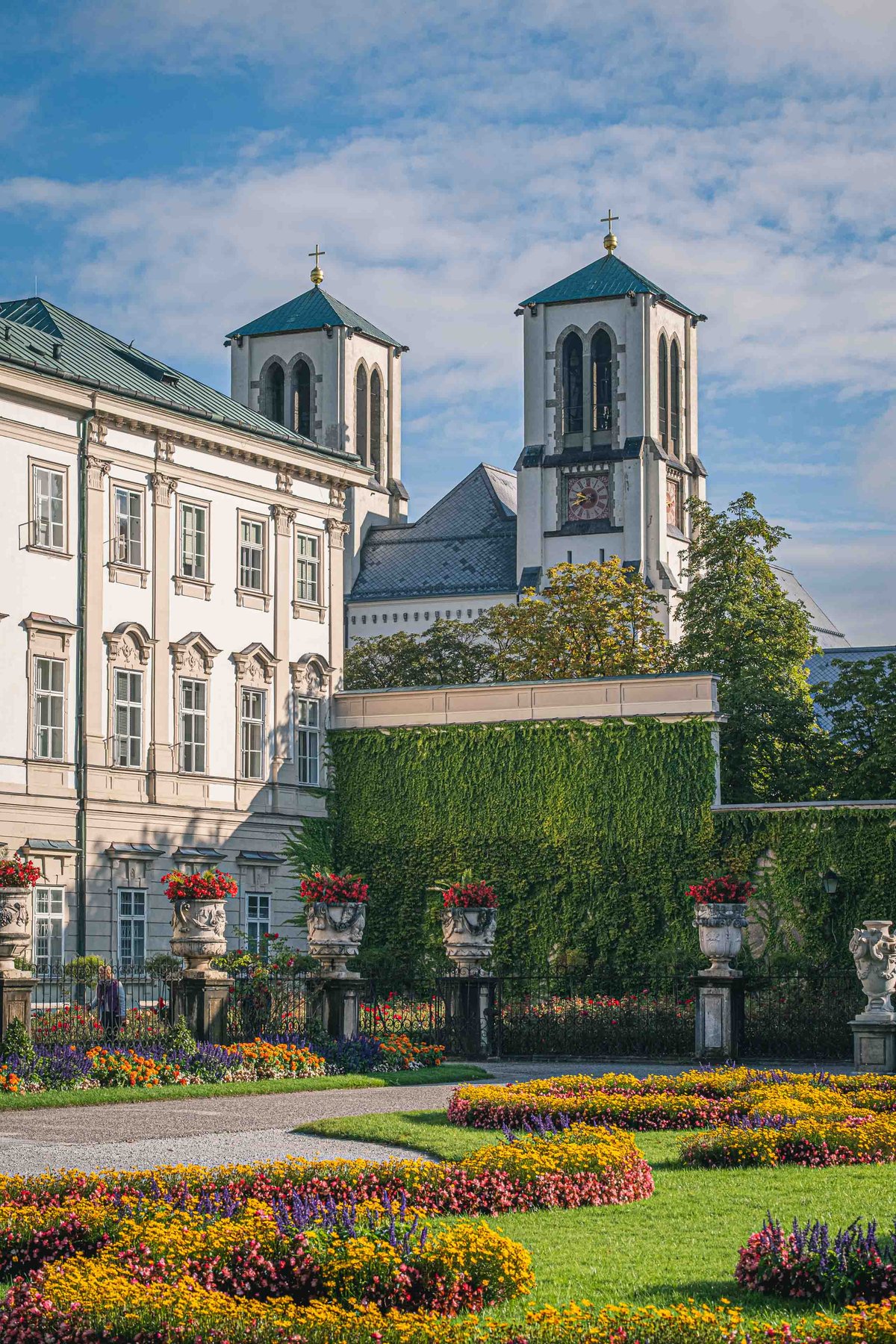
Laid out c. 1730
The formal baroque gardens adjoining Mirabell Palace, freely accessible to all visitors. Franz Anton Danreiter created the definitive layout around 1730. Famous as the location where Julie Andrews performed "Do-Re-Mi" in The Sound of Music. The view toward Hohensalzburg Fortress is one of the most photographed scenes in the city.
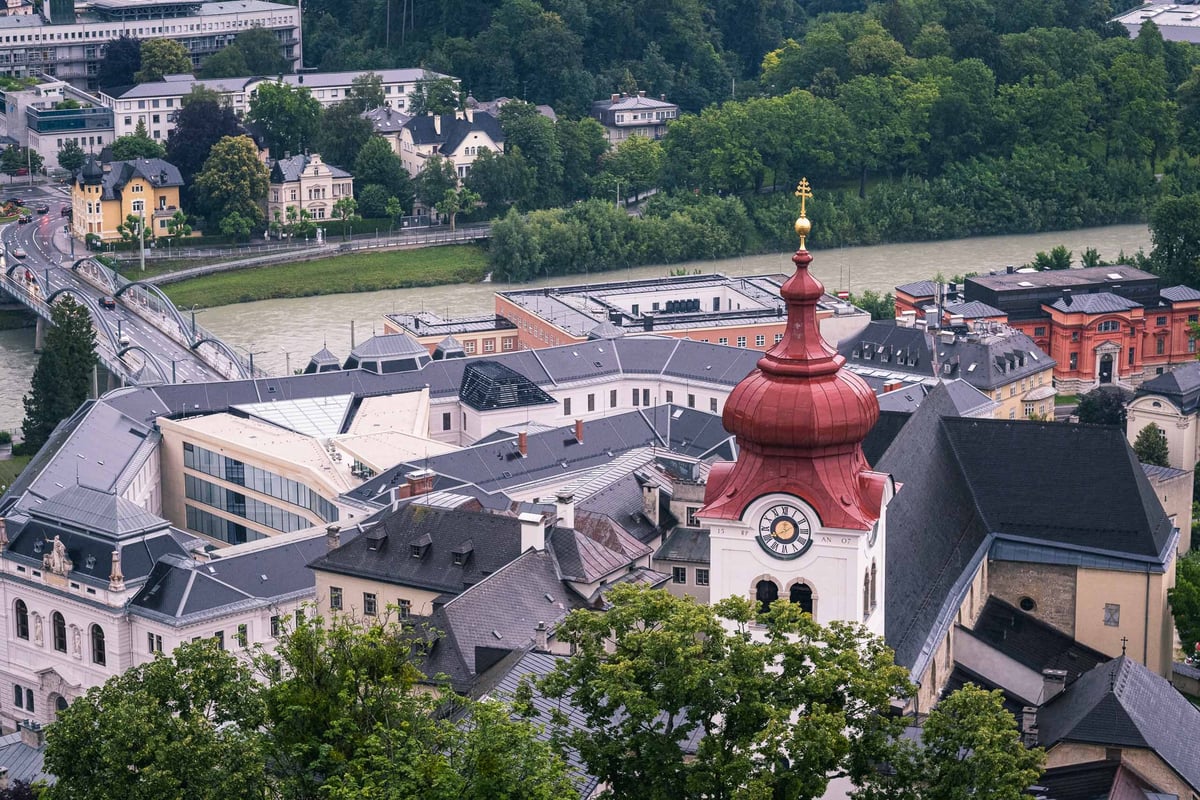
Founded c. 712 AD
Nonnberg Abbey has been a working convent since around 714, making it the oldest continuously operating women's monastery north of the Alps. That is not a tourist claim. The nuns are still there, and they open the church for visitors in the mornings, though the convent itself stays closed.
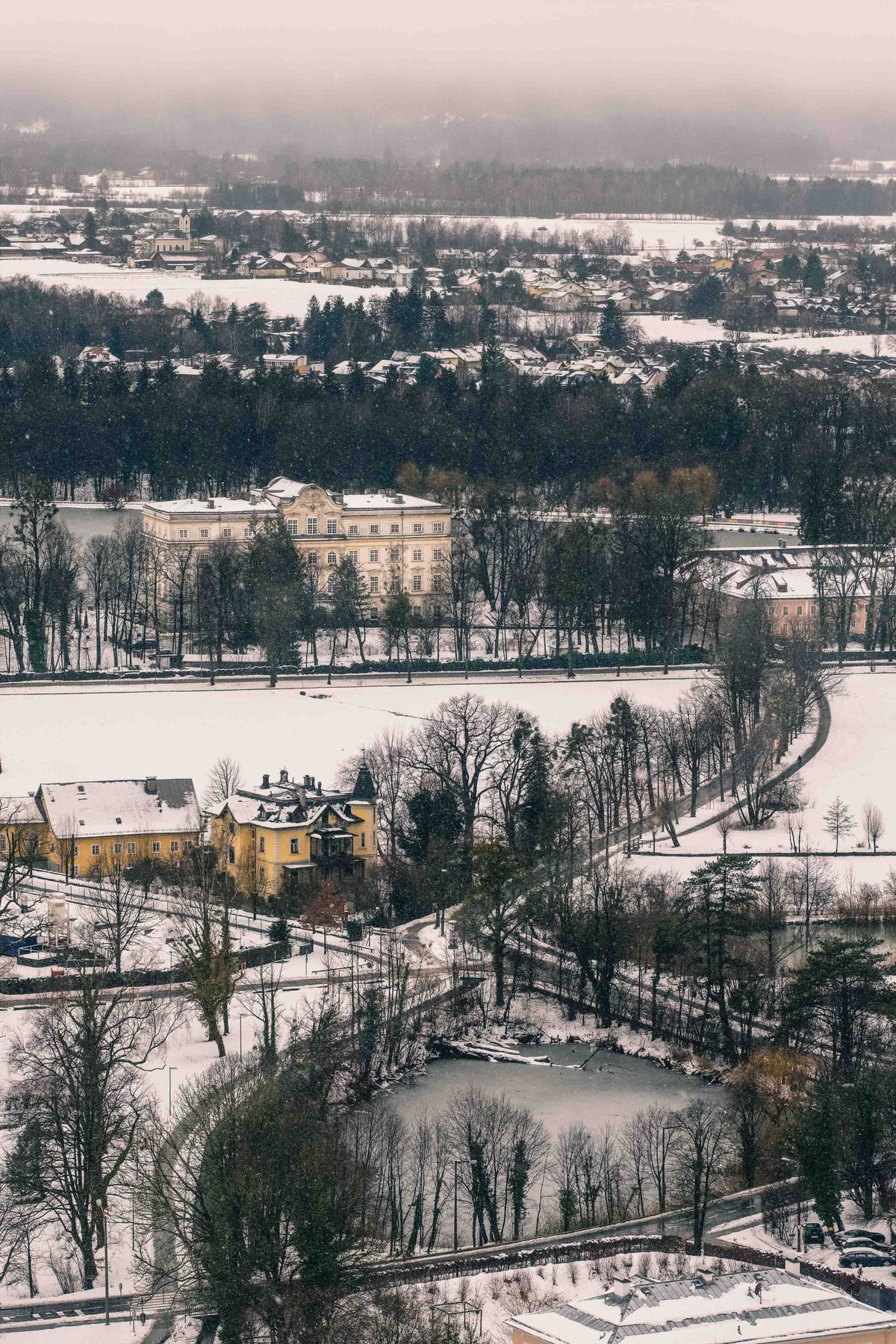
Built 1736
Rococo palace on the shores of Leopoldskroner Weiher, commissioned in 1736 by Archbishop Leopold Anton von Firmian and purchased by theatre director Max Reinhardt in 1918. Reinhardt turned it into the creative headquarters of the early Salzburg Festival and his own artistic home. The Nazis confiscated it in 1938 after Reinhardt fled.