
Museum
Rupertinum
Show all 8 photos
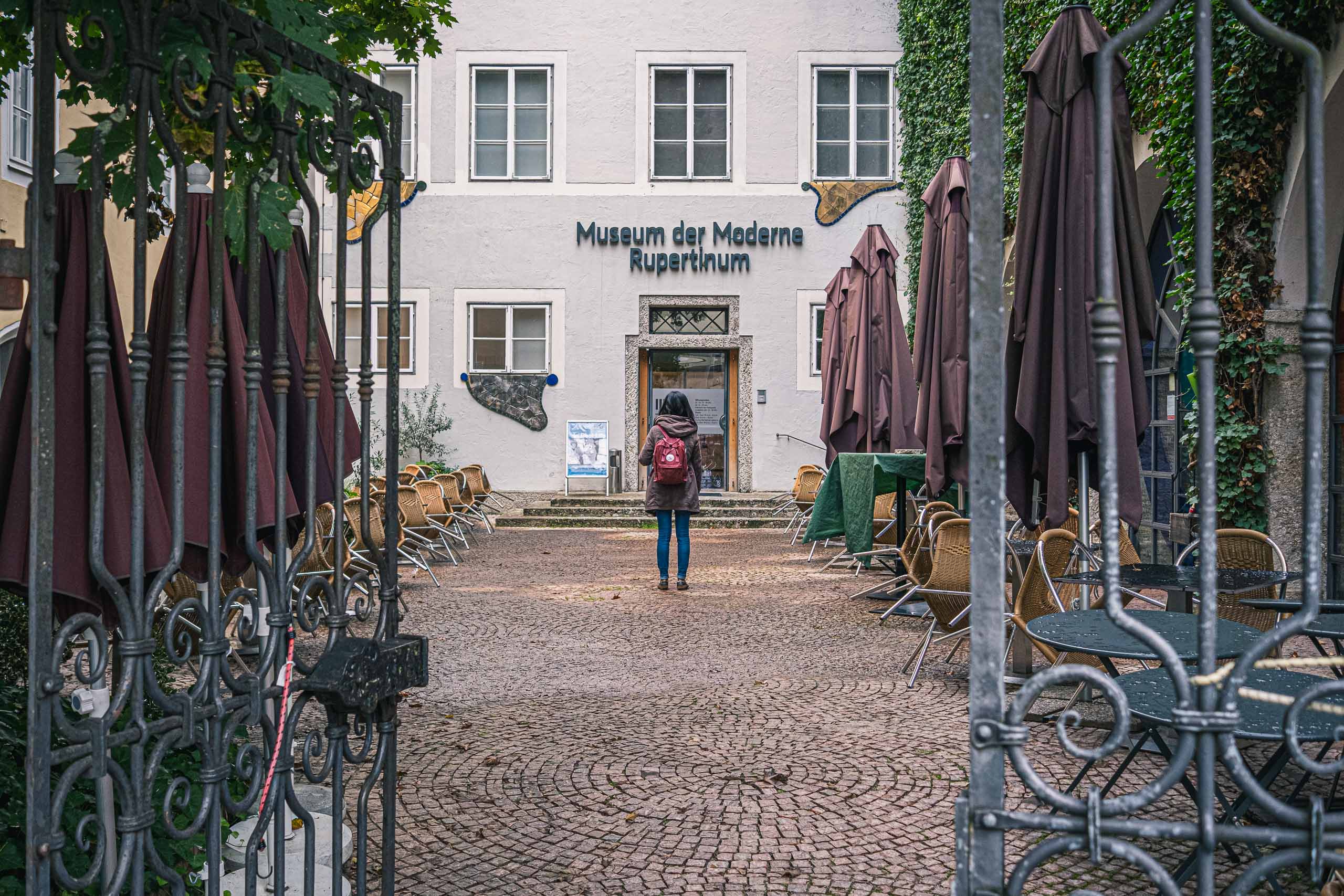
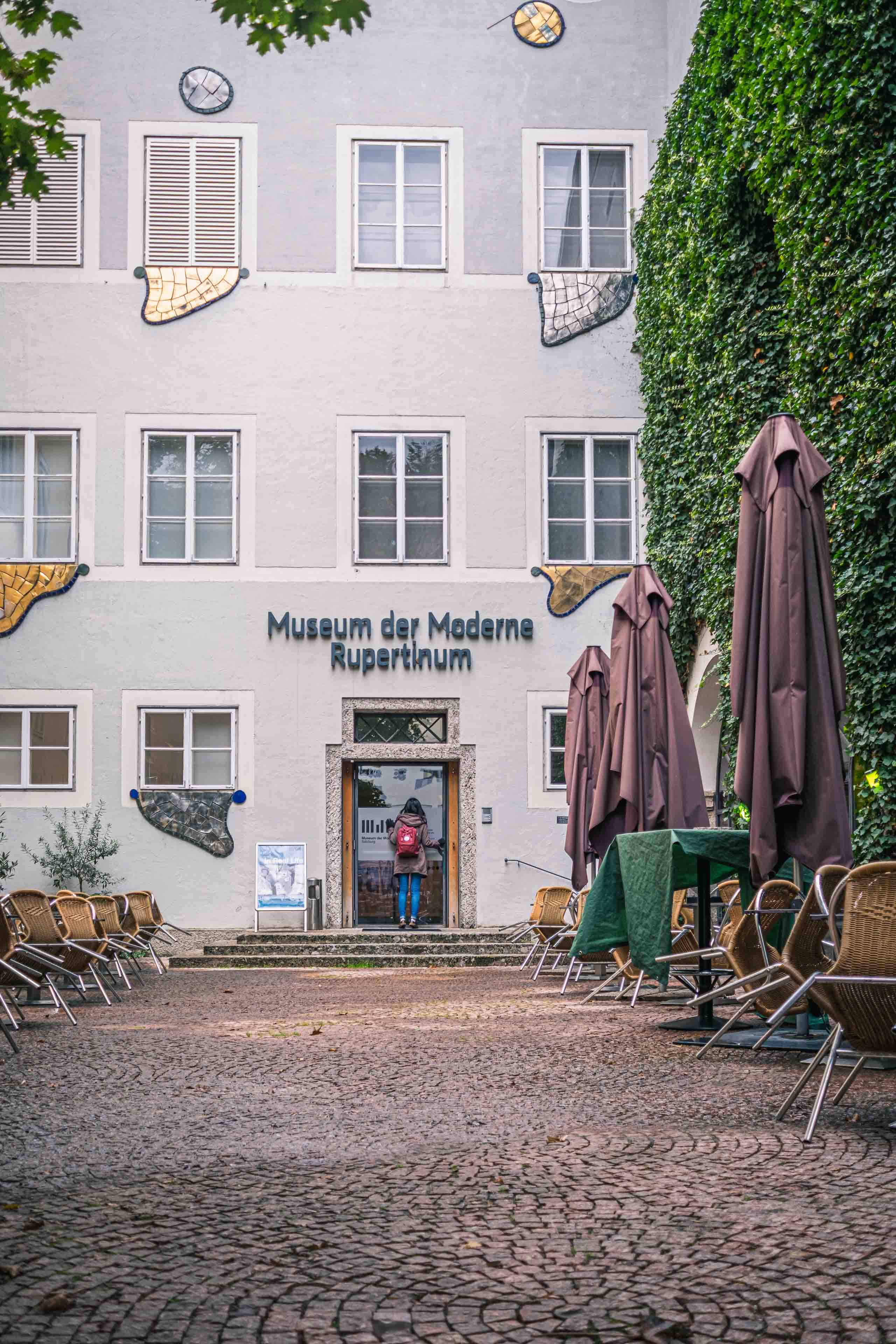
- View through an iron gate toward the Museum der Moderne Rupertinum entrance with cafe chairs in Salzburg old town. (1 / 8)
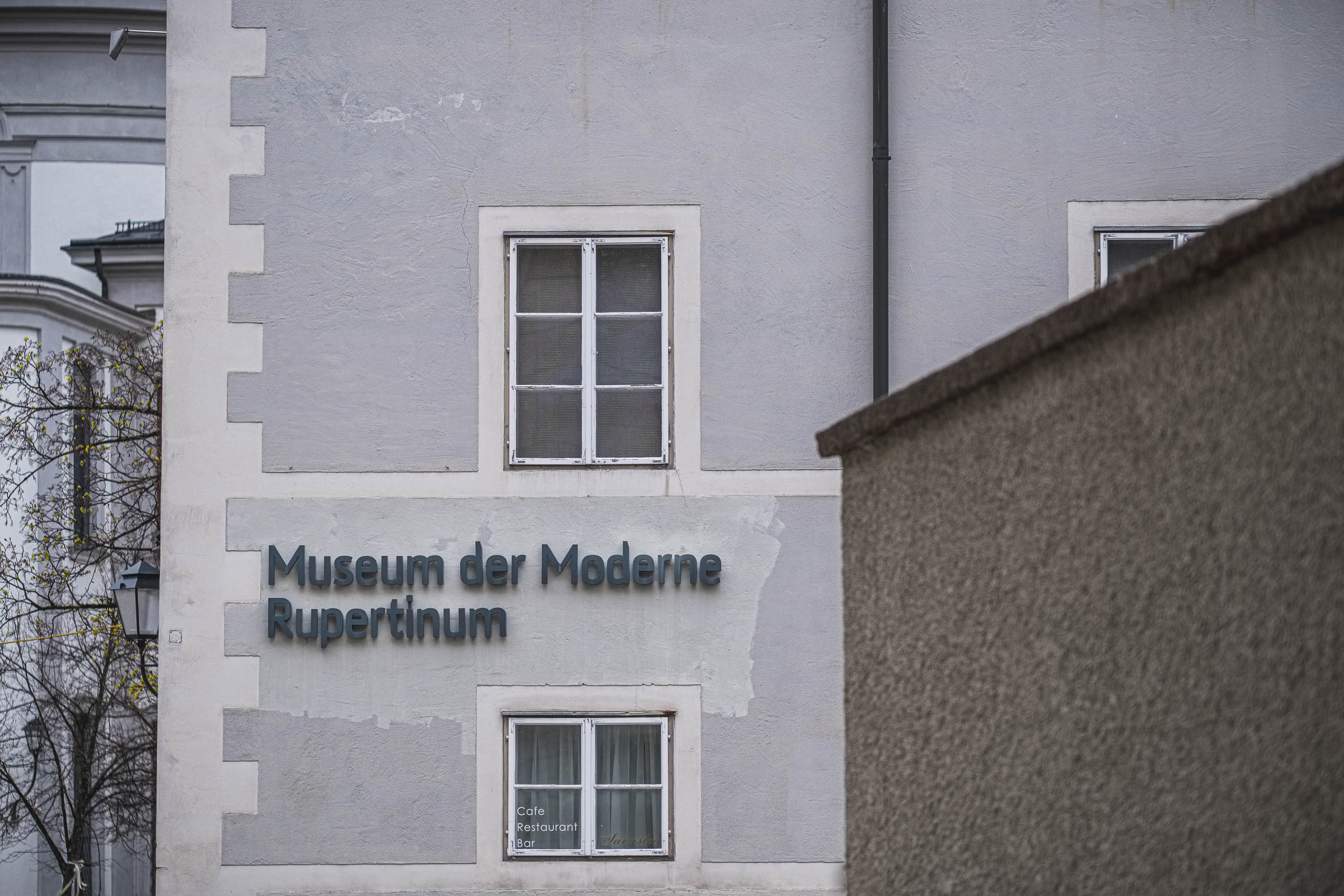
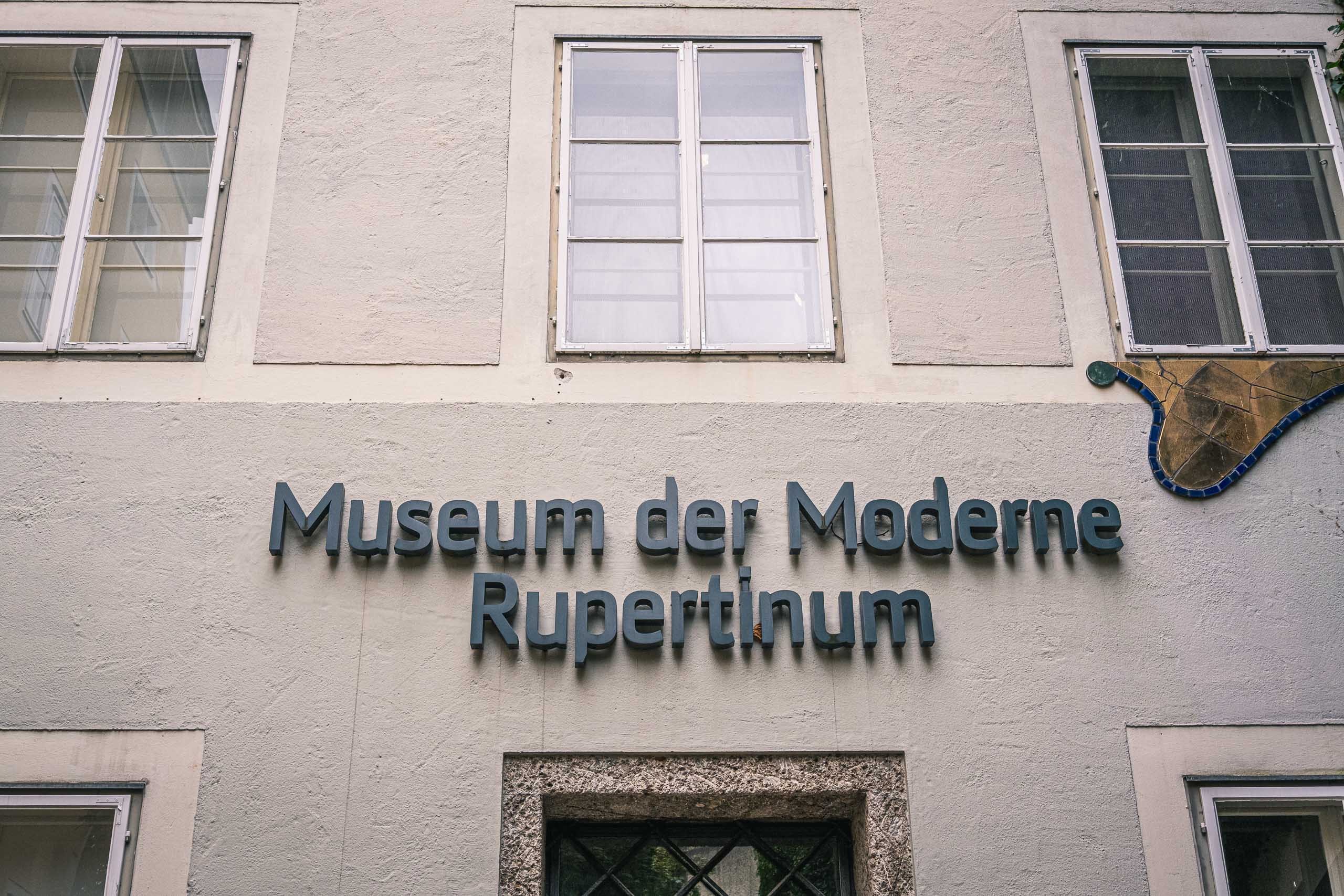
- Facade signage of Museum der Moderne Rupertinum in Salzburg old town (2 / 8)
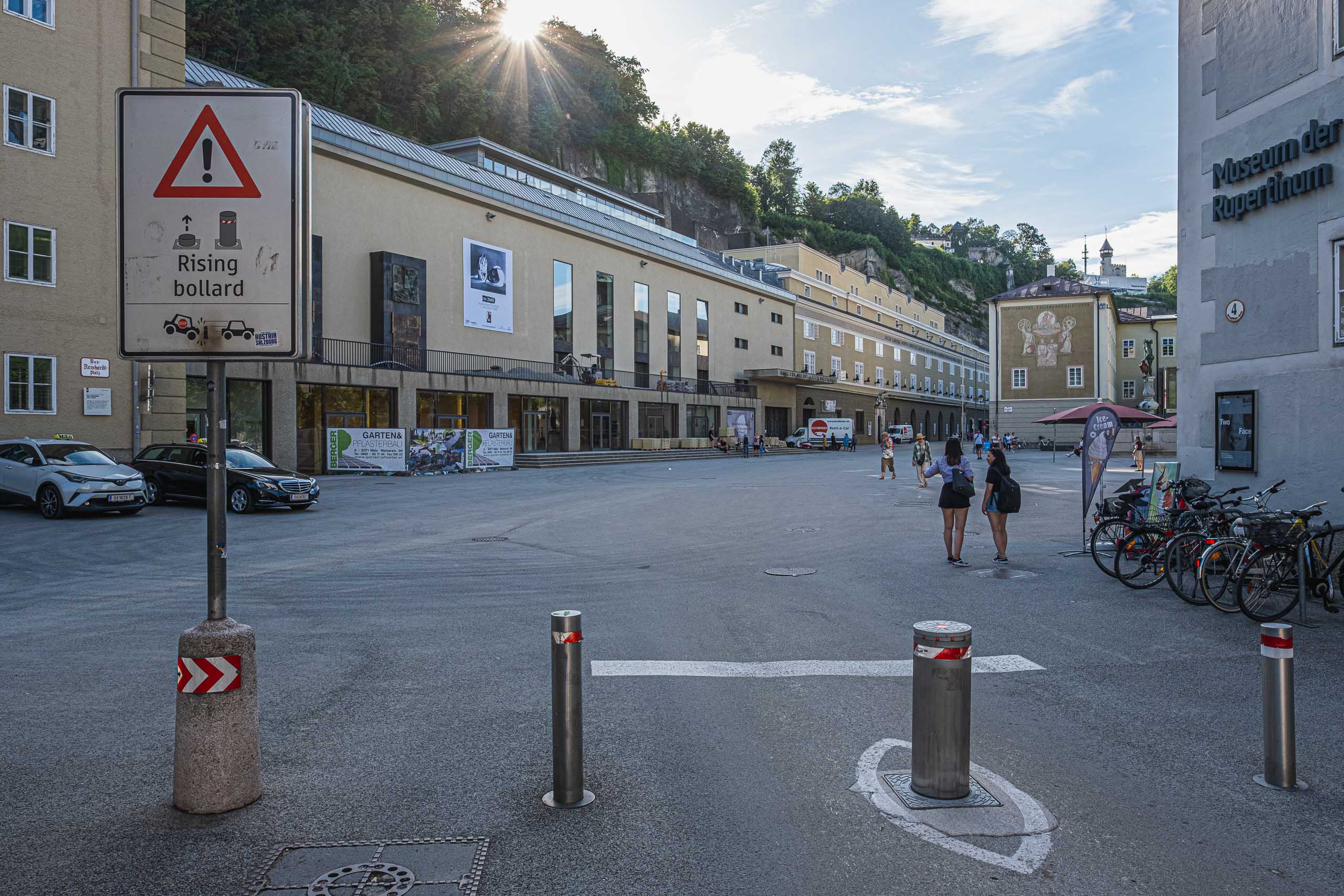
- Museum der Moderne Rupertinum sign at Festspielbezirk plaza with Moenchsberg cliff in Salzburg. (3 / 8)
- Ivy-covered wall beside the Museum der Moderne Rupertinum entrance in Salzburg old town. (4 / 8)
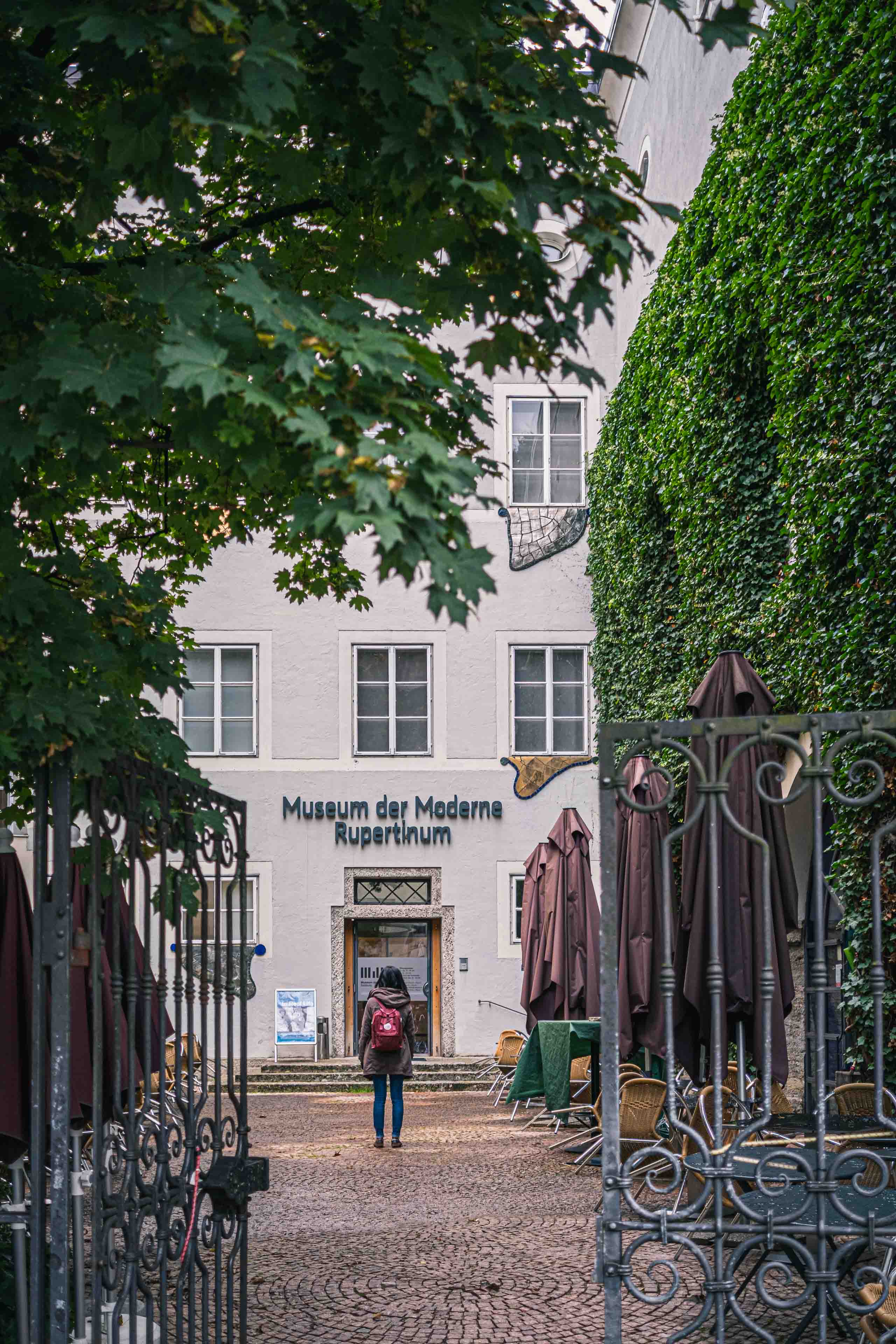
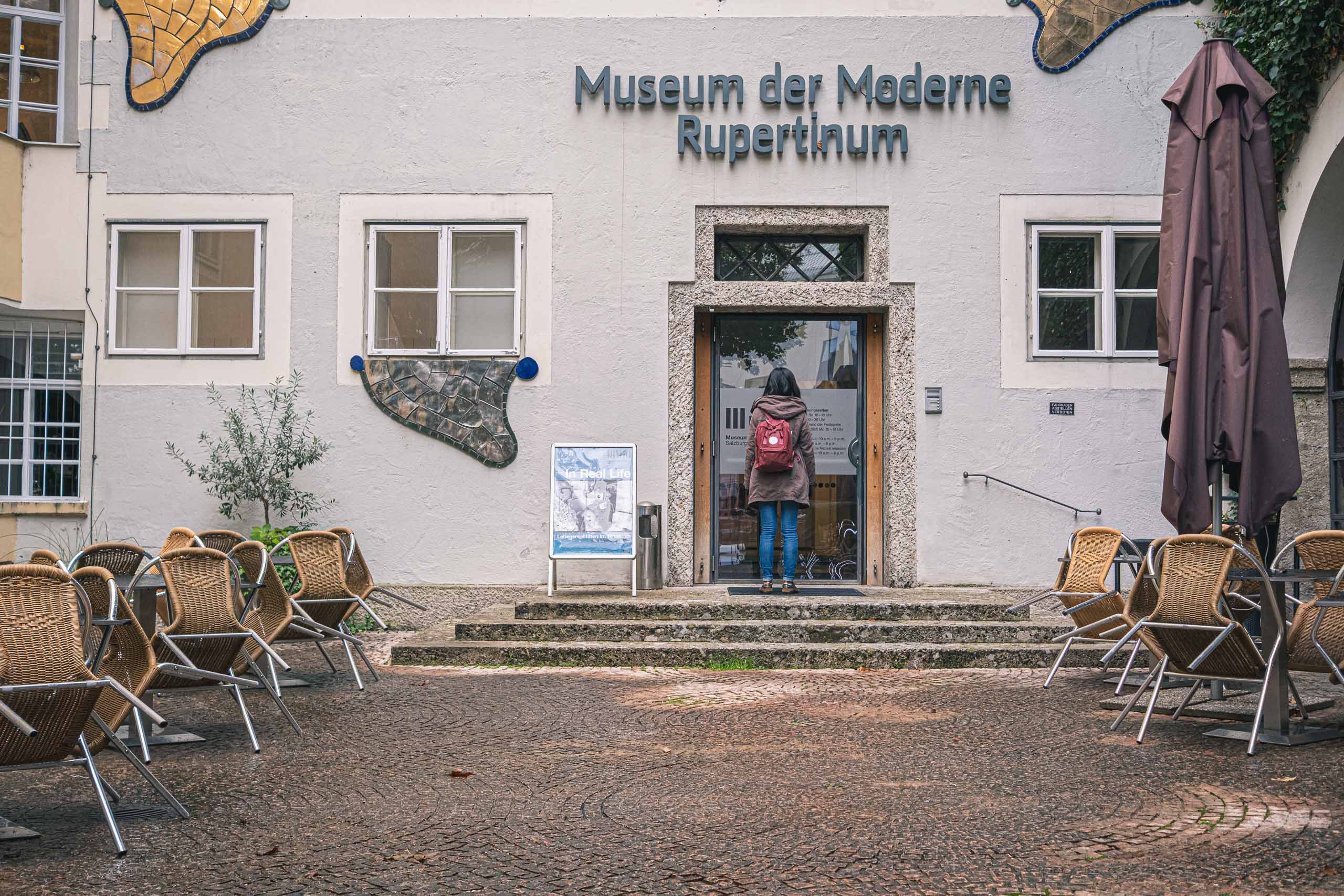
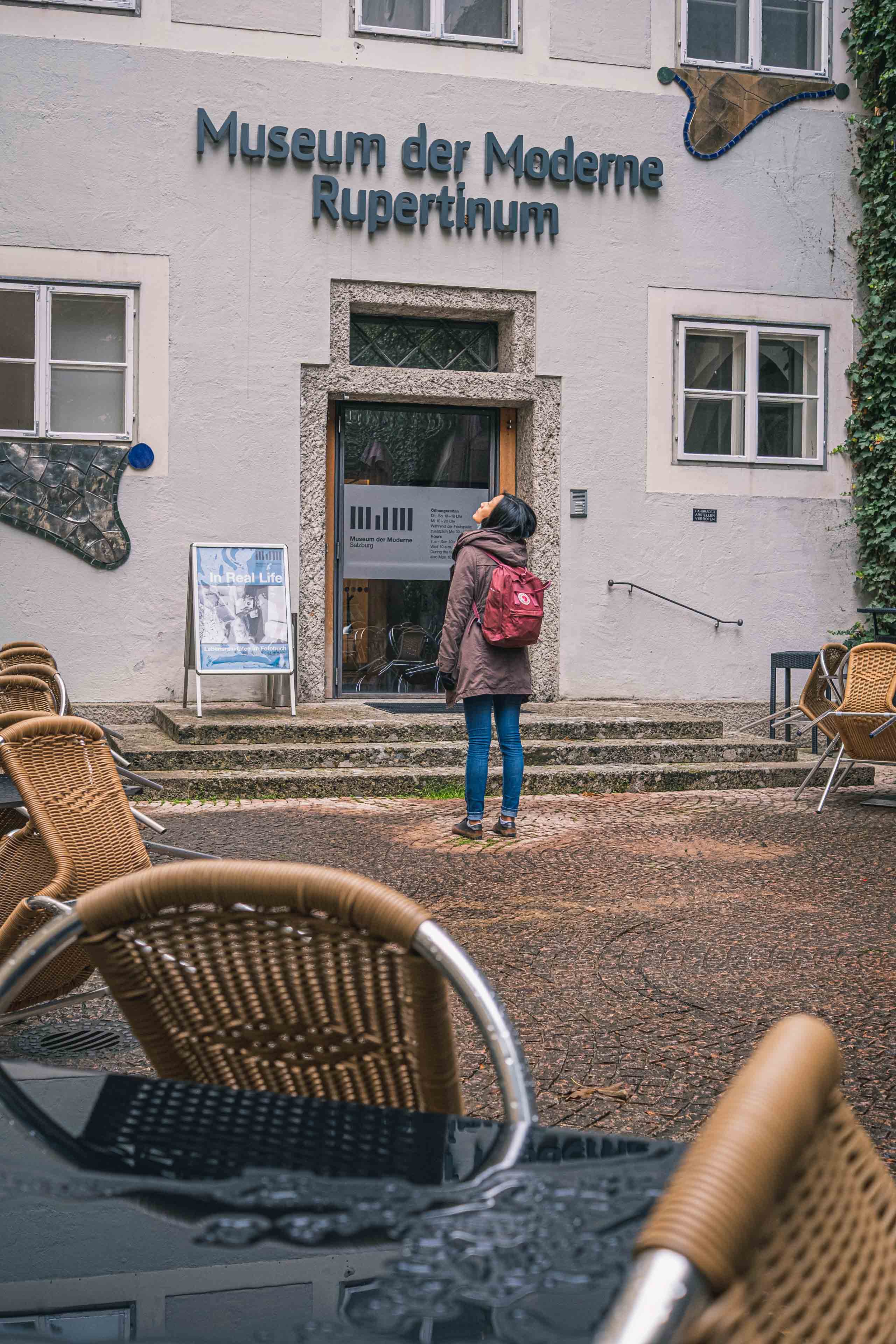
- A visitor enters the Museum der Moderne Rupertinum past empty cafe seating in Salzburg old town. (5 / 8)
- Front facade of the Museum der Moderne Rupertinum with entrance and signage in Salzburg old town. (6 / 8)
- Woman in red backpack approaches the Museum der Moderne Rupertinum entrance framed by cafe chairs in Salzburg. (7 / 8)
- Close-up of the Museum der Moderne Rupertinum blue signage on the baroque facade in Salzburg old town. (8 / 8)
Snapshot
A 17th-century Baroque seminary, turned seminary dormitory in the 1970s, then converted into a museum in 1983: the Rupertinum’s collection of prints, drawings, and photographs is built on one of the most significant donations in Austrian art history, a trove that included Kokoschka’s complete graphic oeuvre and hundreds of Schiele and Klimt drawings.
The Story
In 1633, Prince-Archbishop Paris Lodron commissioned the Collegium Rupertinum as a Counter-Reformation seminary, rising on the edge of the Altstadt between the Franciscan Church and the Collegiate Church. For three centuries it trained priests and housed students. By 1974 it was a dormitory for high-school and university students. In 1976 the province of Salzburg took ownership and began thinking about what else it could become.
The answer came from art dealer Friedrich Welz, who donated approximately 200 works to the province in 1979 on the condition that a museum be created to house them. The Welz collection was extraordinary: it included Oskar Kokoschka’s complete graphic oeuvre (a rarity impossible to replicate), 13 of Max Klinger’s 14 print portfolios, 450 Alfred Kubin prints, drawings by Klimt and Schiele, and works by Paul Klee and Ernst Kirchner. The collection’s provenance is not uncomplicated: Welz had acquired some works from a Jewish collector in 1939-40, and the province later addressed this through formal restitution proceedings that continued into the 2020s.
Architect Gerhard Garstenauer converted the seminary in 1983, keeping the original sandstone arches and inserting a glass-roofed atrium that flooded the central gallery with diffused daylight. The building opened under director Otto Breicha, who added a dedicated photography wing, established the biennial photography prize, and insisted on a curatorial identity built around works on paper rather than painting. By the time the Rupertinum was absorbed into the Museum der Moderne Monchsberg system in 2004, it had a graphic and photographic collection of over 31,000 pieces.
Today it functions as the city-centre counterpart to the Museum der Moderne Mönchsberg on the cliff above. The focus remains on prints, drawings, watercolours, and photography from the 20th and 21st centuries. Exhibitions rotate. The 17th-century stone arches frame the display cases throughout.
Visiting
The Rupertinum is at Wiener-Philharmoniker-Gasse 9 in the Altstadt, a three-minute walk from the Grosses Festspielhaus and the Felsenreitschule. Open Tue-Sun 10am-6pm, Wed until 8pm; closed Mondays. Admission EUR 10 for adults; a combo ticket with the Mönchsberg venue is available. No booking required. The 220GRAD café is inside the courtyard. Combine with the Grosses Festspielhaus and Kollegienkirche on the same Altstadt walk.