Snapshot
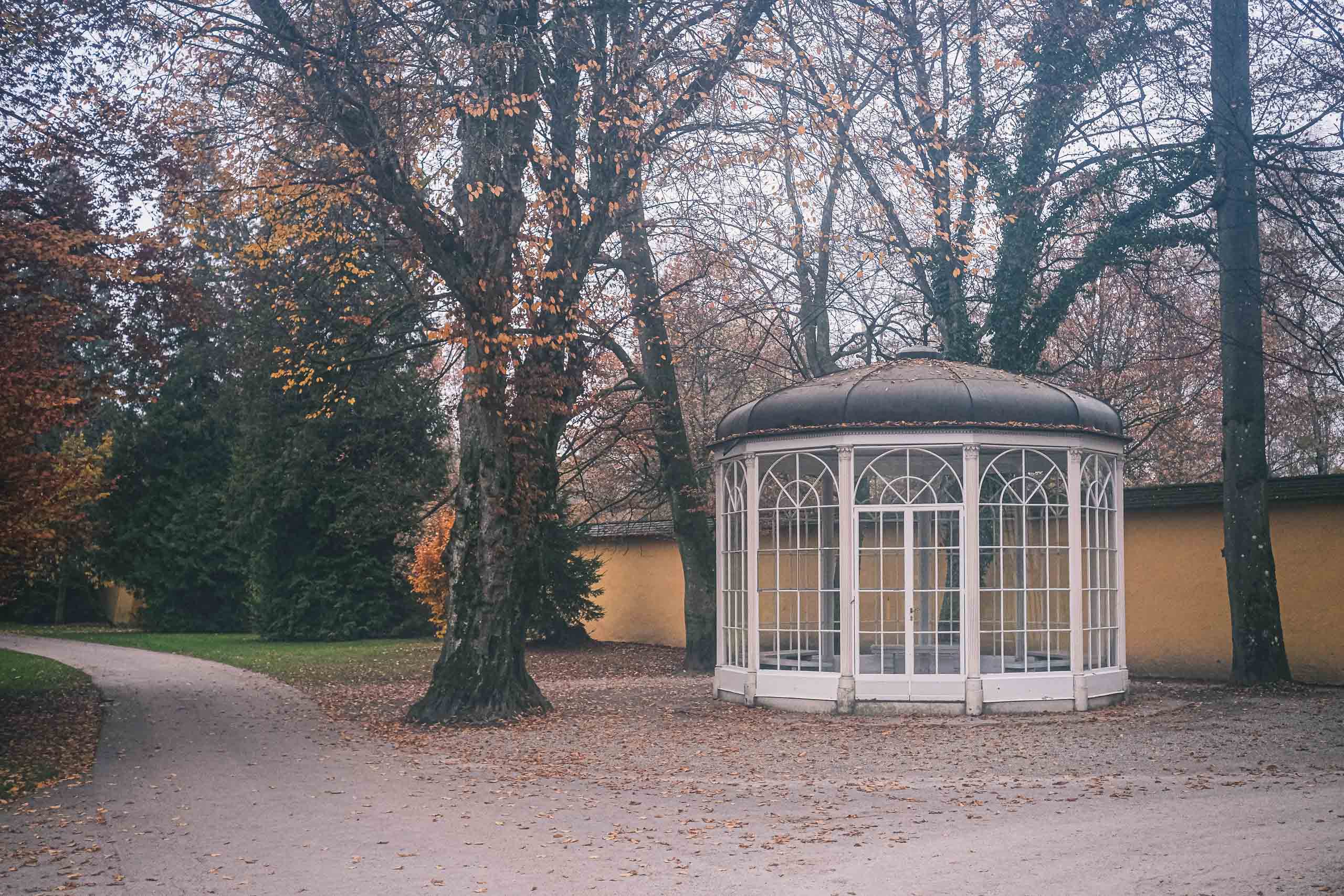
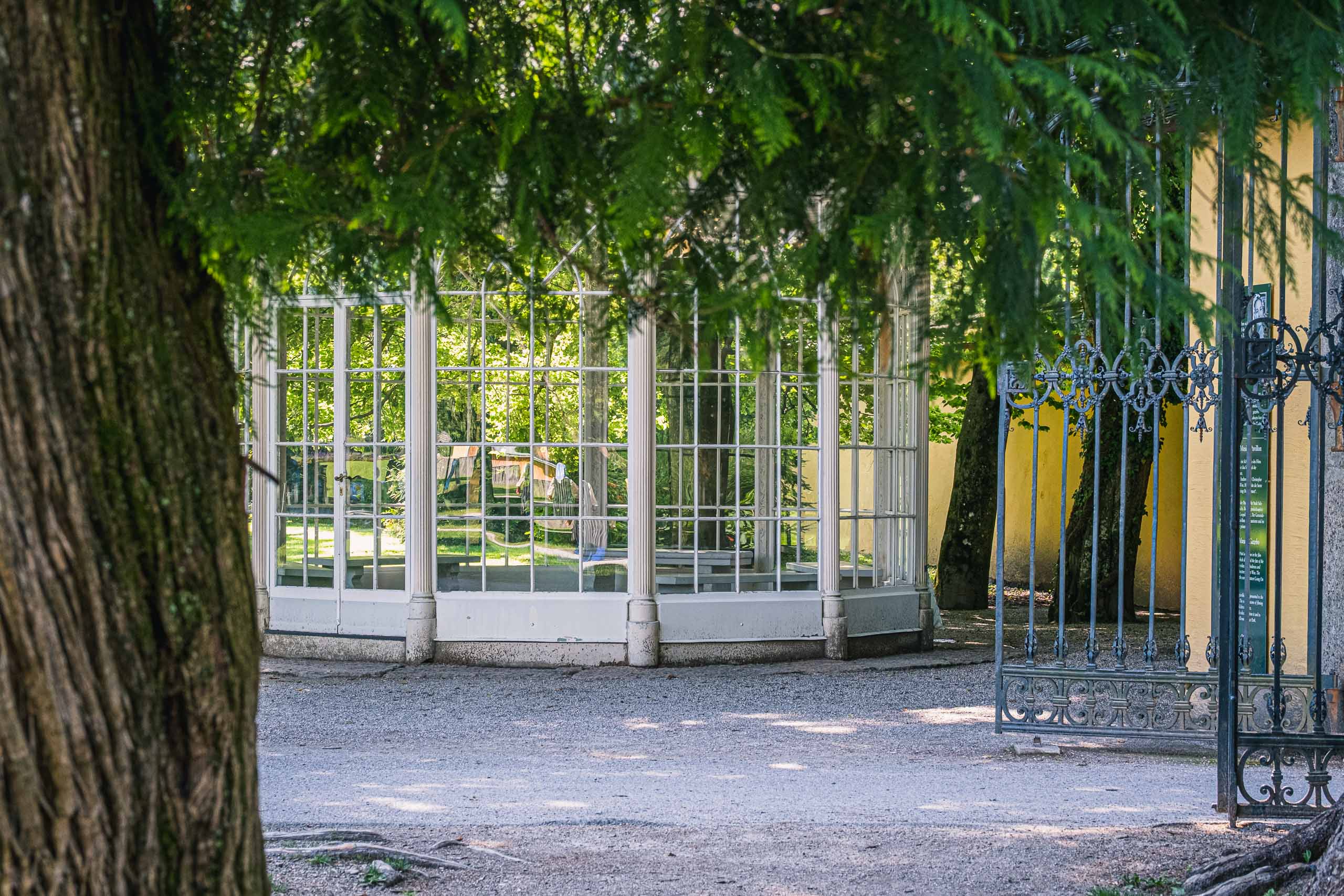
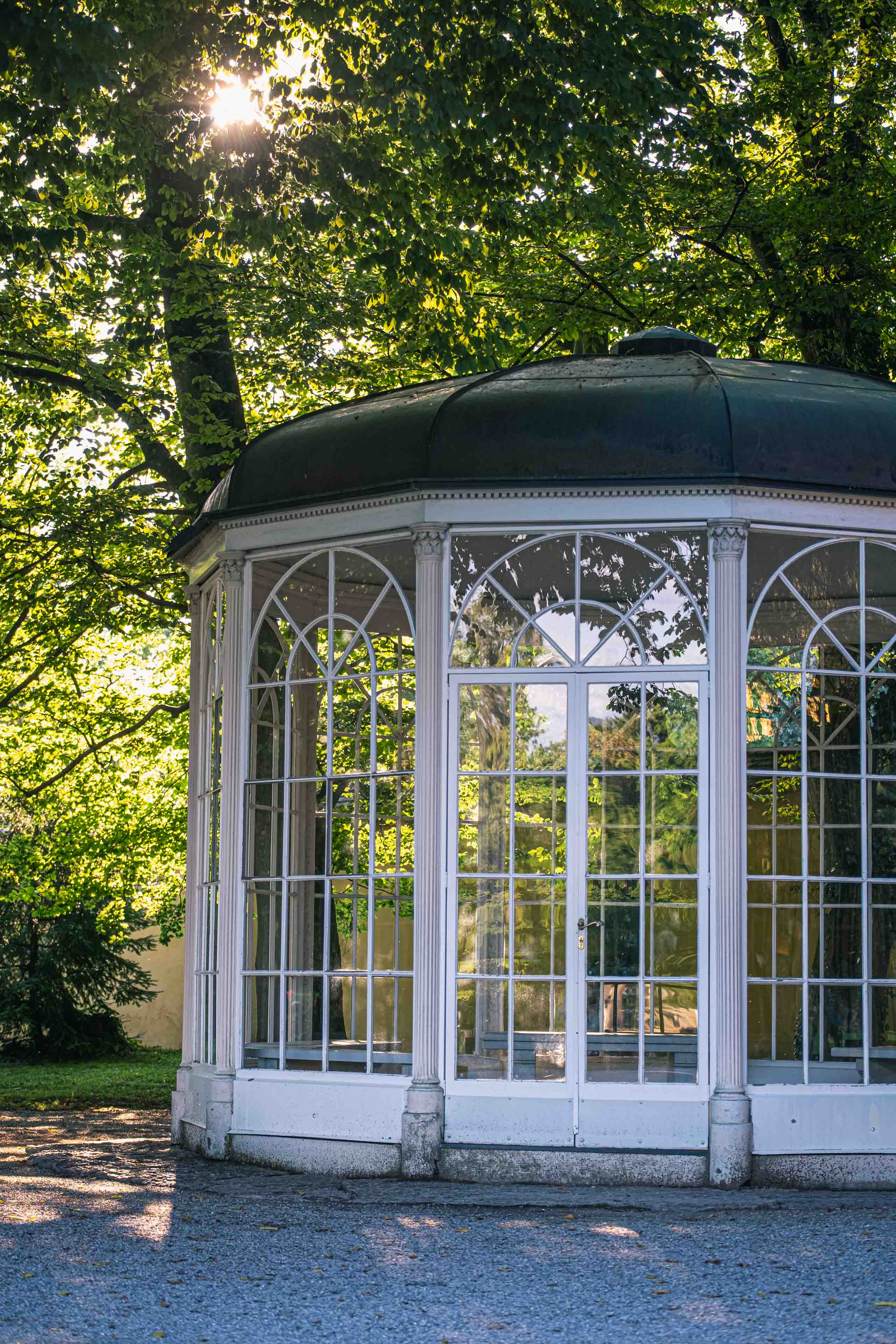
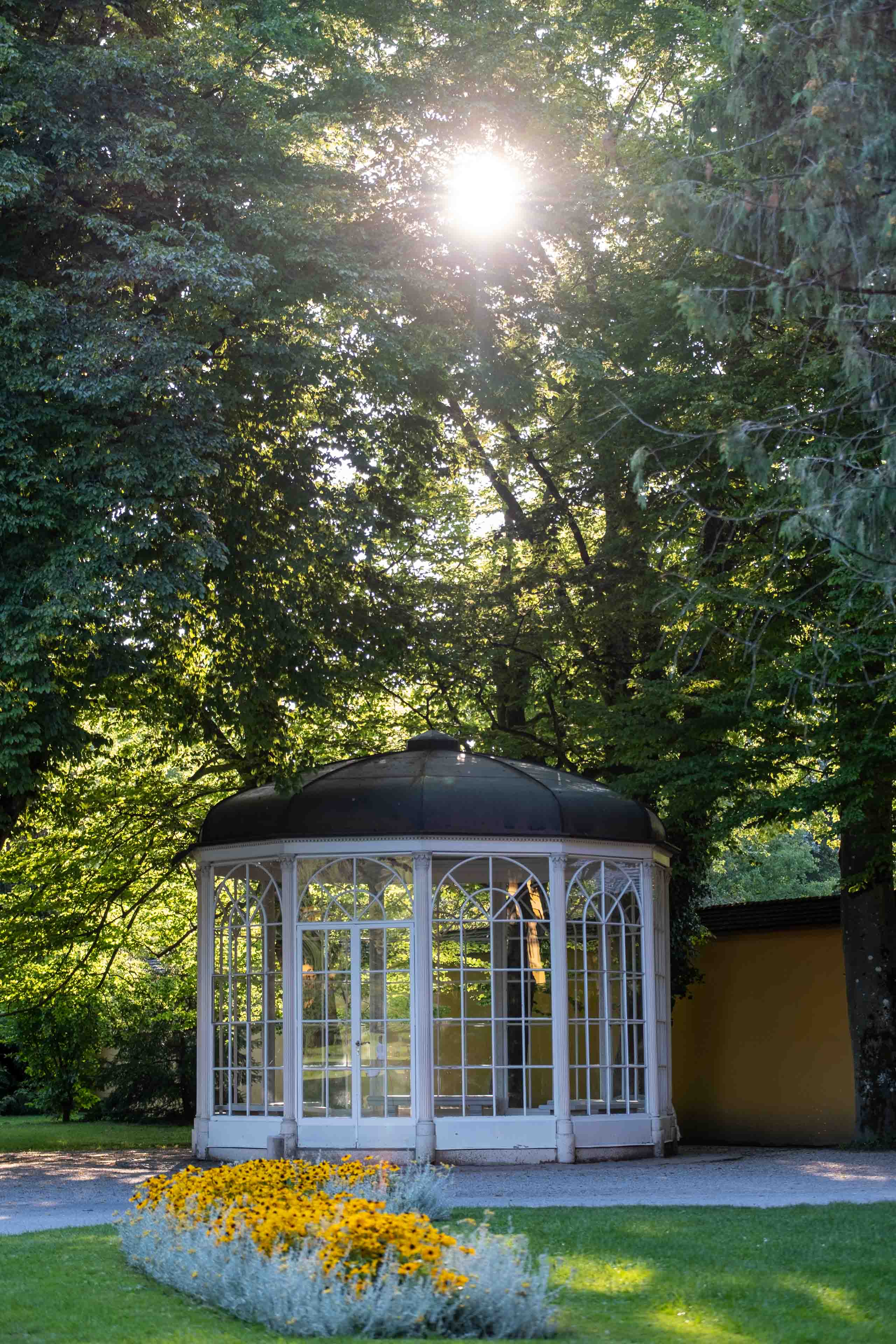
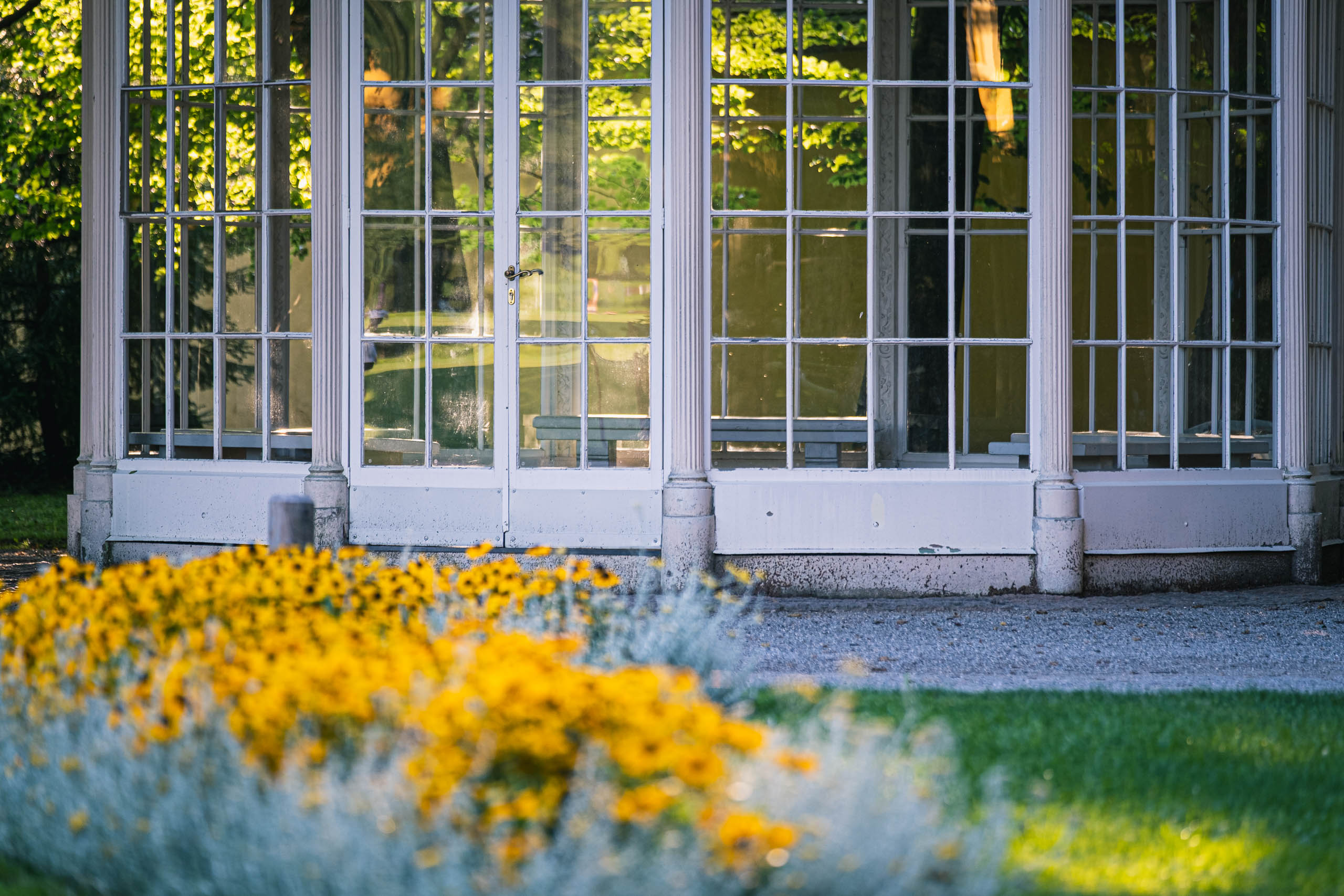
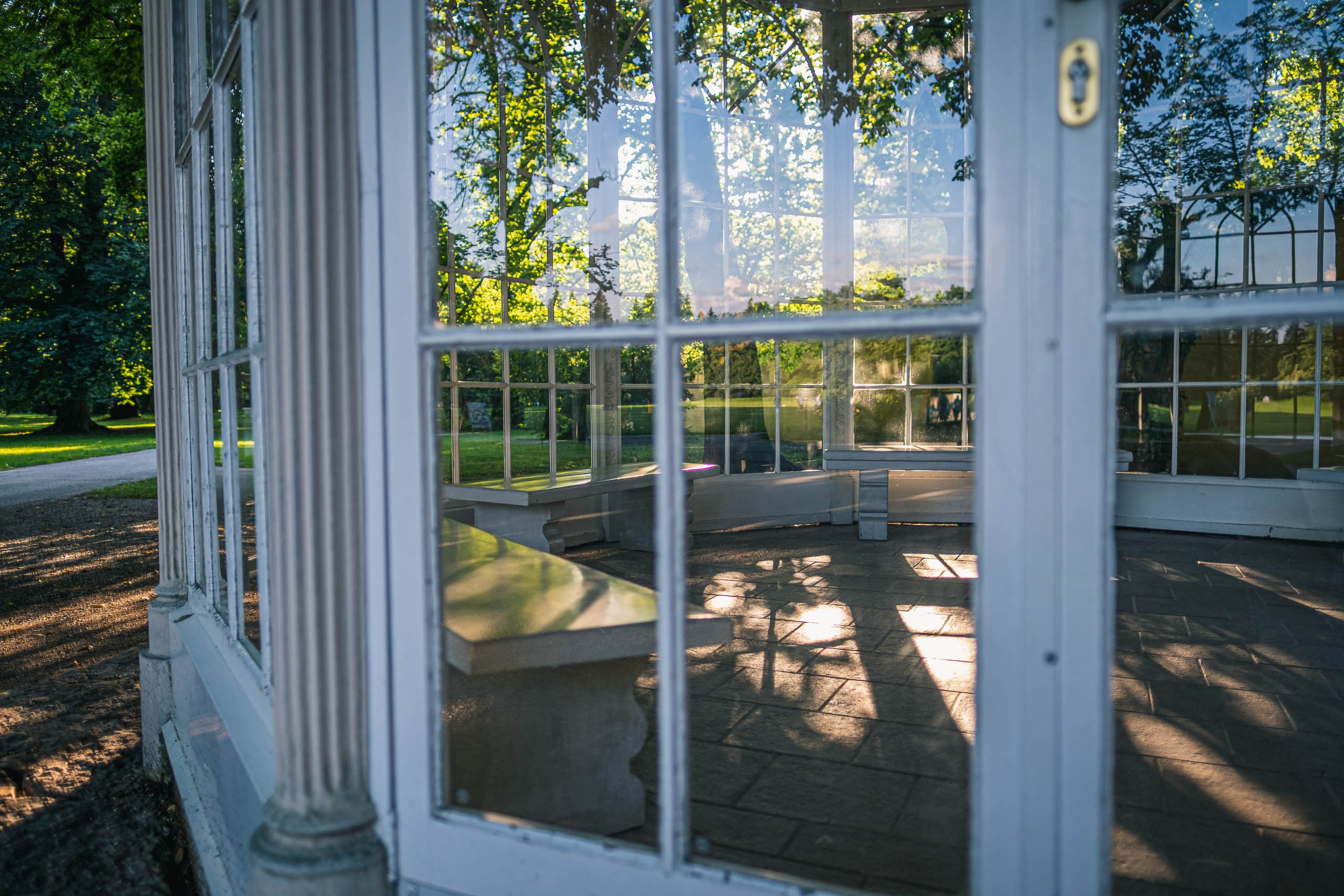
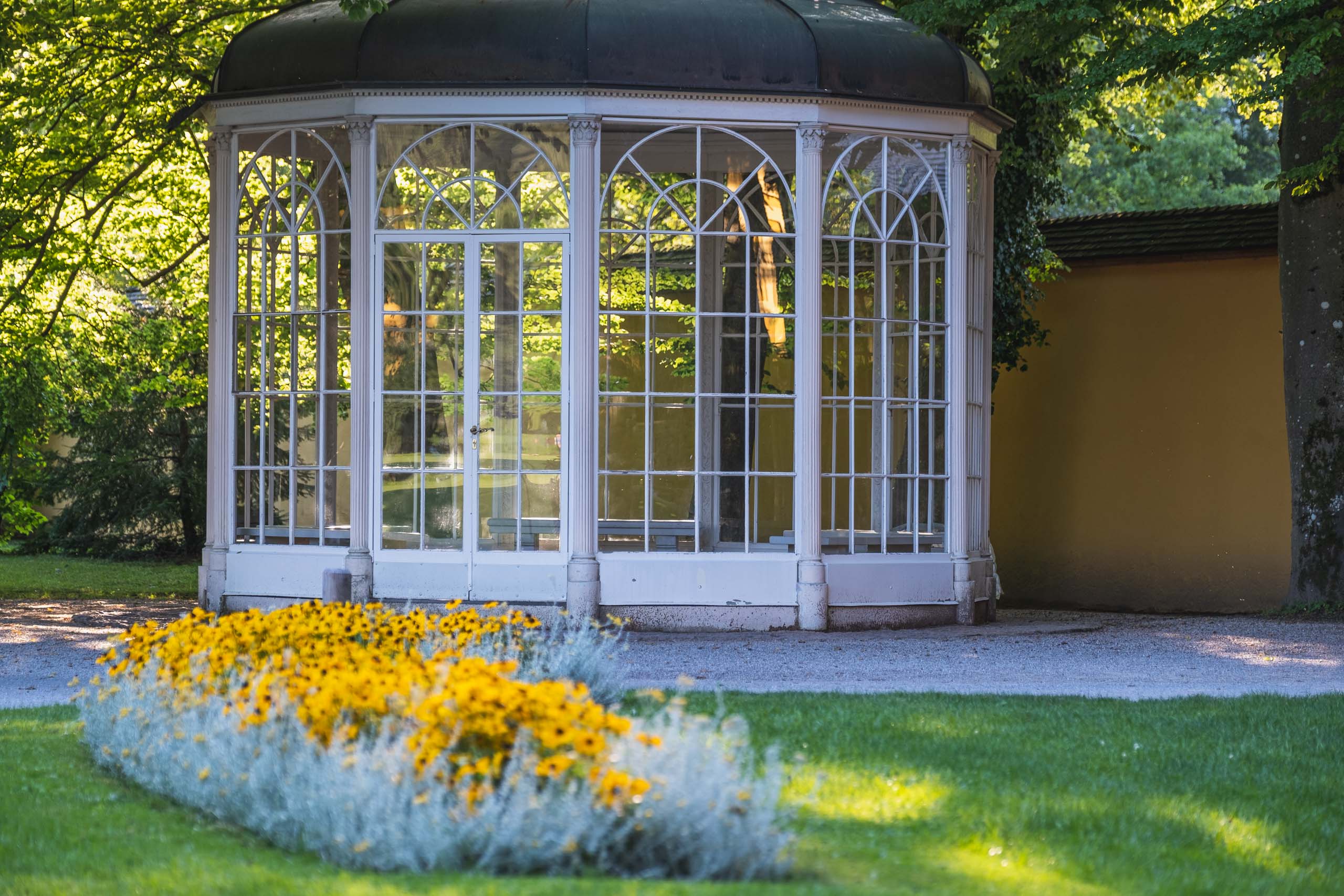
The white octagonal gazebo where Charmian Carr danced in the rain as Liesl in The Sound of Music. The pavilion now sits at Hellbrunn, enclosed behind a low fence, freely viewable and endlessly photographed. One of the most visited film sites in Europe, built originally as a movie prop.
The Story
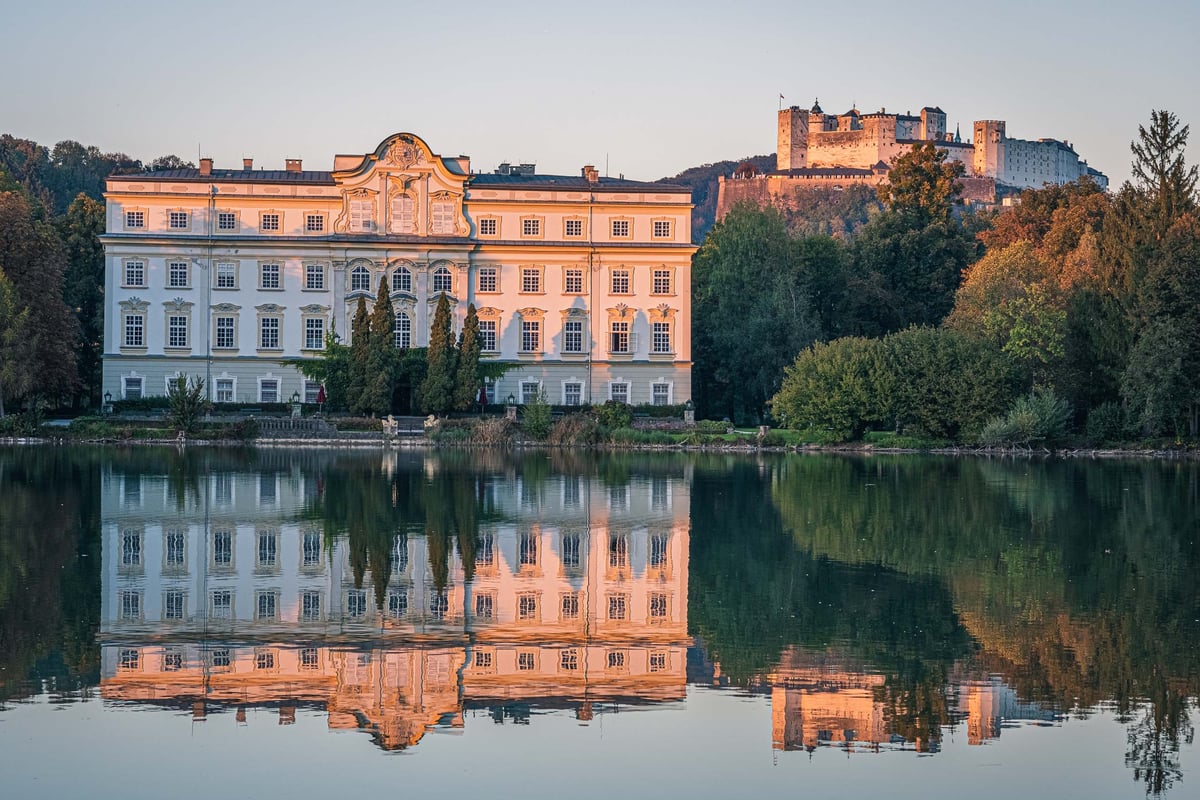
The pavilion was purpose-built in 1964 as a film set. It was never a historic garden structure. Robert Wise’s production team needed an octagonal gazebo to match the Baroque garden aesthetic of Schloss Leopoldskron, where the exterior lake shots were filmed, and they constructed one for the scene in which Charmian Carr and Daniel Truhitte performed “Sixteen Going on Seventeen.”
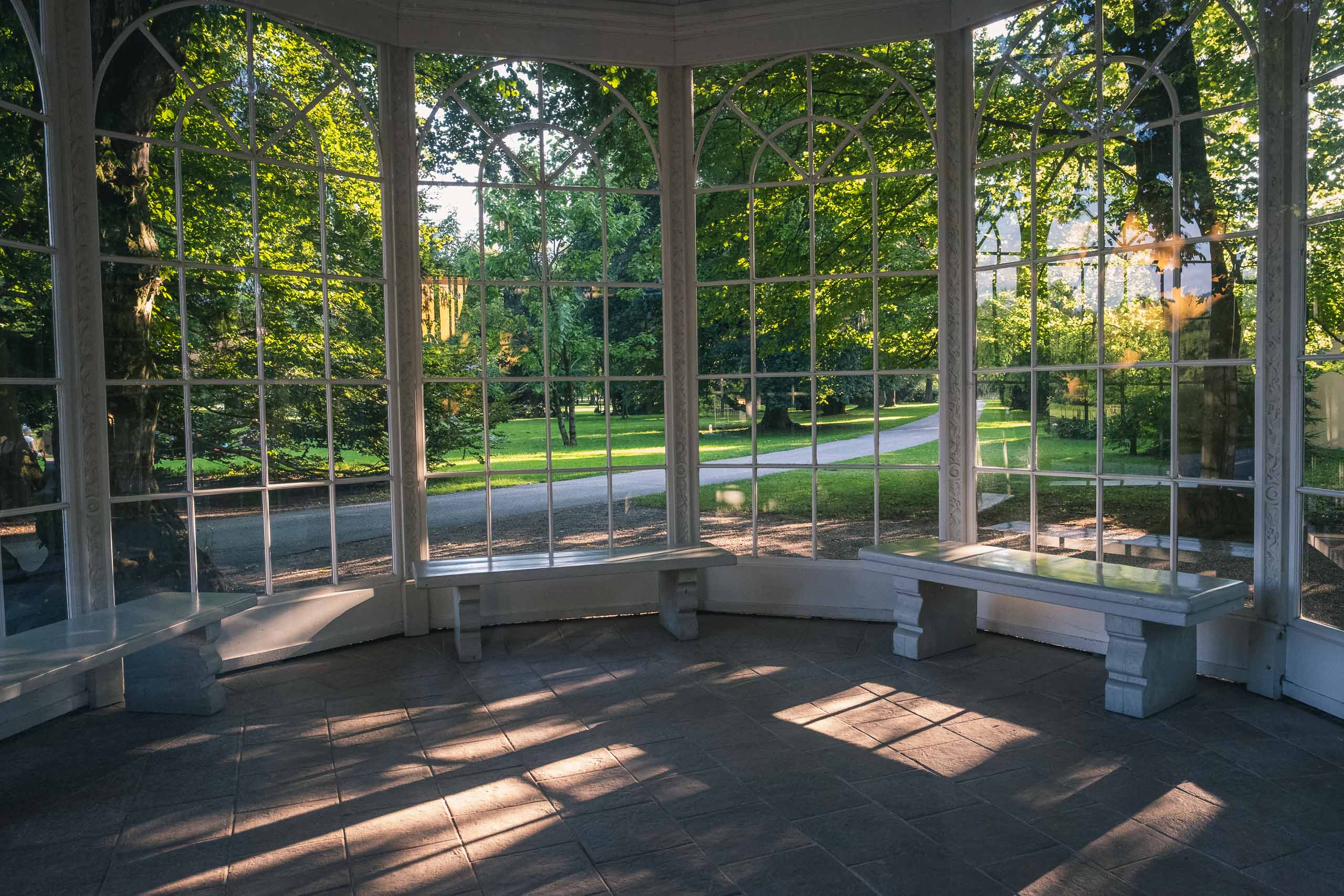
What most visitors do not know is that the famous spinning sequence was not filmed here. A larger replica was built at Fox Studios in Hollywood, expanded so that camera rigs and lighting equipment could fit inside alongside the actors. Charmian Carr reportedly twisted her ankle on the original Salzburg steps during early rehearsals, which may have accelerated the decision to use the Hollywood stage for the dance itself.
After the film’s release in 1965, tourists swarmed the private grounds of Schloss Leopoldskron to reach the original pavilion. The estate’s owners, who operated it as a private hotel and event venue, eventually demanded the structure be removed. The city relocated it to Hellbrunn in the early 1970s, placing it on publicly accessible land where it could be viewed without trespassing.
The fence around the pavilion came later, installed after multiple visitors broke ankles attempting to recreate Liesl’s dance on the circular bench inside. The fence closes off the interior but leaves the pavilion fully visible and photographable from close range. Thousands still make the pilgrimage each year, which says something particular about what cinema can do to a place.
Visiting
Inside the Hellbrunn palace grounds, near the eastern entrance. Free to view; no separate admission. The palace grounds themselves require a ticket if you wish to visit the Wasserspiele and interiors (roughly EUR 12 for adults). Bus 25 from the Altstadt takes approximately 15 minutes. The pavilion visit takes only a few minutes but pairs naturally with a full Hellbrunn visit. Also reachable by bicycle along the Hellbrunner Allee.
The Hellbrunner Allee is the world's oldest preserved Baroque avenue, a 4 km corridor of mature chestnuts and oaks planted by Prince-Archbishop Markus Sittikus between 1613 and 1615 to connect the Residenz with his summer palace at Hellbrunn Palace. Cycling it is flat, car-free, and unrushed.
Maria's Bicycle Tour runs daily from April to October, starting at Mirabellplatz 4 at 9:30 am and covering the Sound of Music filming locations by bike over 3.5 hours. The route takes in Mirabell Gardens, Nonnberg Abbey, Schloss Frohnburg, Leopoldskron, and the Hellbrunner Allee to Hellbrunn Palace. Almost entirely flat, suitable for all ages.
The iconic coach tour of Salzburg and Salzkammergut filming locations from the 1965 film. ~4 hours. Mirabell Gardens (Do-Re-Mi staircase), Schloss Leopoldskron, Nonnberg Abbey, Mondsee church. One of the most popular tourist activities in Salzburg. For many first-time visitors, the primary reason they chose Salzburg.