
Church
Stadtpfarrkirche Hallein
Show all 3 photos
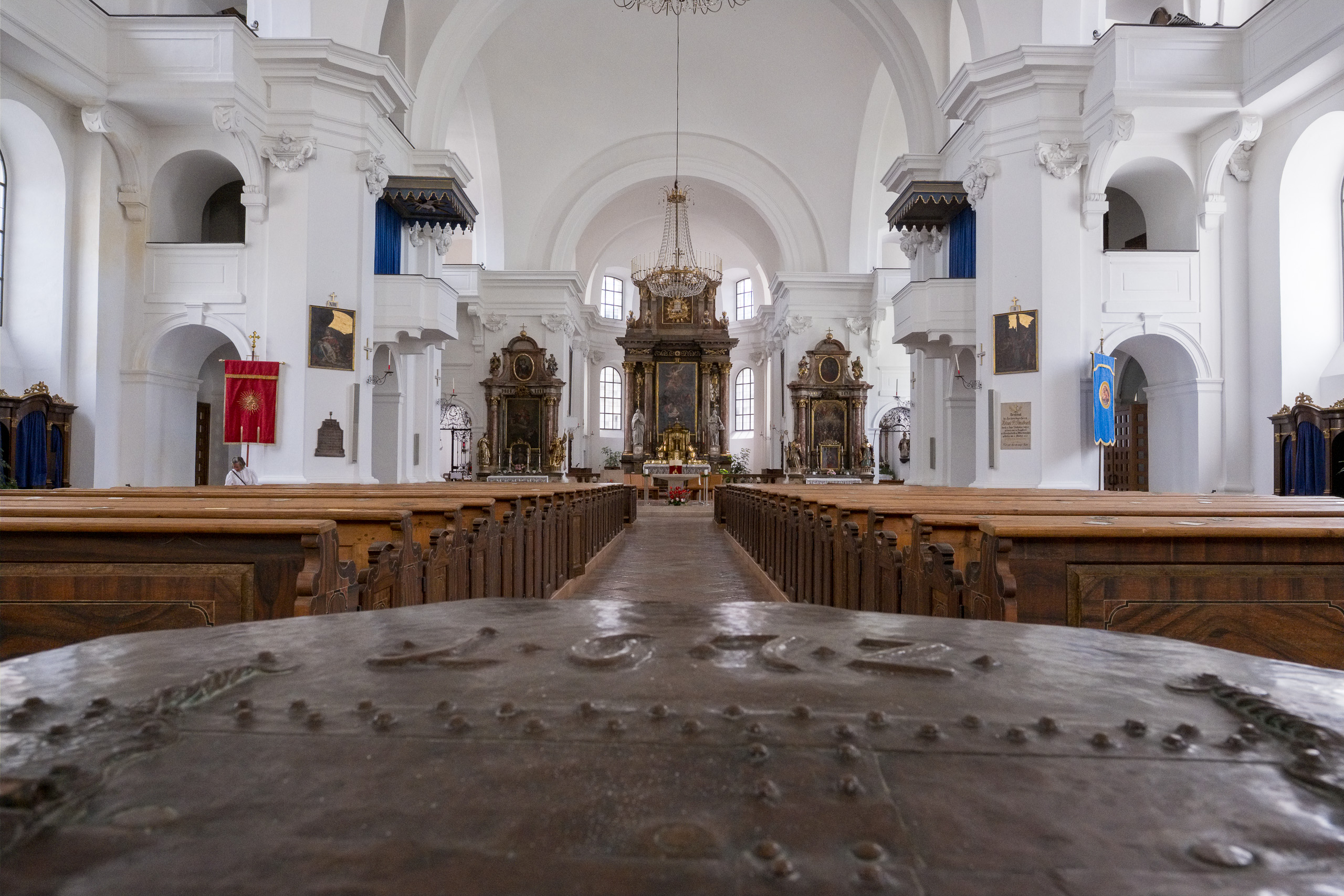
- The white baroque nave of Hallein parish church seen down the central aisle from behind the studded metal lid of the baptismal font, with the gilded high altar at the far end. (1 / 3)
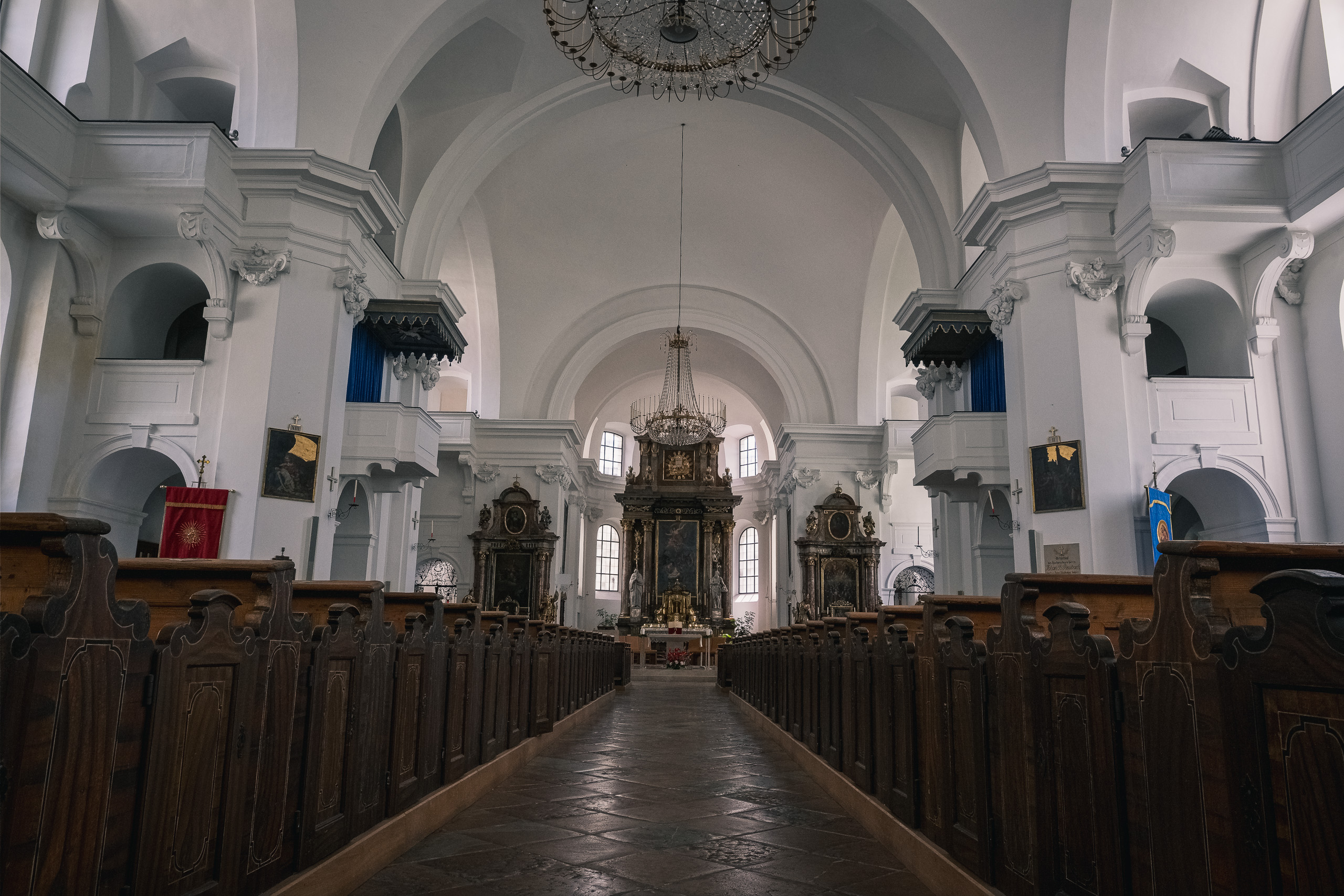
- The central aisle of Hallein parish church runs between dark wooden pews toward the altar, under a white barrel vault hung with two crystal chandeliers. (2 / 3)
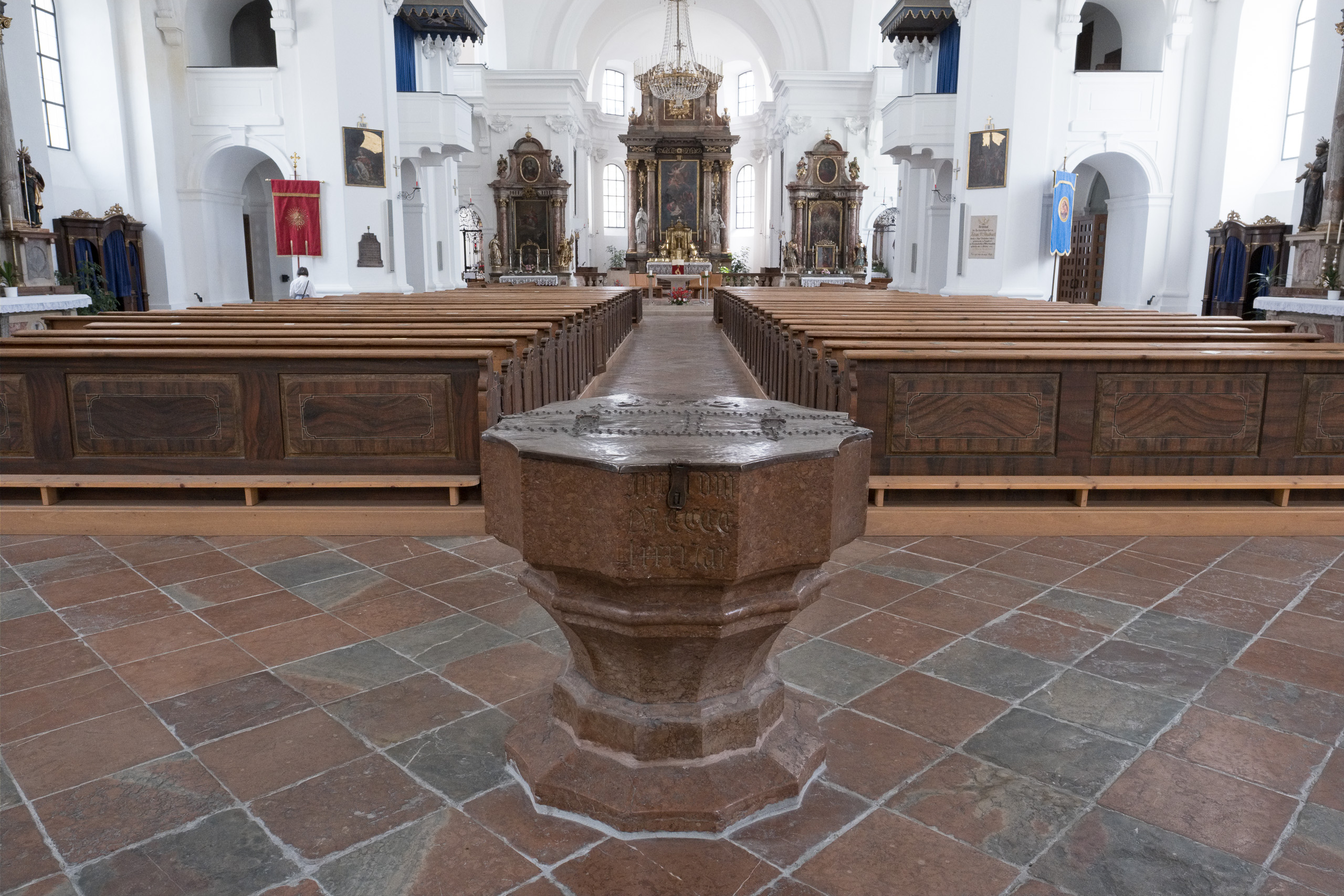
- An octagonal red marble baptismal font with a hammered metal lid stands on the tiled floor of Hallein parish church, the pews and altar receding behind it. (3 / 3)
Snapshot
The parish church of Hallein, on Pflegerplatz, where Franz Xaver Gruber (composer of the melody of Stille Nacht) is buried. A modest Baroque structure with medieval foundations, free to enter. A secondary Stille Nacht site for travelers tracing the song’s origins through the Salzburg region.
The Story
The Stadtpfarrkirche is best known as the burial place of Franz Xaver Gruber, the schoolteacher and organist who composed the melody of Stille Nacht, Heilige Nacht on Christmas Eve 1818. Gruber spent most of his life teaching and playing organ in the Salzburg region, settled in Hallein in 1835, and served as choirmaster at this church until his death in 1863. His tomb is inside the church.
The Stille Nacht story spans three sites in the Salzburg region: Oberndorf bei Salzburg, where the song was first performed; Wagrain, where co-author Joseph Mohr is buried; and the Stadtpfarrkirche Hallein, where Gruber is buried. Travelers serious about the song’s history visit all three. The Hallein church is the smallest and least visited of the three, which fits Gruber’s biography: a teacher in a salt town who happened to write one of the most performed pieces of music in the world.
The building itself has medieval origins, substantially rebuilt in the Baroque period. The interior is modest relative to the Salzburg city churches but carries the local identity of the Tennengau salt town.
Visiting
Pflegerplatz 2 in the Hallein old town, a short walk from the Keltenmuseum Hallein. Free to enter, typically open during daytime hours; check locally for current times. Hallein is 15 km south of Salzburg, about 20 minutes by S-Bahn. Combine with the Keltenmuseum Hallein for Celtic salt history, the Bad Durrnberg salt mine for the deeper Hallein context, and the wider Stille Nacht trail through Oberndorf and Wagrain.