Snapshot
The Steintheater is a natural rock grotto carved into a theatre around 1612-1615 by Archbishop Markus Sittikus, believed to be the oldest surviving open-air stone theatre north of the Alps. In 1617 the first Italian opera north of the Alps was performed here. It sits at the edge of the Hellbrunn park and is freely accessible.
The Story
Markus Sittikus arrived as Archbishop of Salzburg in 1612 and immediately began building. Within a few years he had constructed Hellbrunn Palace, filled its gardens with the elaborate Wasserspiele, and reshaped this limestone grotto at the park’s edge into a theatre. He had grown up in Italy, in a culture where theatre and opera were understood as expressions of aristocratic power and taste, and he intended to bring both to Salzburg.
The Steintheater uses what the rock gave him. The grotto’s natural hollow provided the auditorium; the stage was cut into the mouth of the cave. Seats and levels were hewn from the limestone face. The result is intimate in scale, perhaps a few hundred people at most, surrounded on three sides by pale rock greened with moss. The acoustics work.
In 1617 the opera Orfeo was staged here, believed to be the first Italian opera performed north of the Alps. The attribution is well-established in Salzburg music history, though as with many 17th-century performance claims, the documentary record is not without ambiguity. Sitticus himself was probably in the audience. He died two years later, in 1619, having compressed an extraordinary amount of cultural construction into a single seven-year archbishopric.
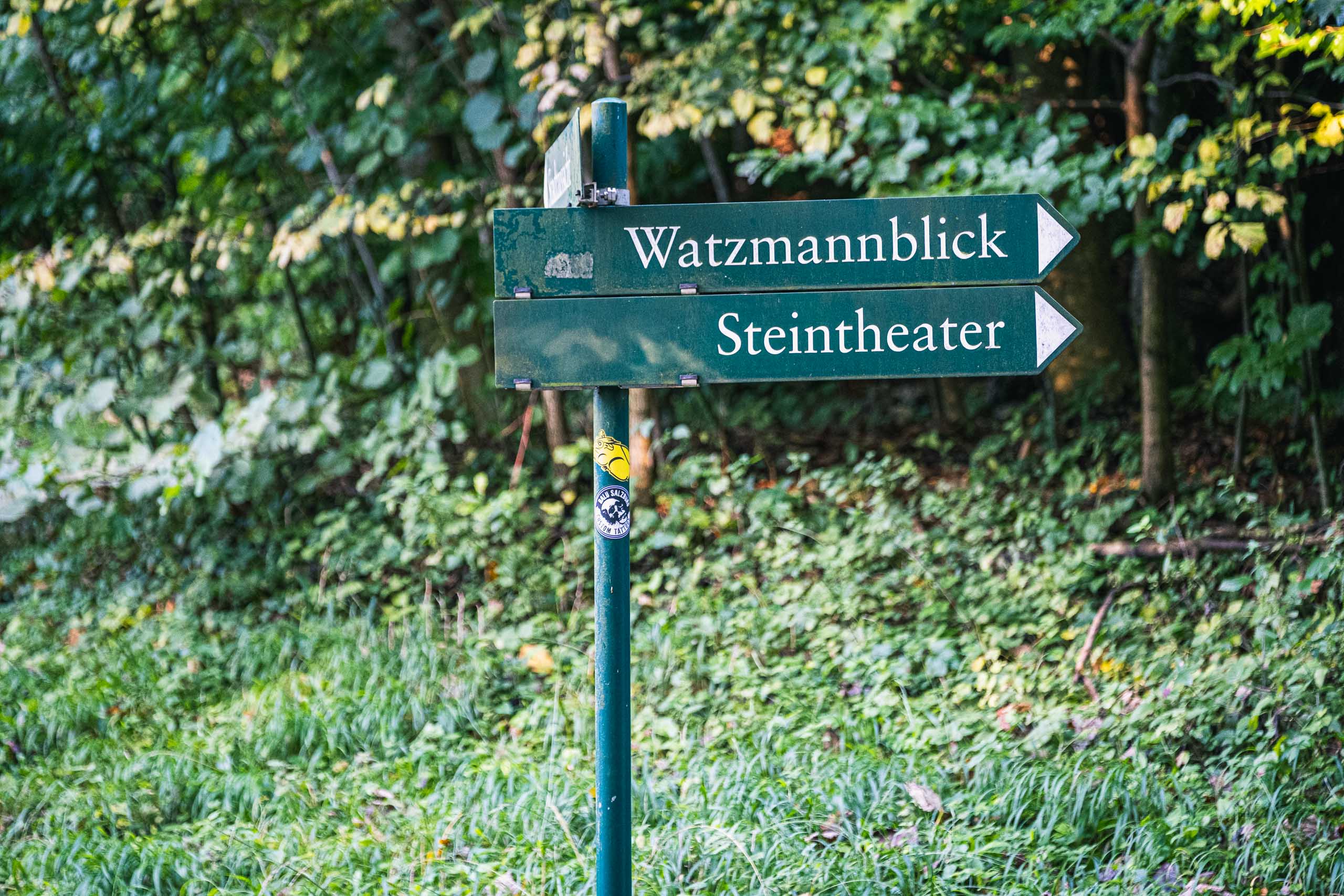
The theatre today is a free add-on to any Hellbrunn visit. It sits about ten minutes’ walk from the palace, signposted through the park. Occasional summer performances still take place in the grotto; the atmospheric qualities that made it useful 400 years ago remain.
Visiting
Within the Hellbrunn park grounds, freely accessible during park hours, Fürstenweg 37, Salzburg. No separate admission. Allow 10-15 minutes for the theatre itself. Signposted from the palace. Best combined with the full Hellbrunn visit and the Wasserspiele guided tour. Check the Hellbrunn programme for summer performances.