Snapshot
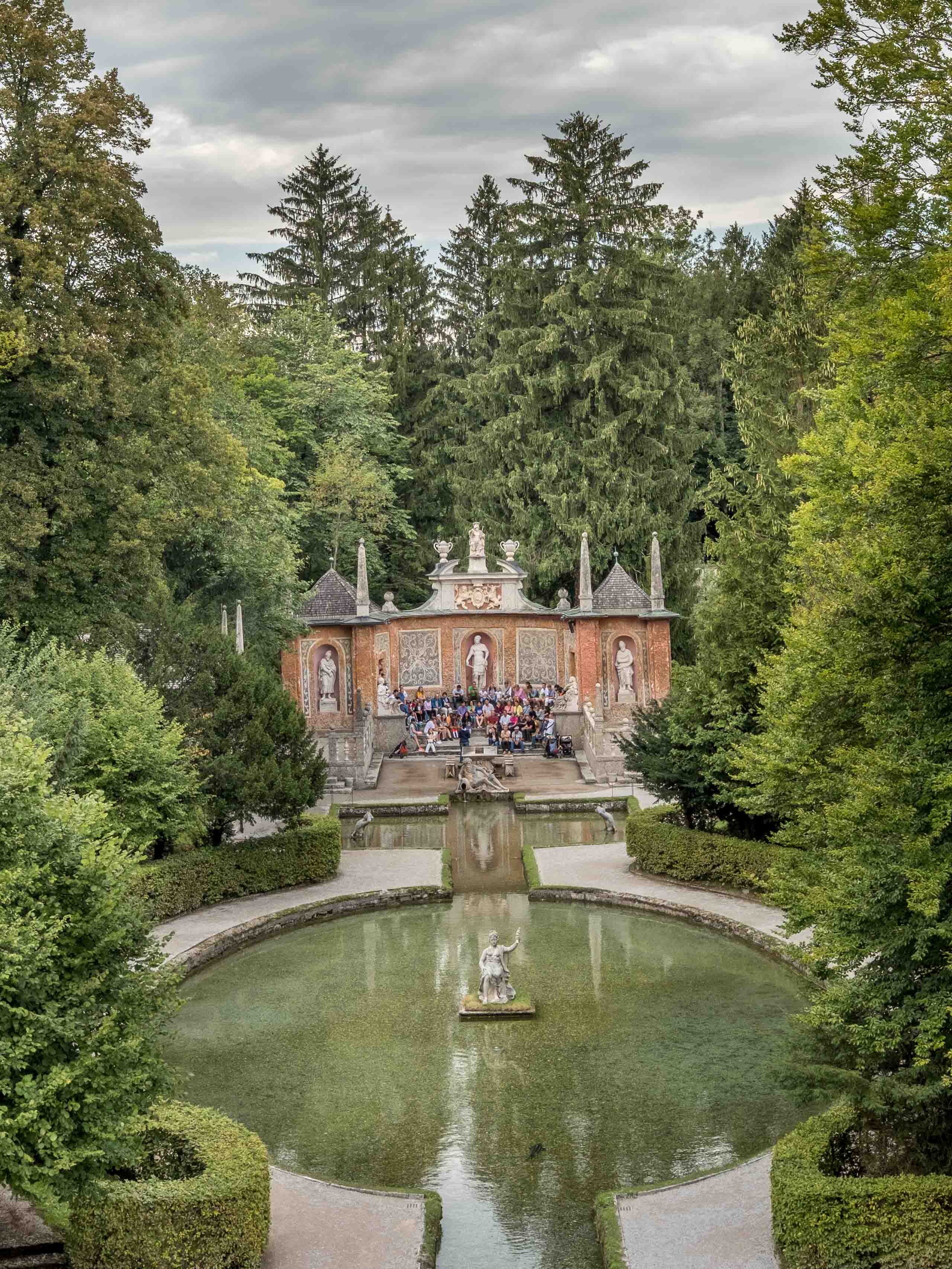
The Wasserspiele at Hellbrunn are a network of over 200 concealed water jets, trick seats, and hydraulic automata built in 1613-1615 by Archbishop Markus Sittikus. The system has run continuously for over 400 years on gravity-fed spring water alone. Visiting means getting wet. This is not a side effect; it is the design.
The Story
Archbishop Markus Sittikus had a specific sense of humour. When he built Hellbrunn Palace as a summer pleasure retreat between 1612 and 1615, he and his architect Santino Solari threaded the entire garden with a concealed hydraulic system designed to drench, surprise, and embarrass his guests at will.
The centrepiece is the stone banquet table. It is a long, elegant, outdoor dining table set into a formal garden alcove. Every seat has a hidden jet of water beneath it. The Archbishop’s seat does not. At a moment of his choosing, he could activate the system and drench every guest while remaining perfectly dry himself. This was not an accident of the design; it was the entire point.
The rest of the garden follows the same logic. Concealed jets in narrow paths activate as visitors walk through. Stone figures in niches, seemingly decorative, squirt water at eye level. Neptune’s grotto has jets arranged to soak anyone who stops to look at the statues. The whole complex is a landscape of hidden traps.
The hydraulic automata go further. Mechanical theatres driven entirely by water pressure contain moving figures: craftsmen at their tools, soldiers in formation, musicians playing instruments. The mechanisms are sophisticated enough that Renaissance hydraulic engineering historians study them as technical documents. Nothing comparable from the period has survived in as complete a state.
The water source is a natural spring. The entire system runs on gravity. No pumps, no electricity, no modern intervention beyond maintenance. It was built this way and has operated this way for over 400 years without interruption. The seasonal guides who operate the mechanisms understand the system thoroughly and take evident pleasure in deploying it on unprepared visitors.
Visiting
Fürstenweg 37, Hellbrunn, Salzburg. Guided tour only; tours run on a fixed schedule throughout the day, April to October. Duration approximately 40 minutes. Admission charged, typically included in the Hellbrunn Palace ticket. Wear shoes and clothes you are comfortable getting wet. Tours operate in German and English. Combine with the Steintheater, freely accessible in the same park.