Snapshot
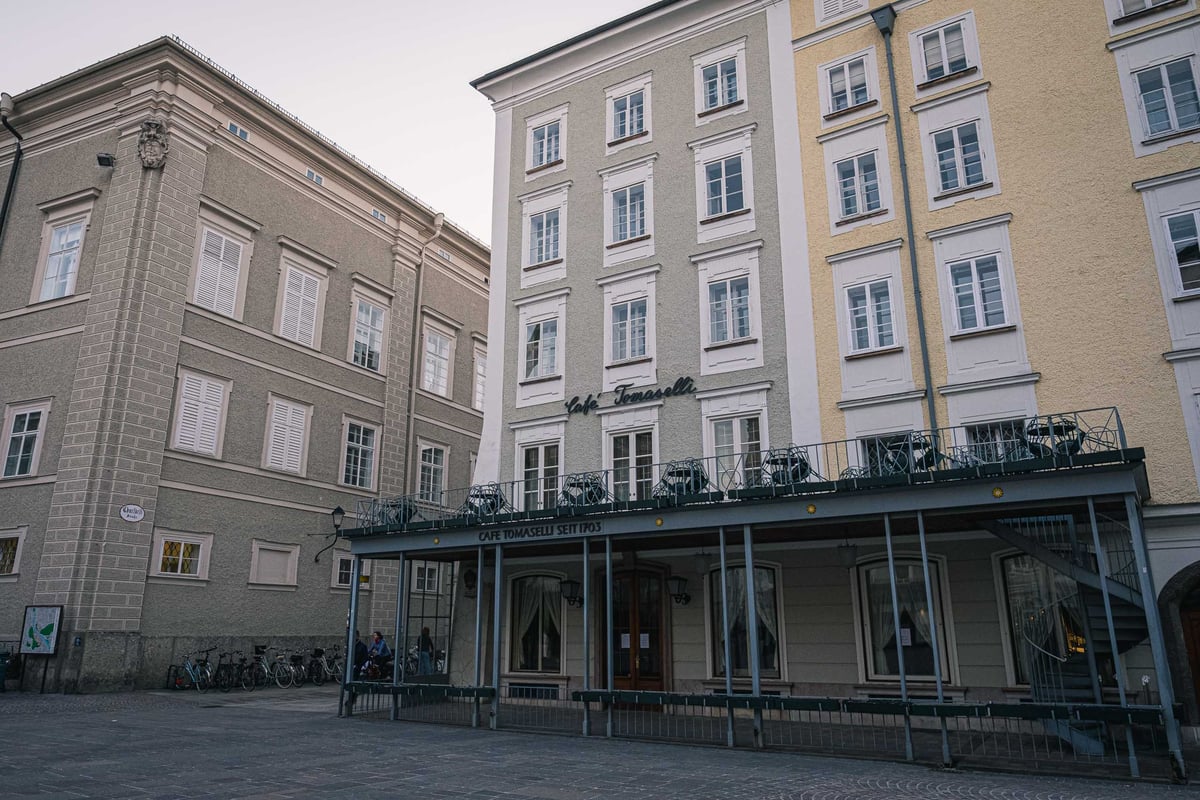
Paper-thin hand-pulled pastry wrapped around spiced apples, raisins, and buttered breadcrumbs, baked golden and served warm. At Cafe Tomaselli, Austria’s oldest coffee house, it arrives with particular authority.
The Story
Apfelstrudel is the great test of Austrian pastry skill. The dough, called Strudelteig, is hand-pulled across a flour-dusted table until it is thin enough to read a newspaper through. Most pastry doughs rely on fat for tenderness; strudel dough relies on gluten development, patience, and technique. The result is a pastry so thin it shatters on contact and steams the filling inside as it bakes.
The filling is built from sliced tart apples, sugar, cinnamon, raisins, and breadcrumbs browned in butter. The breadcrumbs are not a shortcut; they absorb the juice released by the apples during baking and keep the pastry crisp. The whole roll is baked golden, dusted with icing sugar, and served warm with vanilla sauce or lightly whipped cream, always in that order: hot pastry, cool cream.
The origins of strudel trace to the Ottoman-influenced pastry traditions that reached Vienna through Hungarian court kitchens, likely in the 17th century. The technique was codified in Viennese Konditorei and spread across the empire. In Salzburg, it appears on nearly every traditional dessert menu. Cafe Tomaselli has been serving it continuously since the 18th century, which gives their version a particular weight.