Snapshot
Jean-Pierre Ponnelle is the director whose visual world defined what Mozart looked like at the Salzburg Festival for a generation. Working with Karl Bohm and Karajan from the late 1960s through the 1980s, his productions were filmed and broadcast worldwide, and they are what most people picture when they think of Salzburg Mozart.
The Story
Ponnelle came to opera with the training of a visual artist. He had studied philosophy and art history at the Sorbonne and taken painting lessons from Fernand Léger, and those influences are visible in his work: a concern with the picture as a whole, with how light falls and how architecture frames a figure. When he began directing, he also designed his own sets. The result was an unusual coherence: the visual language and the dramatic language came from the same person.
His breakthrough at the Salzburg Festival came in 1968 with Rossini’s Il barbiere di Siviglia, conducted by a young Claudio Abbado. The production was a success, and it opened twenty years of work in Salzburg. Over that period he staged the complete Mozart da Ponte cycle and other operas in collaboration with Karl Bohm and Karajan, the two conductors most associated with Salzburg’s peak period.
The productions he made with Böhm in particular, Le nozze di Figaro, Così fan tutte, Don Giovanni, La clemenza di Tito, were filmed for television and broadcast internationally. This is why Ponnelle’s work matters beyond opera specialists: the filmed versions reached millions of people who had never been to Salzburg, and they fixed a particular visual image of Mozart in the popular consciousness. The costumes, the lighting, the staging of that era are still what many people see when they hear those operas.
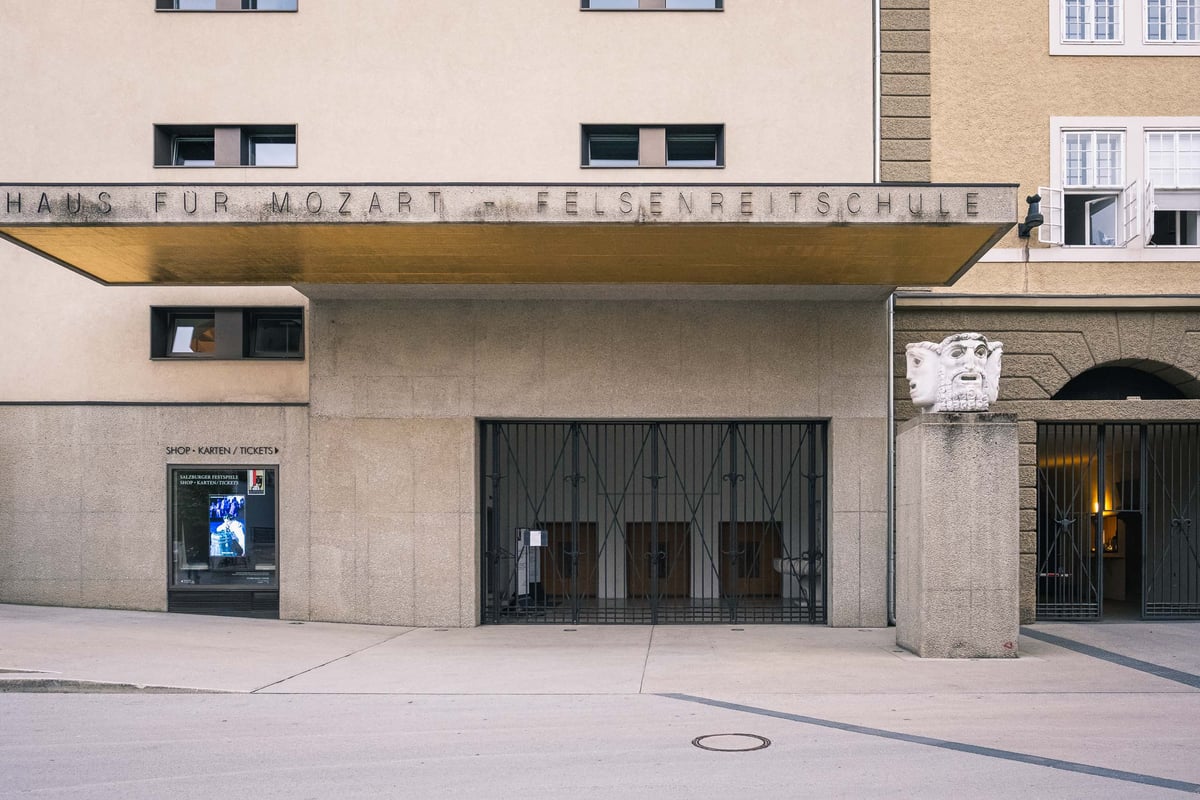
He collapsed during rehearsals at the Felsenreitschule in August 1988 and died in Munich the same day. The Salzburg Festival held a memorial gathering for him that year. He had spent twenty years building, piece by piece, the visual identity that the Festival still trades on.