Snapshot
The musician Salzburg kept while the rest of the world watched Vienna. Michael Haydn arrived at the court in 1763, served as concertmaster and composer under two archbishops, took over Salzburg Cathedral’s organist post when Mozart left in 1781, and never left. He died here in 1806 after 43 years in the city and is buried at Petersfriedhof.
He composed over 800 works. He was a close friend of Leopold and Wolfgang Mozart. Wolfgang copied some of his manuscripts. Mozart scholars later confused one of his symphonies for Mozart’s own 37th. He taught Carl Maria von Weber. He was elected to the Royal Swedish Academy of Music in 1804.
None of that was enough to keep his name in the conversation.
The Story
The elder Haydn brother, Joseph Haydn, left for the Esterhazy court and became a continental celebrity. Michael went to Salzburg and stayed. For most of musical history, that choice has read as a lesser outcome. It probably was not.
Salzburg in the 1760s was a serious musical city, with a full court orchestra, a functioning cathedral ensemble, and a prince-archbishop who spent money on music. Michael Haydn fit it precisely. He wrote masses and motets for the liturgical calendar, symphonies and serenades for the court, and graduals for the Kapellknaben boys he trained himself. He was the city’s working musician in the fullest sense.
His friendship with the Mozarts was real and mutual. Leopold praised his writing in letters. Wolfgang later modeled his string quintets on a piece Haydn wrote in 1773. The misattribution of Haydn’s Symphony No. 25 as Mozart’s 37th was not corrected until modern scholarship caught it, which says something about how closely the two composers worked and thought.
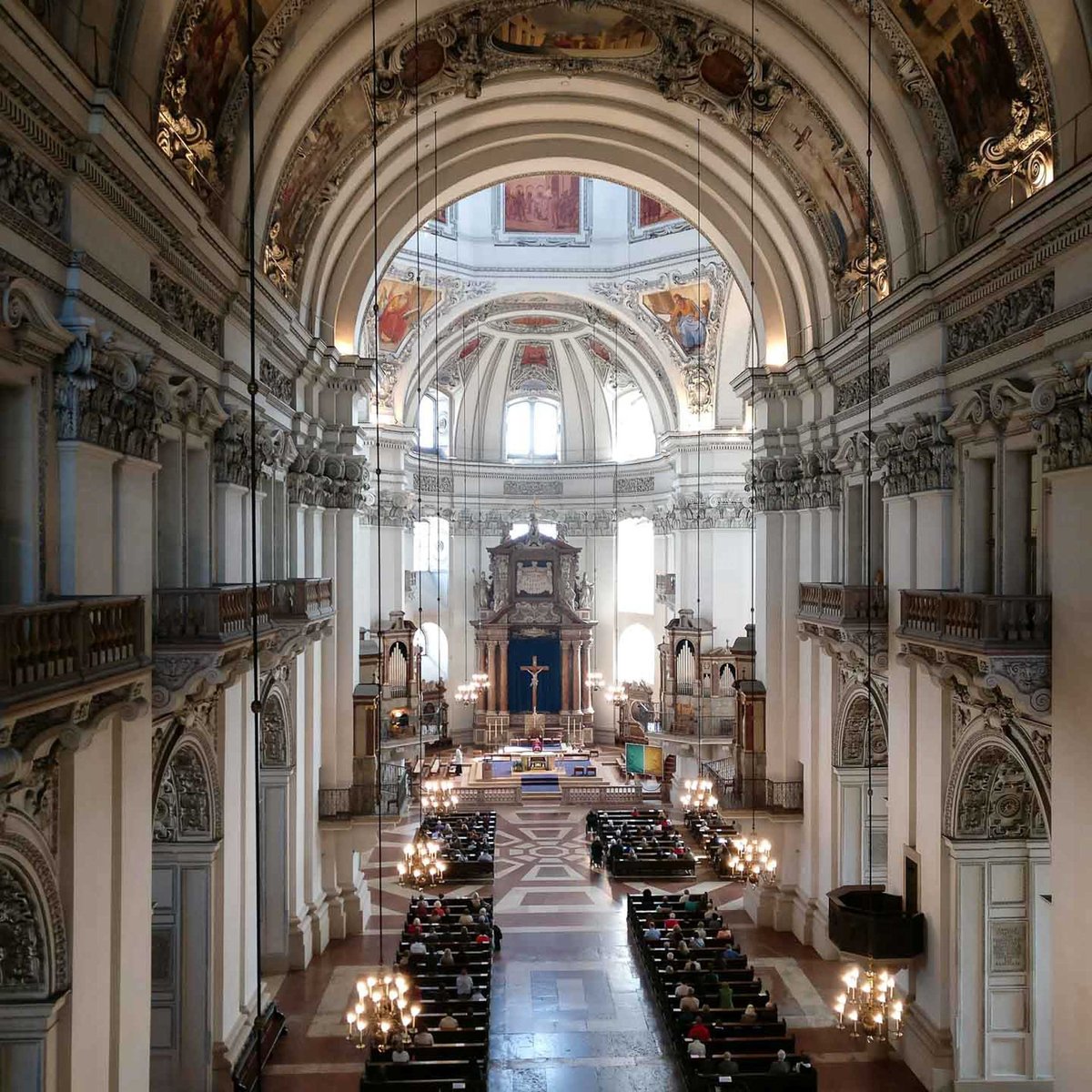
When Mozart left Salzburg after his break with Archbishop Colloredo in 1781, Haydn took his place as cathedral organist. He held that role for the next 25 years, writing over 100 graduals for Colloredo’s reformed liturgy and producing more than 40 masses for the cathedral’s cycle. His Requiem in C minor, written after the death of Archbishop Schrattenbach in 1771, remained in use for decades.
Around 1800, the Esterházy court, where his brother served as Kapellmeister, tried more than once to draw him away. He turned the offers down. He had spent most of his life in Salzburg and saw no reason to leave. He died here in 1806, three years before Joseph.
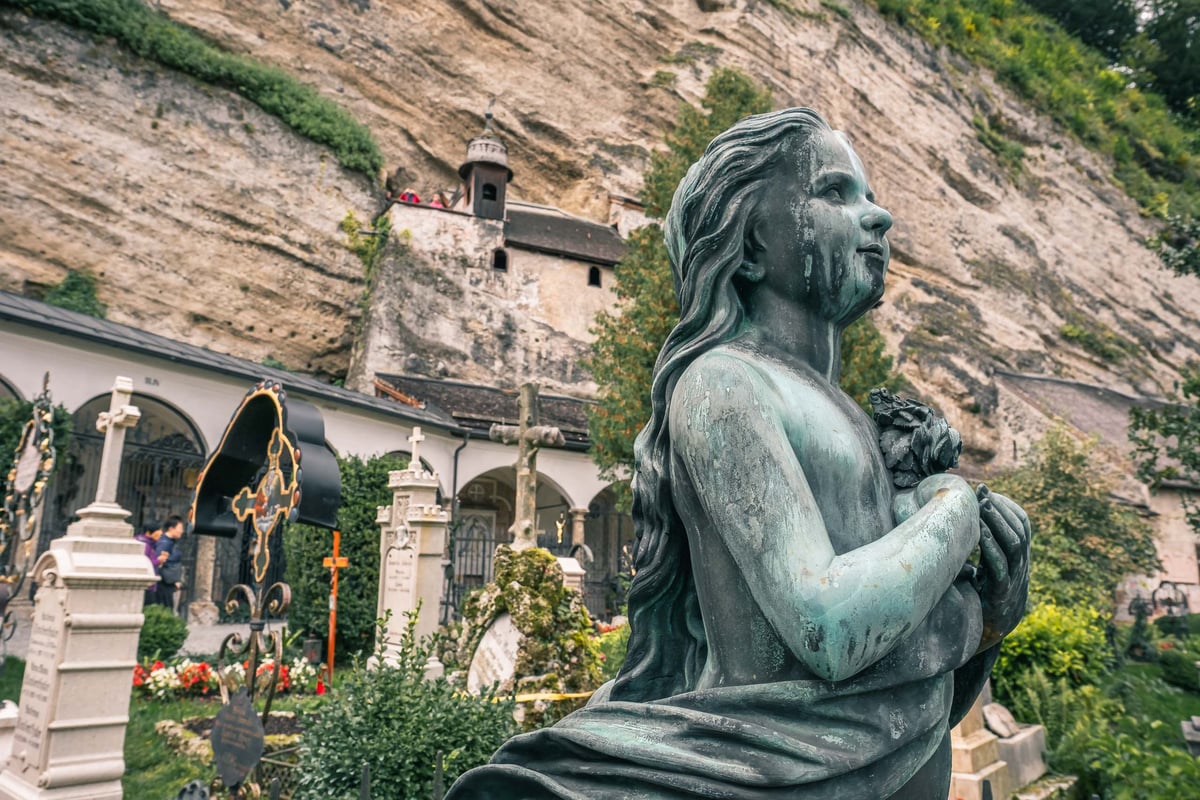
His grave is at Petersfriedhof, the ancient cemetery pressed against the cliff face behind Stift St. Peter. One of the quieter places in the city to find a composer who was never quite as quiet as the record makes him seem.