Snapshot
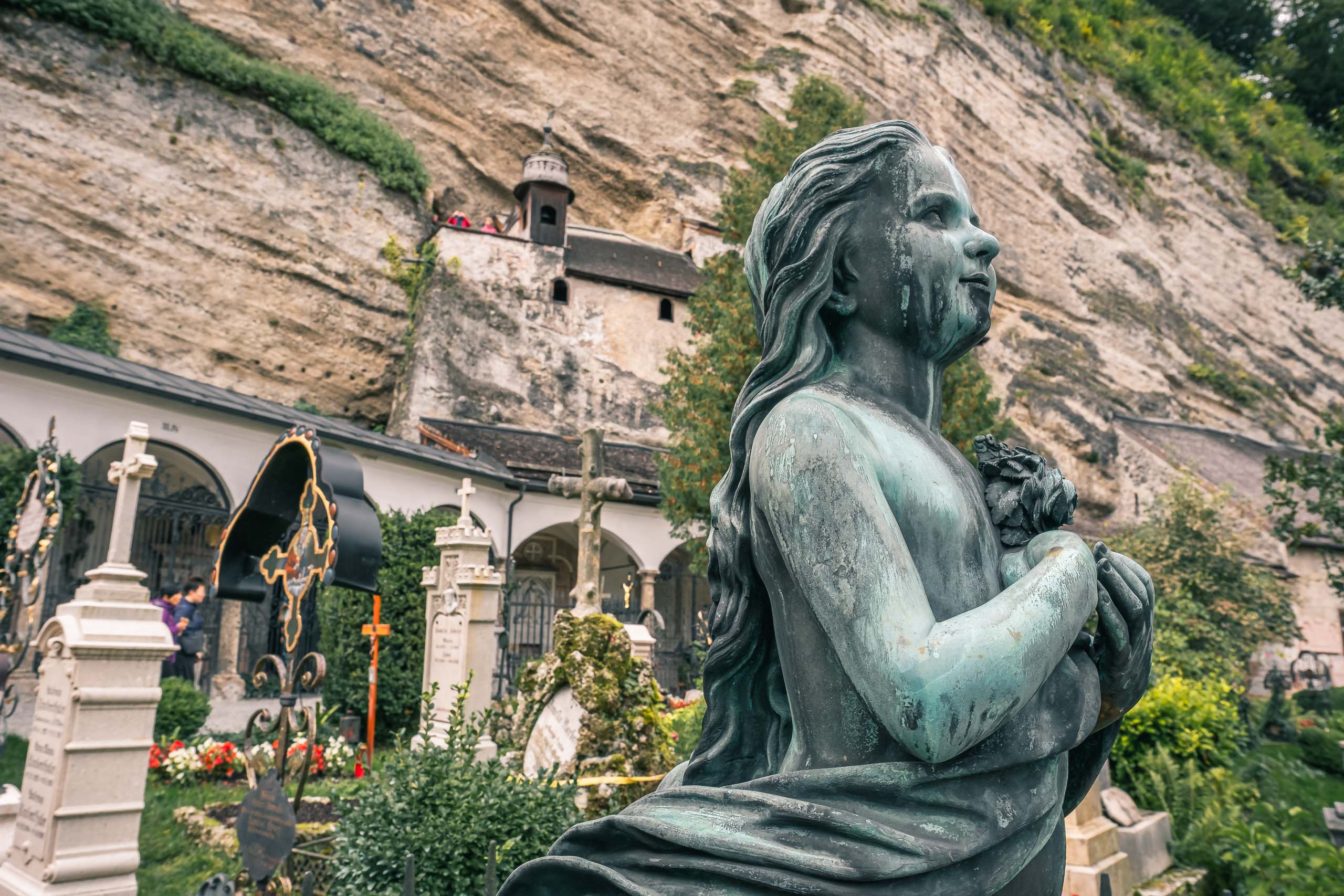
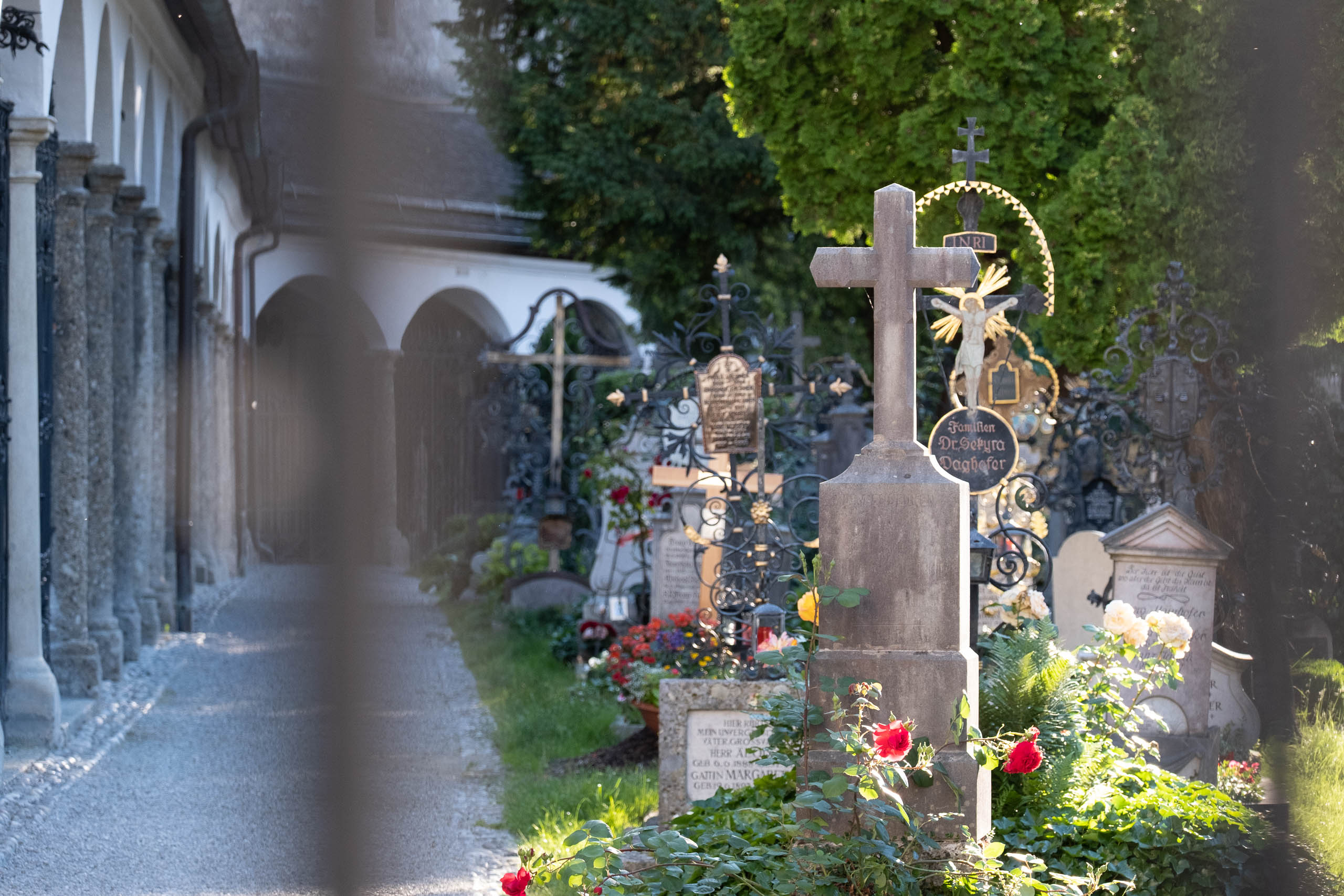
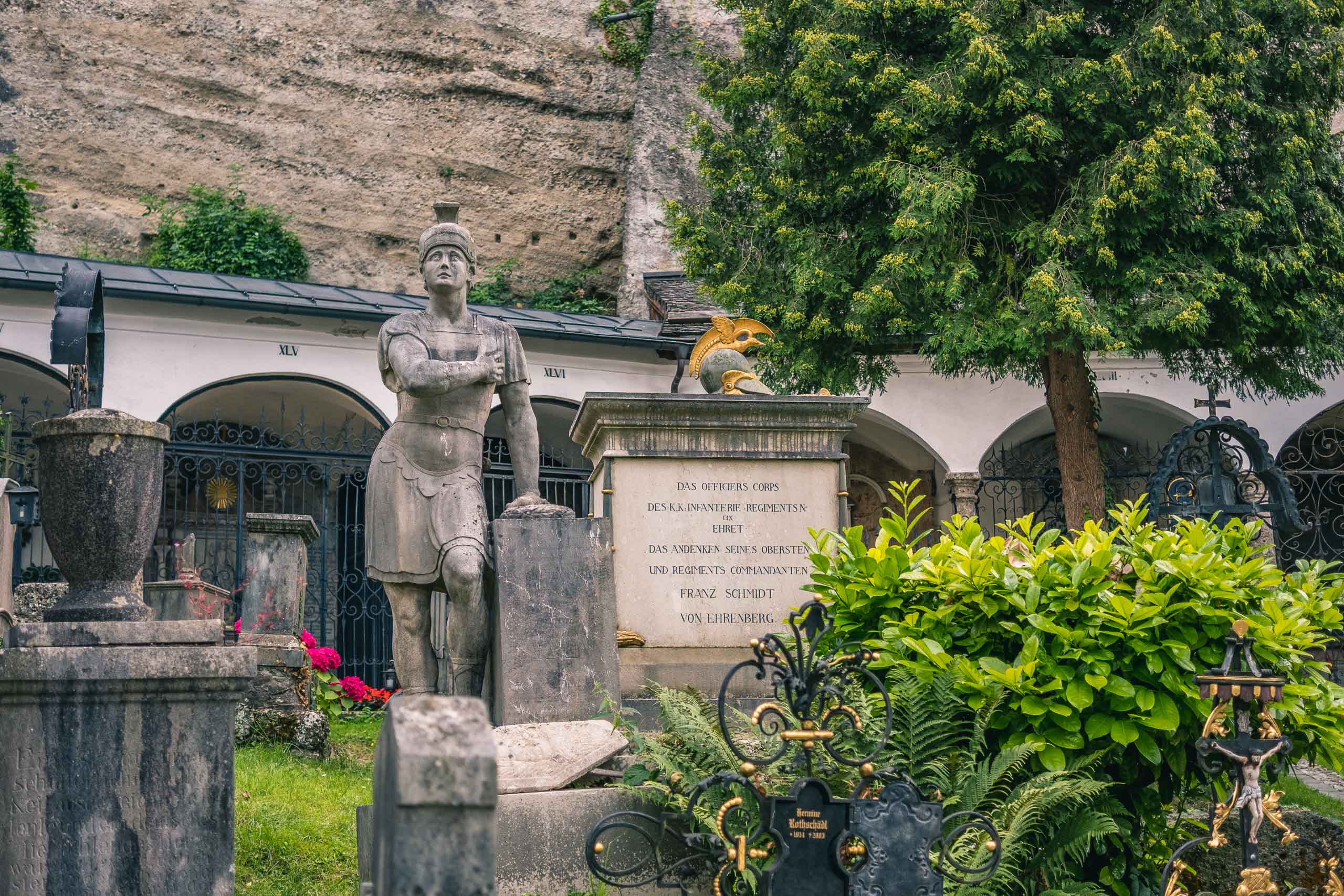
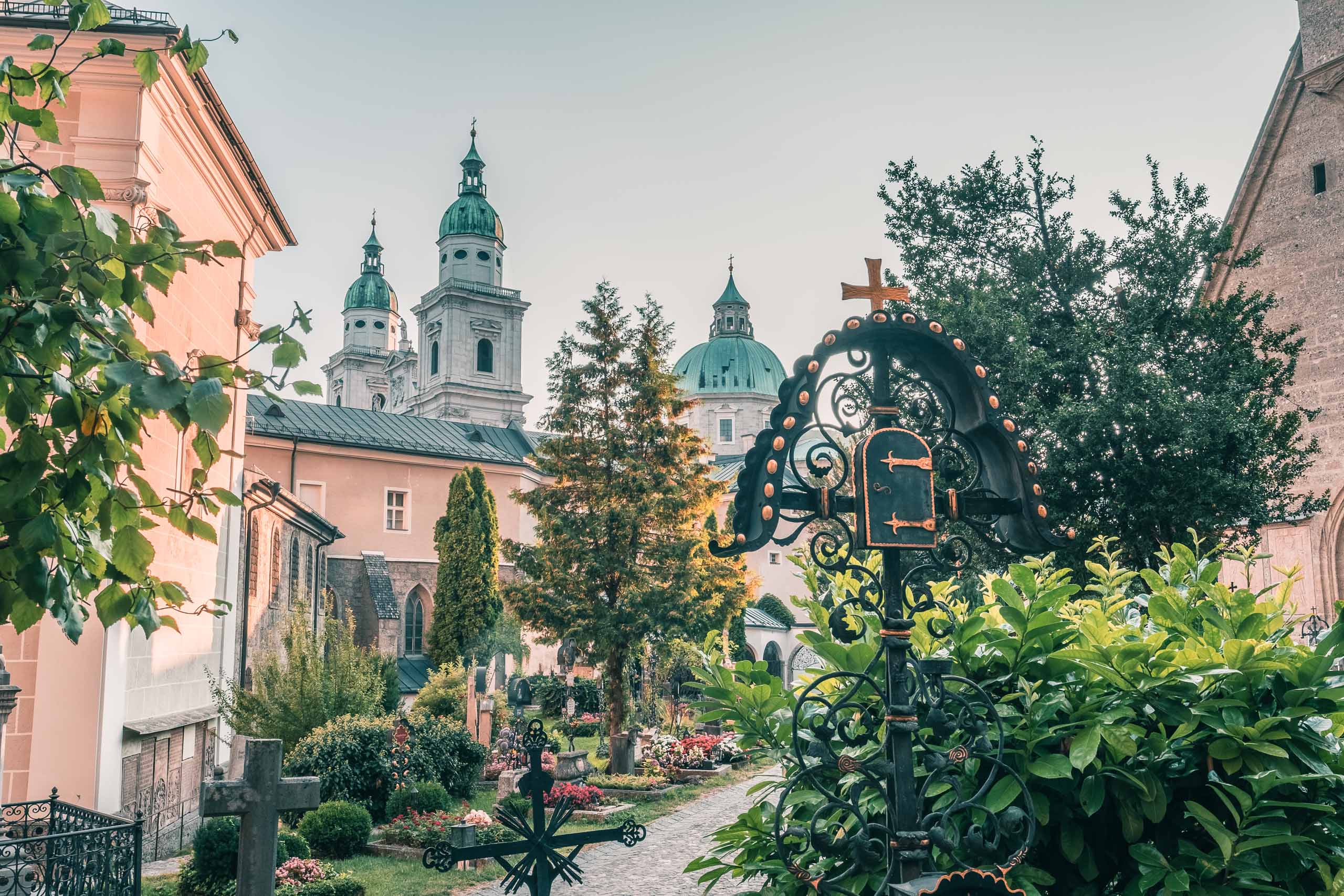
Pressed against the Mönchsberg cliff beside Stift St. Peter, this narrow burial ground has been in continuous use since around 700 AD, making it the oldest active cemetery in the German-speaking world. Three of the people who shaped Salzburg most are buried here, and two chapels are hidden inside the cliff above most visitors’ heads.
The Story
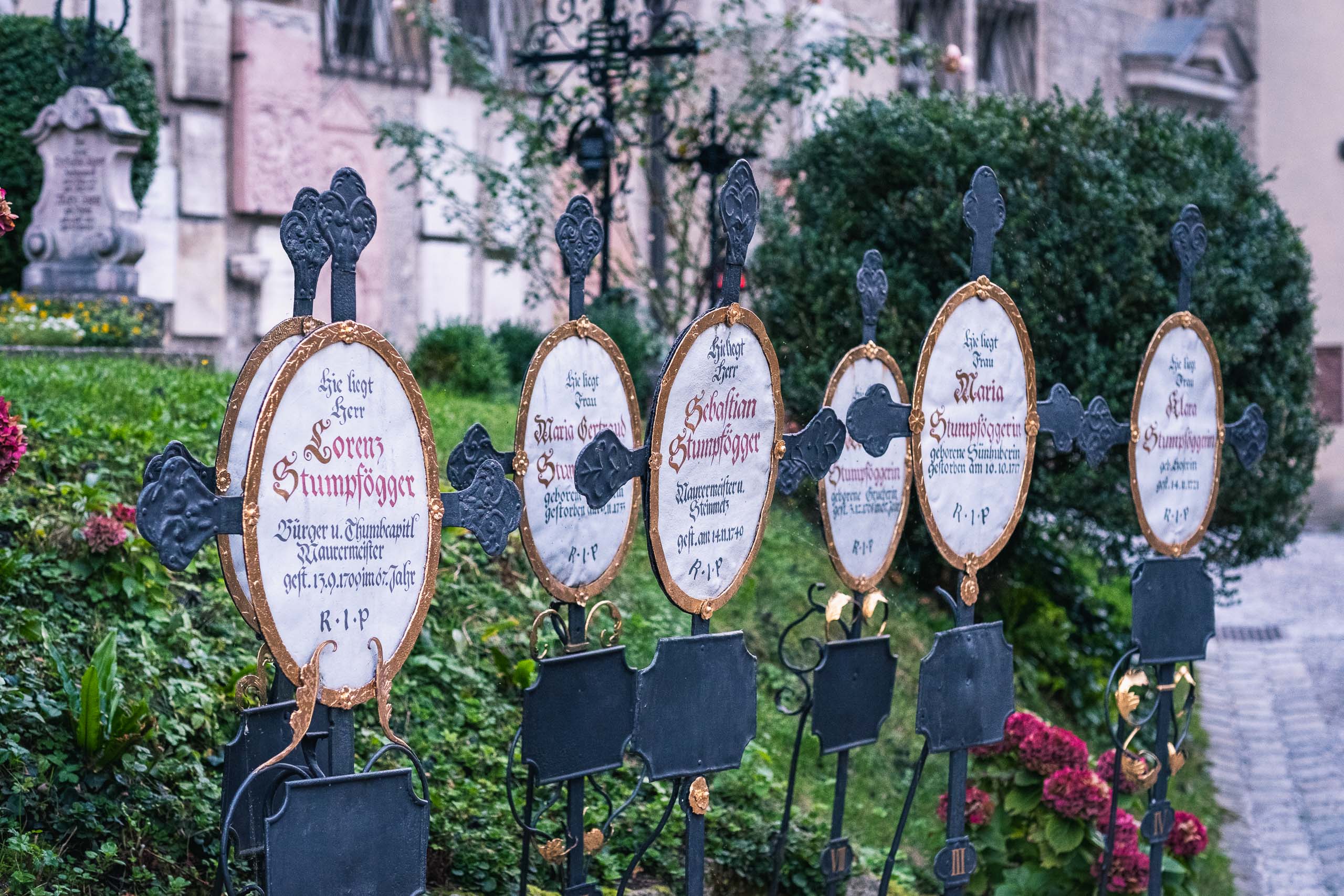
Saint Rupert founded the cemetery when he established Stift St. Peter in 696 AD, and the ground has barely paused since. The oldest surviving tombstone dates to 1288, but the site itself is older: rock-cut corridors carved into the Mönchsberg served early Christian hermits centuries before the first abbey wall went up. What looks like a single courtyard enclosed by Baroque arcades is actually a layered landscape, Romanesque foundations beneath Baroque ornament, medieval graves below 19th-century ironwork.
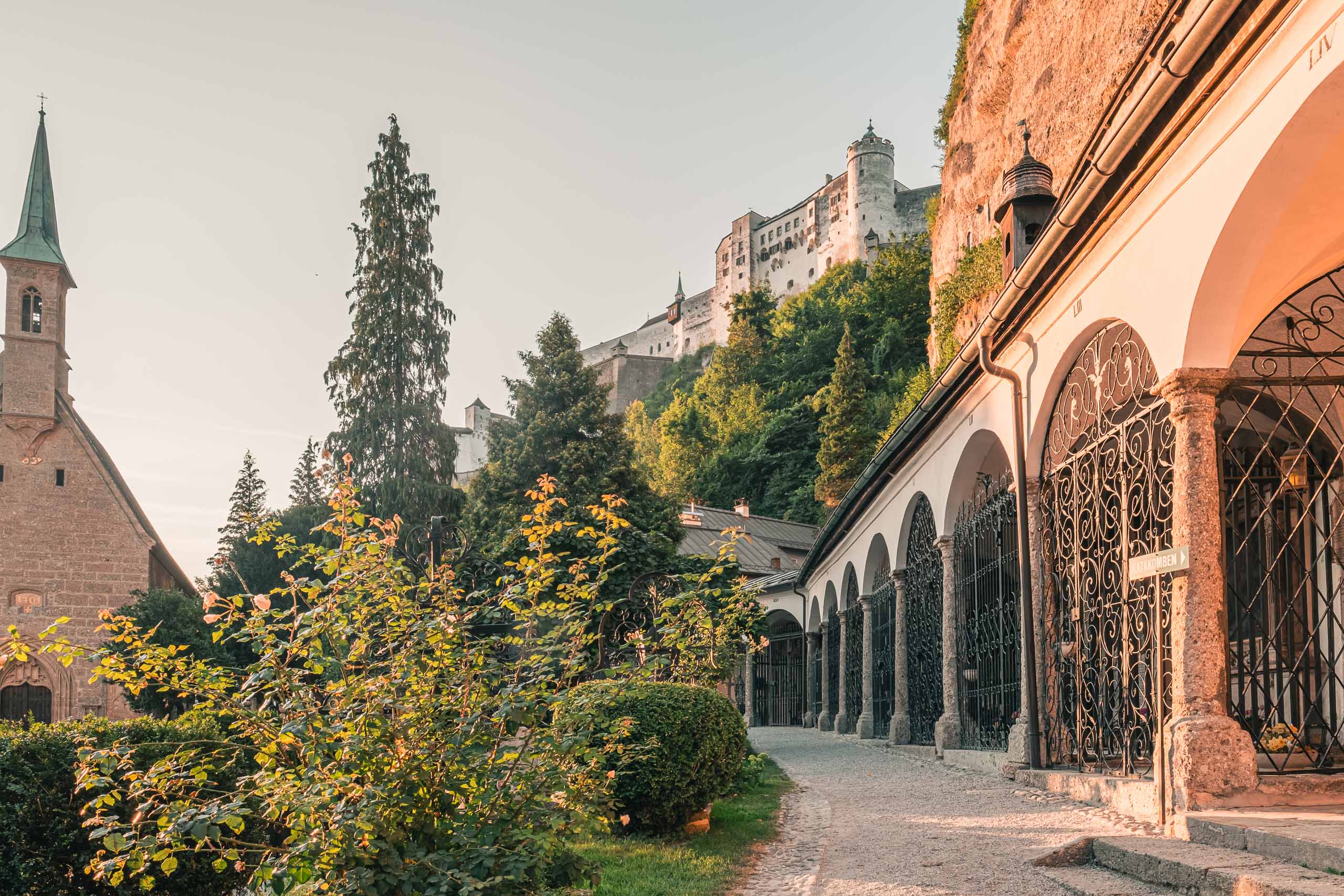
The arcades themselves are part of Santino Solari’s legacy. The Swiss-Italian architect who designed Salzburg Cathedral worked closely with Prince-Archbishop Wolf Dietrich von Raitenau to transform Salzburg’s Altstadt in the early 17th century, and the same curved cornices and marble pilasters he brought to the cathedral extended around the cemetery walls. Solari is buried here too, in a marble niche, his name in the same stone as the dome he designed.
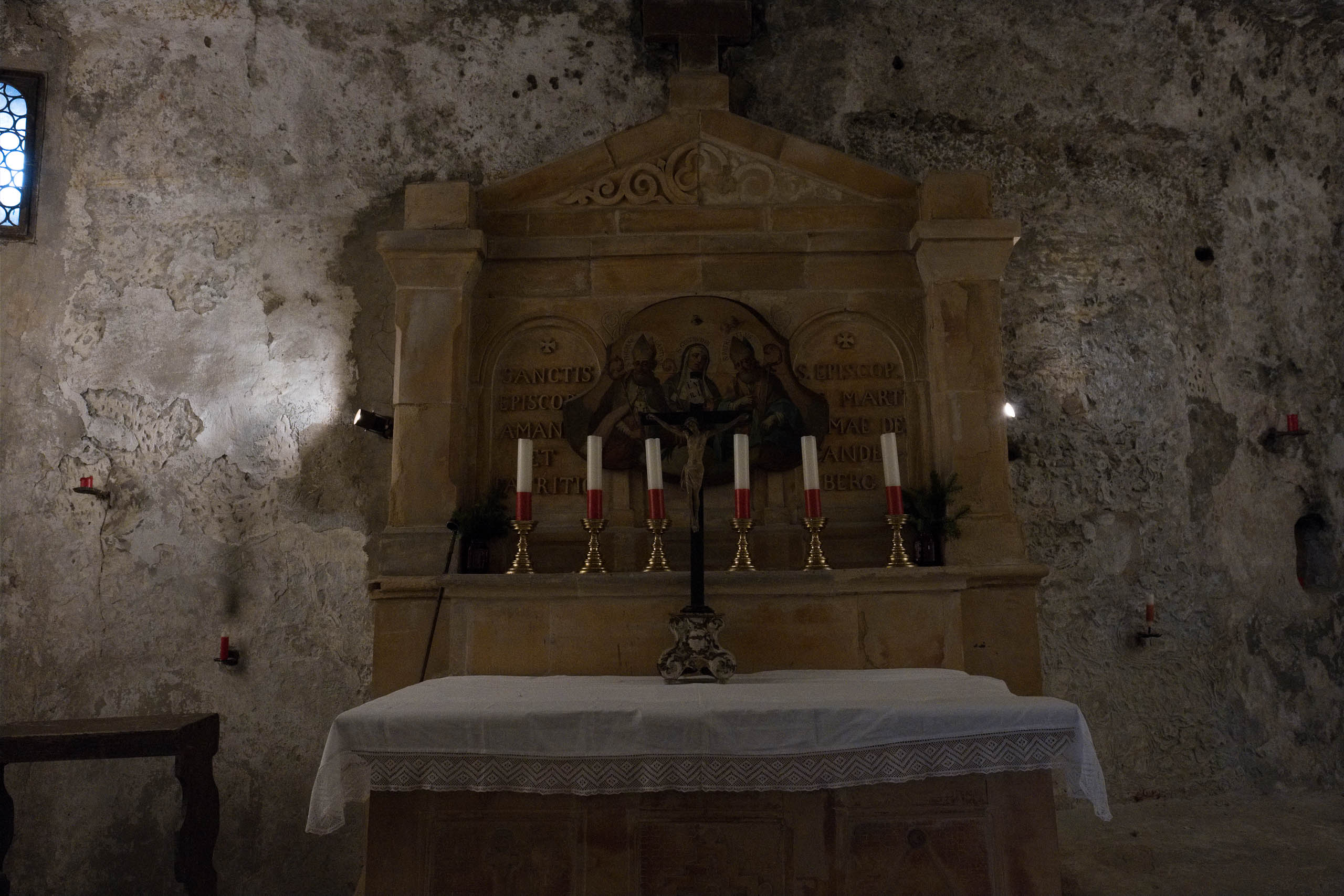
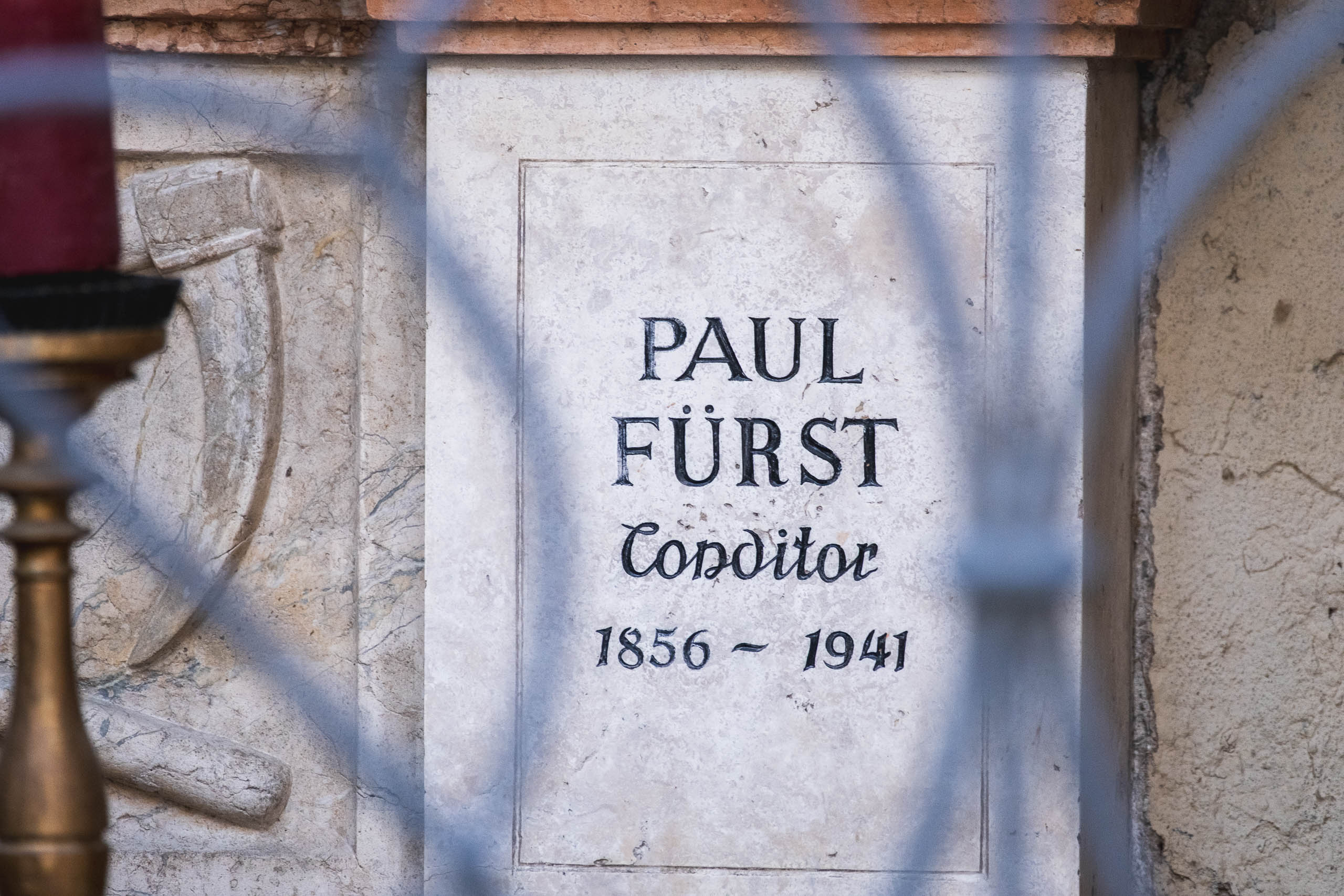
The graves map a concentrated portrait of the city’s musical and architectural life. Michael Haydn, younger brother of Joseph and court composer who spent four decades serving the Prince-Archbishops, lies in a quiet corner with a modest Latin inscription. Nannerl Mozart, Wolfgang’s elder sister, a violinist and keyboard player of genuine ability who outlived her brother by 38 years, is buried here under a simple stone. Two hidden chapels, the Maximuskapelle and the Gertraudenkapelle, sit inside the cliff above the main courtyard, reached by steep stairs carved into the rock. Both were consecrated in 1178 by Archbishop Conrad of Wittelsbach and can be missed entirely if you don’t look up and notice the iron doors in the cliff face.
The cemetery also has a film connection most visitors know before they arrive. The Von Trapp family escape scene in The Sound of Music (1965) is set here, but it was shot on a studio set in Hollywood built to recreate Petersfriedhof’s grave enclosures and arcades, not on the actual grounds.
Visiting
Free entry to the cemetery and chapels. Catacombs: EUR 2.00 adults, EUR 1.50 children (under 6 free). Catacombs open May-September 10am-6pm, October-April 10am-5pm. Cemetery open daily from 6:30am. Reached on foot from the Altstadt in under five minutes: follow the path beside Stift St. Peter toward the cliff. Combine with Stiftskeller St Peter for a meal in the oldest restaurant in Europe, which occupies the abbey’s cellars just steps away. Also pairs well with Kapitelplatz and Domplatz, both a short walk toward the cathedral. Respect the silence: this is an active cemetery with current burials.