Snapshot
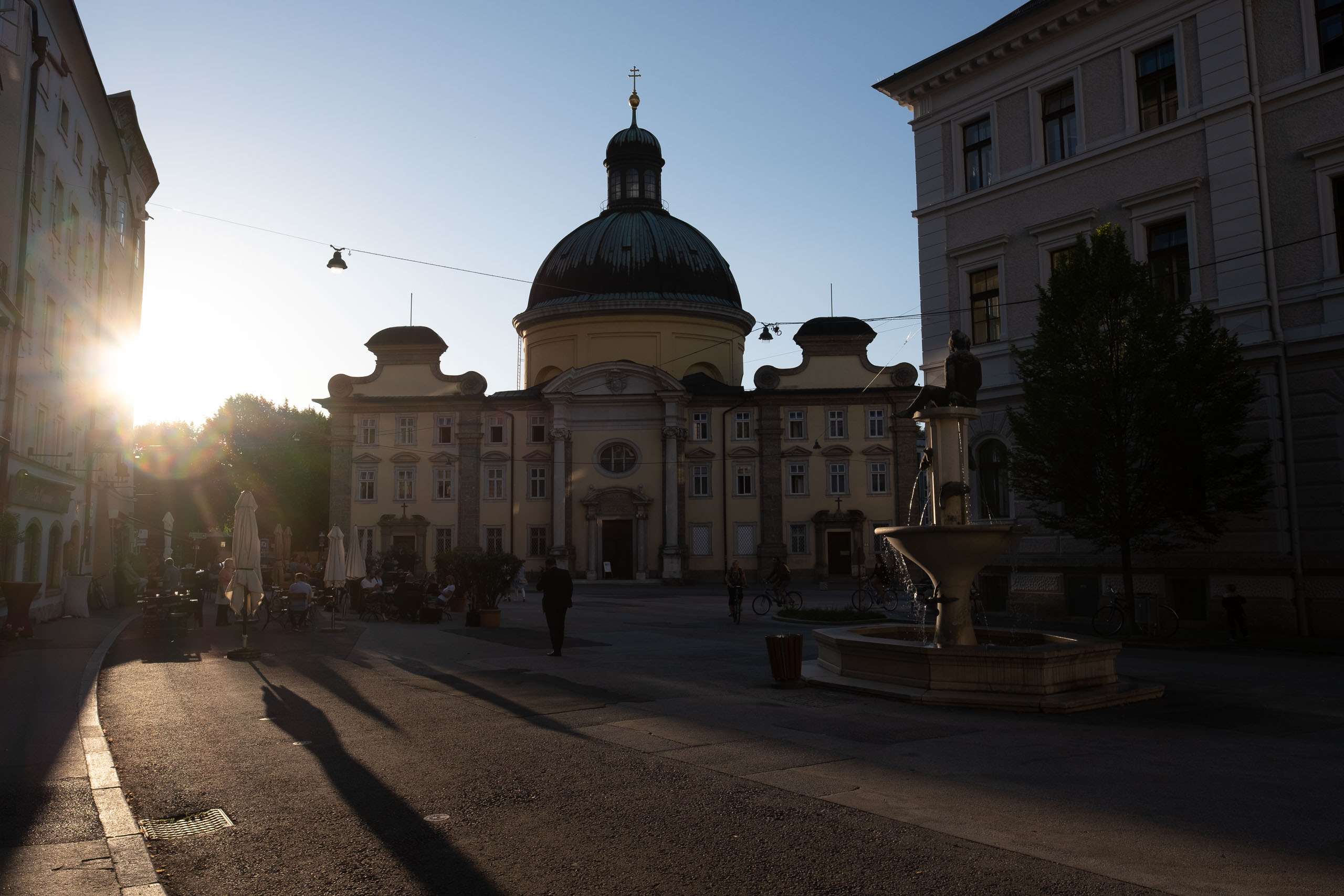
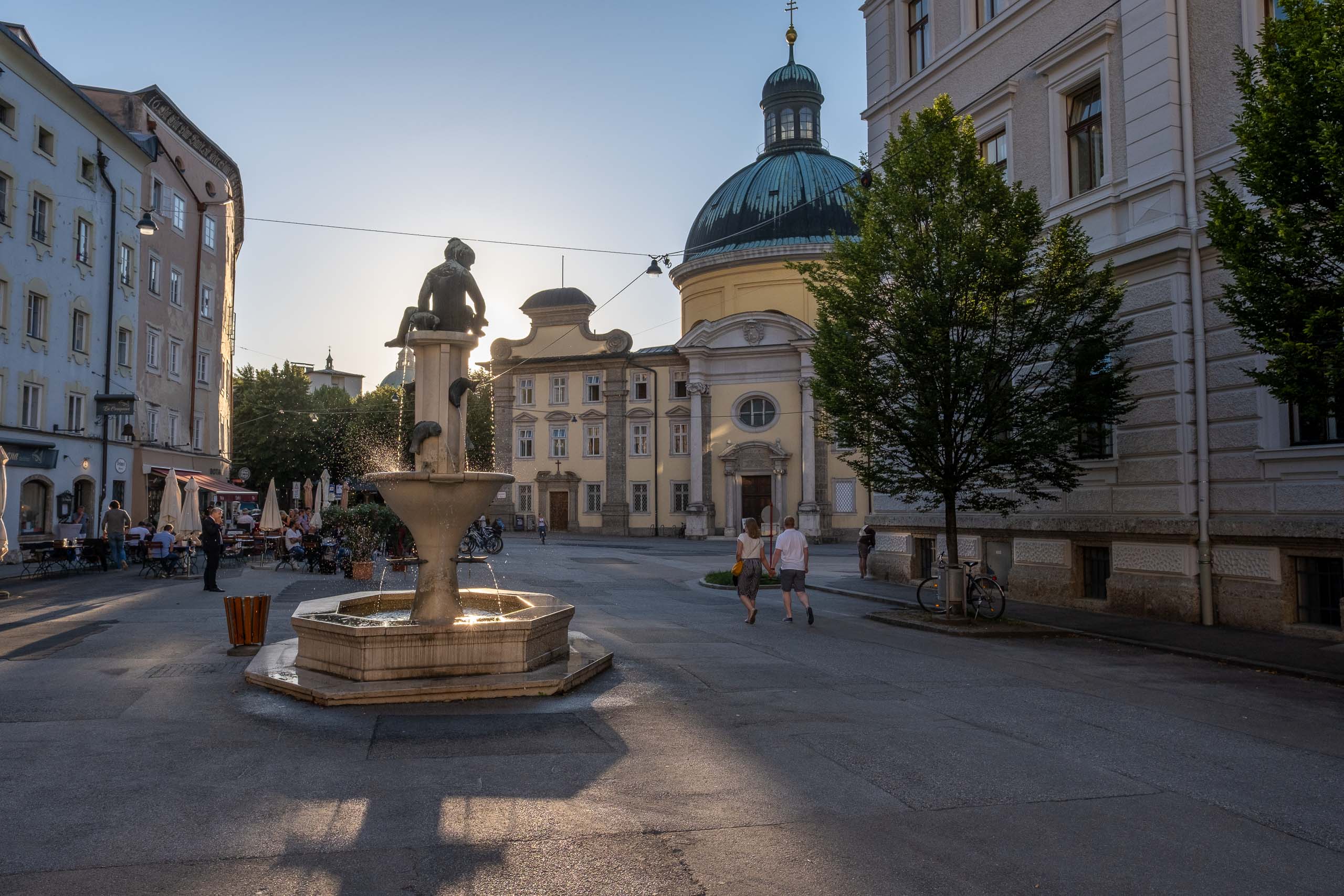
Kajetanerplatz sits at the southern edge of the Altstadt in the Nonntal district, dominated by the Kajetanerkirche and unknown to most visitors. It is the kind of square that Salzburg residents use, not the kind that appears on every itinerary. Walkers heading between the Cathedral and Nonnberg Abbey pass through it without realising they have found something.
The Story
The square’s history runs deeper than its quiet appearance suggests. The site began as a hospital property purchased by Prince Archbishop Wolf Dietrich in 1591, then passed to the Theatine Order, who built the Kajetanerkirche between 1696 and 1700. The architect was Giovanni Gaspare Zucalli, and the result is one of the finer pieces of Salzburg baroque: an oblique-oval dome, a broad palatial design, and an interior where the light spreads across an elliptical nave. The organ, built around 1700 by Christoph Egedacher, is among the oldest surviving organs in the city.
After the Theatine chapter dissolved in 1809, the Brothers of Mercy took over the complex in 1923 and ran a working hospital on the site for most of the twentieth century, including through World War II when the building suffered bomb damage. The church and square survived; restorations followed.
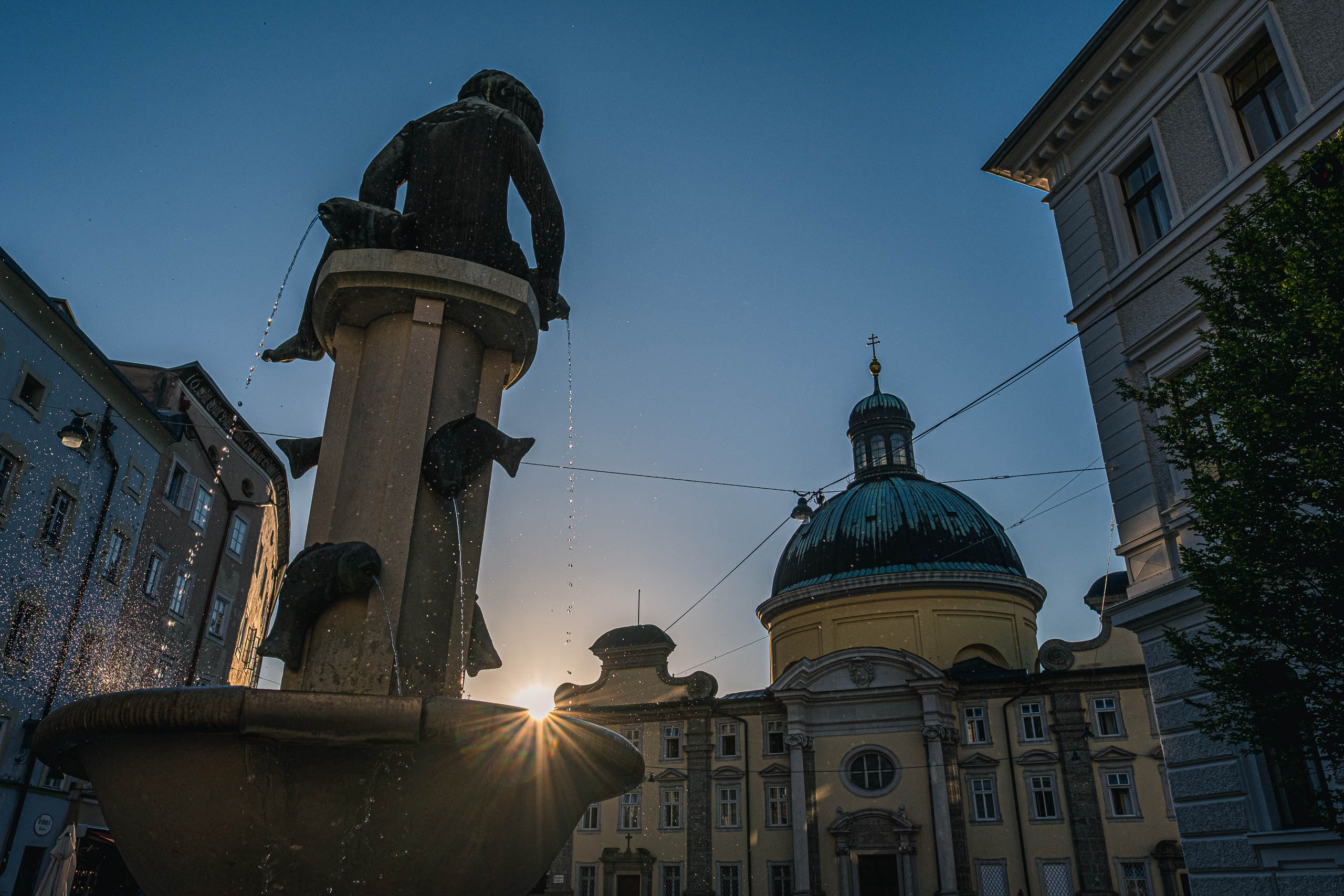
The square itself was redesigned in 2021, stripped of later additions and given a central splash fountain that makes it a practical gathering point for locals in summer. A Friday organic farmers’ market still draws a neighbourhood crowd. On Schanzlgasse 5, a short walk away, a plaque marks the corner house where Alexander von Humboldt stayed in 1797-98 and made observations on the Salzach River’s flow. Most visitors who pass it do not know what they are looking at.
Visiting
Kajetanerplatz, Nonntal, at the southern edge of the Altstadt. Always accessible, free. The Kajetanerkirche is open approximately 09:00-17:00. Friday organic market 08:00-13:00. Five to fifteen minutes. Best reached on foot from the Cathedral area or from Nonnberg Abbey.