Snapshot
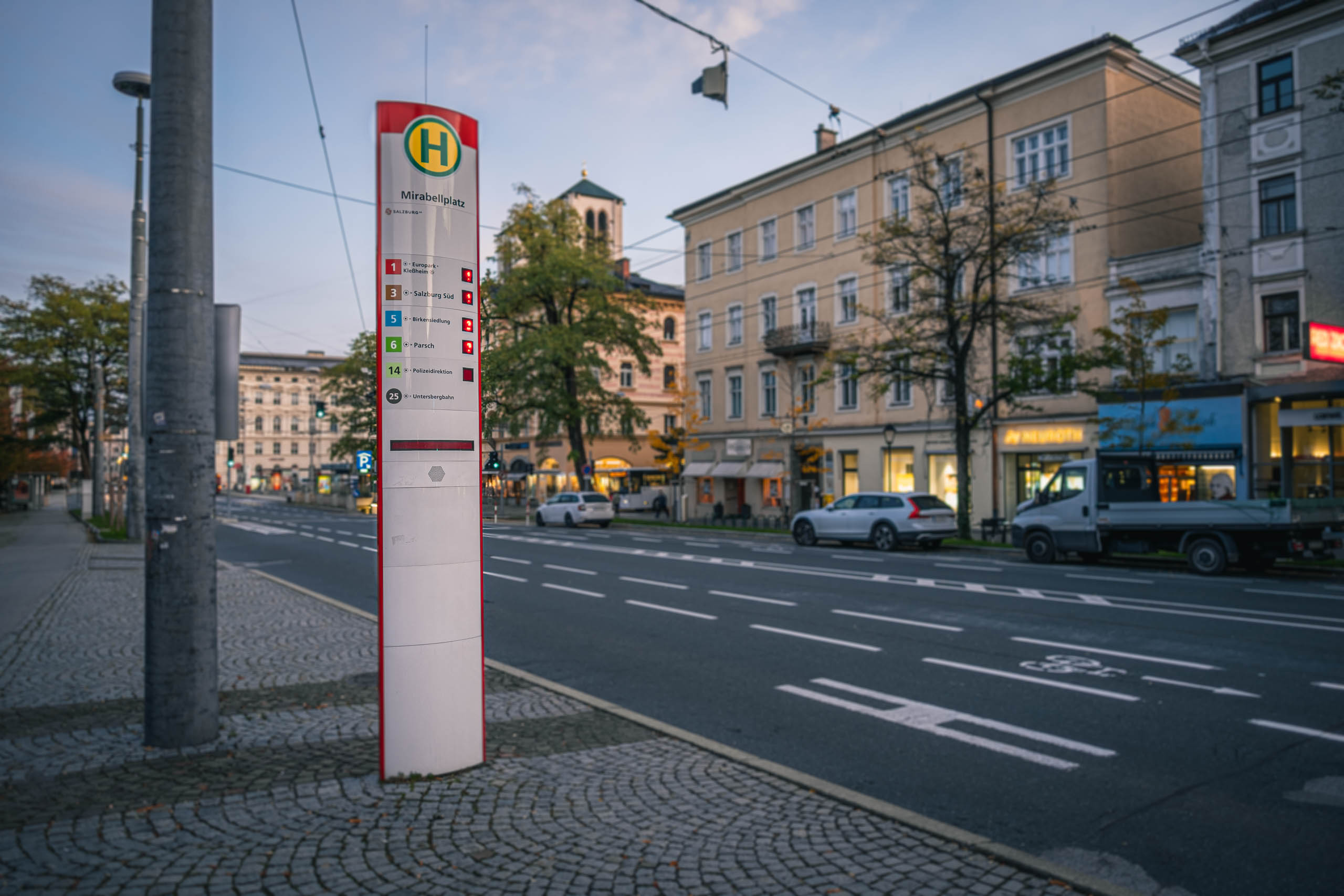
The square north of Mirabell Palace is a transit hub and a threshold: the everyday Neustadt side of a palace built for a prince-archbishop’s mistress, later transformed into one of Salzburg’s finest baroque interiors and the garden whose axis points directly at the fortress.
The Story
Mirabellplatz occupies the city-facing side of Mirabell Palace, the square where locals commute through and visitors pause before deciding whether to enter the gardens or keep walking. The palace behind it has a more complicated origin than its composed baroque facade suggests.
Wolf Dietrich von Raitenau, one of the archbishops who shaped baroque Salzburg, built the original structure in 1606 as a private residence outside the city walls for Salome Alt, his mistress, and their children (fifteen in total, though several died young). He called it Schloss Altenau. When his rivals deposed him in 1612, the new Archbishop Markus Sittikus renamed it Mirabell, from the Italian for “wonderful beauty,” scrubbing the association from the public name if not from memory. Sittikus never lived there.
The palace’s baroque character came later, between 1721 and 1727, when Johann Lukas von Hildebrandt rebuilt and enlarged it for Archbishop Franz Anton von Harrach. This work produced the Angel Staircase, where Georg Raphael Donner’s carved putti watch every visitor’s ascent, and the Marble Hall, which Mozart performed in as a boy and which is still used for chamber concerts and civil weddings today. The 1818 fire damaged the exterior and prompted a neoclassical rebuild; the interiors survived largely intact.
The gardens were laid out by Johann Bernhard Fischer von Erlach around 1690 with a north-south axis aimed at Hohensalzburg Fortress and Salzburg Cathedral. Standing in the formal parterre, the fortress rises at the far end of the visual line. This is a designed sightline, not a coincidence. The Zwergelgarten (Dwarves Garden), created around 1690-91 with 28 white Untersberg marble figures, is one of the oldest ornamental gardens of its type in Central Europe; many originals are now in the Salzburg Museum.
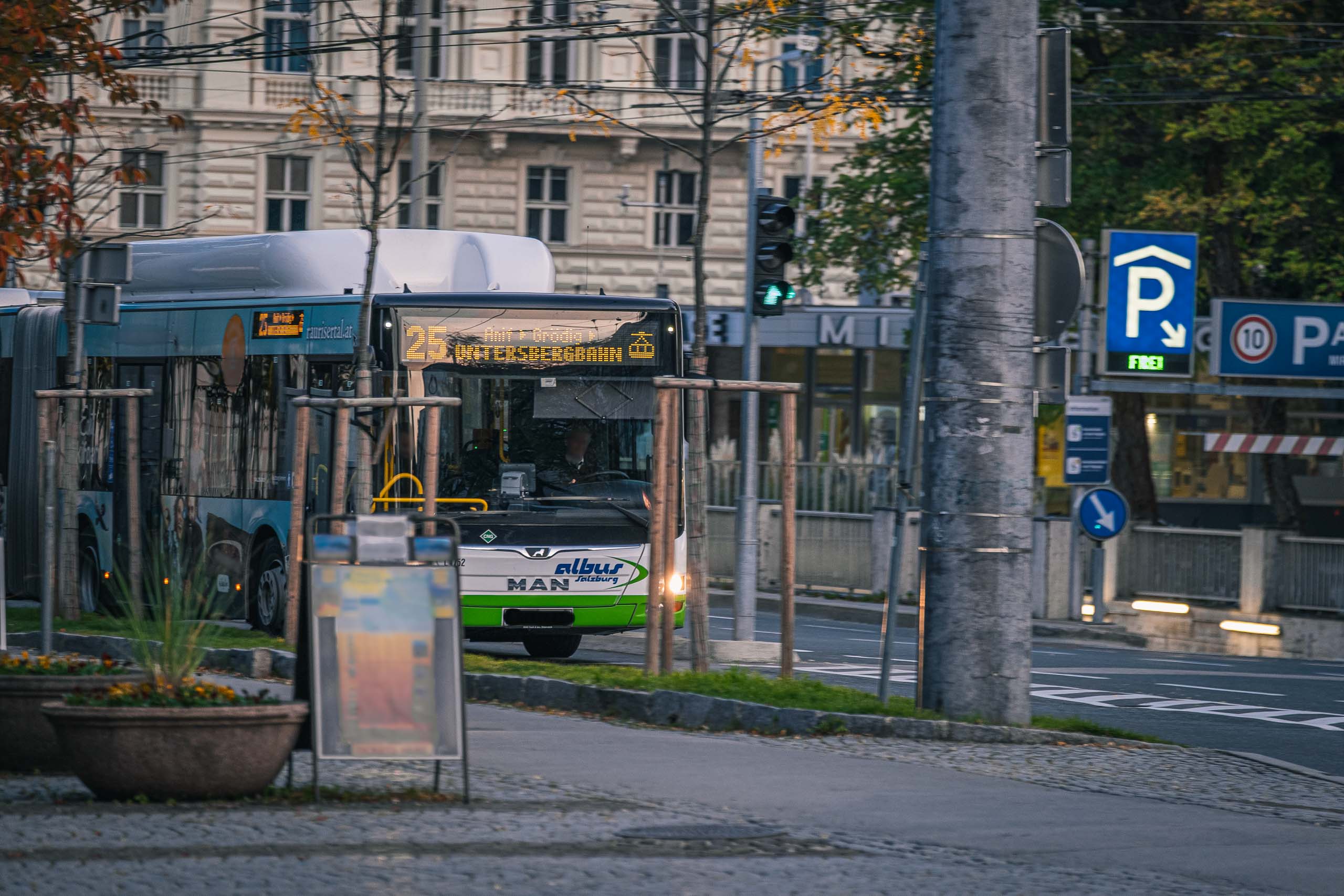
The square itself is the practical north face of all this: the side where buses stop, where locals cut through, where the Mirabell Christmas Market sets up in December.
Visiting
The square is always accessible. The palace interior, including the Marble Hall and Angel Staircase, is open Monday to Wednesday and Friday 8am-4pm, Thursday 1pm-4pm (check current hours at salzburg.at). The Mirabell Gardens are open daily, free. The formal garden with the fortress sightline is immediately south of the palace; the Dwarves Garden is in the northwest corner. Combine with the Kapuzinerberg stairway (starting a short walk east) for a morning circuit of the right bank.