Snapshot
Thin crepes rolled around apricot jam, curd cheese, or Nutella, dusted with icing sugar, and on every traditional menu in Salzburg. The name came via Hungarian from Romanian, which tells you something about how Austrian cuisine actually developed.
The Story
The name Palatschinken traces from the Romanian plăcintă through Hungarian palacsinta: the dish arrived in the Habsburg empire from the south-east and settled in permanently. It is a thin crepe, not a thick pancake, made from a simple batter of flour, eggs, and milk, fried in butter until just set, then rolled or folded around a filling and dusted with icing sugar.
The classic fillings are apricot jam, sweetened Topfen (curd cheese, similar to quark, not sour cream), and chocolate. Savoury versions with ham and cheese exist but they are beside the point as a dessert. The Topfen version is the most traditional: curd cheese softened with butter and a little sugar, sometimes enriched with raisins, rolled inside the crepe and dusted lightly. The apricot version, Marillenpalatschinken, uses Marillenmarmelade, noting that Austrians call apricots Marillen, not Aprikosen, and the difference matters when you are reading a menu.
This is not a dish that requires explanation or defending. It is straightforward, good, and available everywhere. Children order it immediately. Adults take longer to decide and then order the same thing.
Where to try it
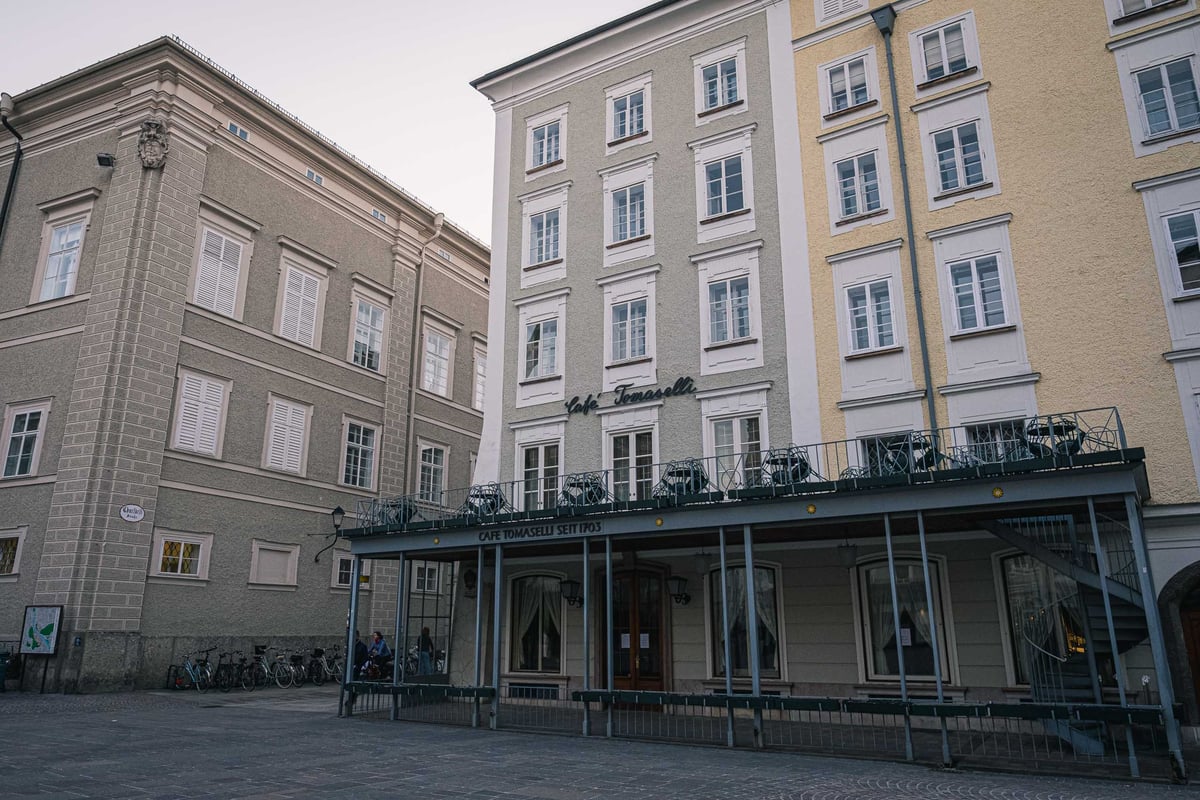
Stiftskeller St Peter and Cafe Tomaselli both serve Palatschinken in the traditional sweet format. Virtually every Gasthaus and café in Salzburg has them on the menu. The quality difference between establishments is smaller than you would expect.