
Monument
Residenzbrunnen
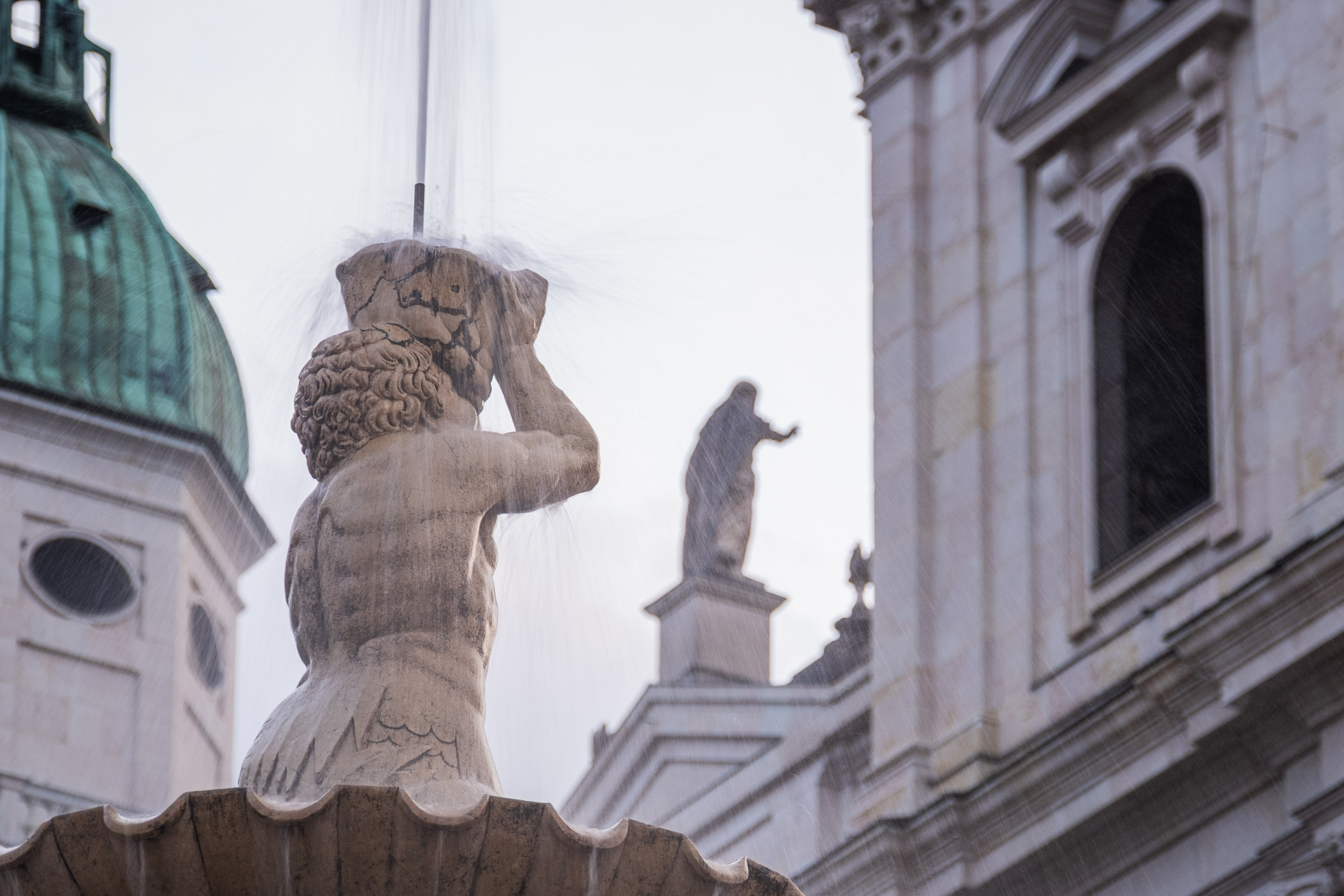
Show all 8 photos
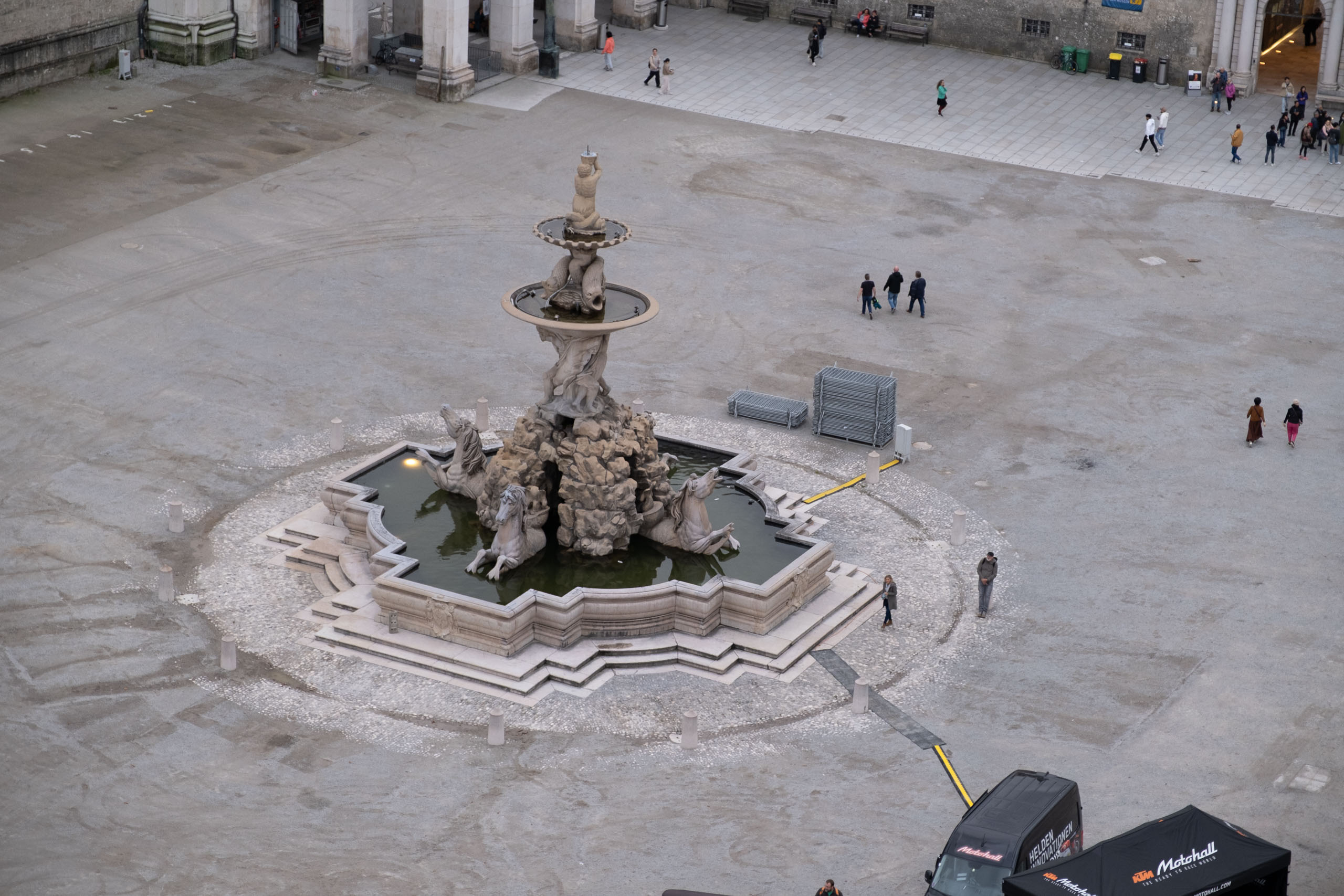
- Aerial view of the baroque Residenzbrunnen with tritons and horses on the empty Residenzplatz with people walking past in Salzburg (1 / 8)
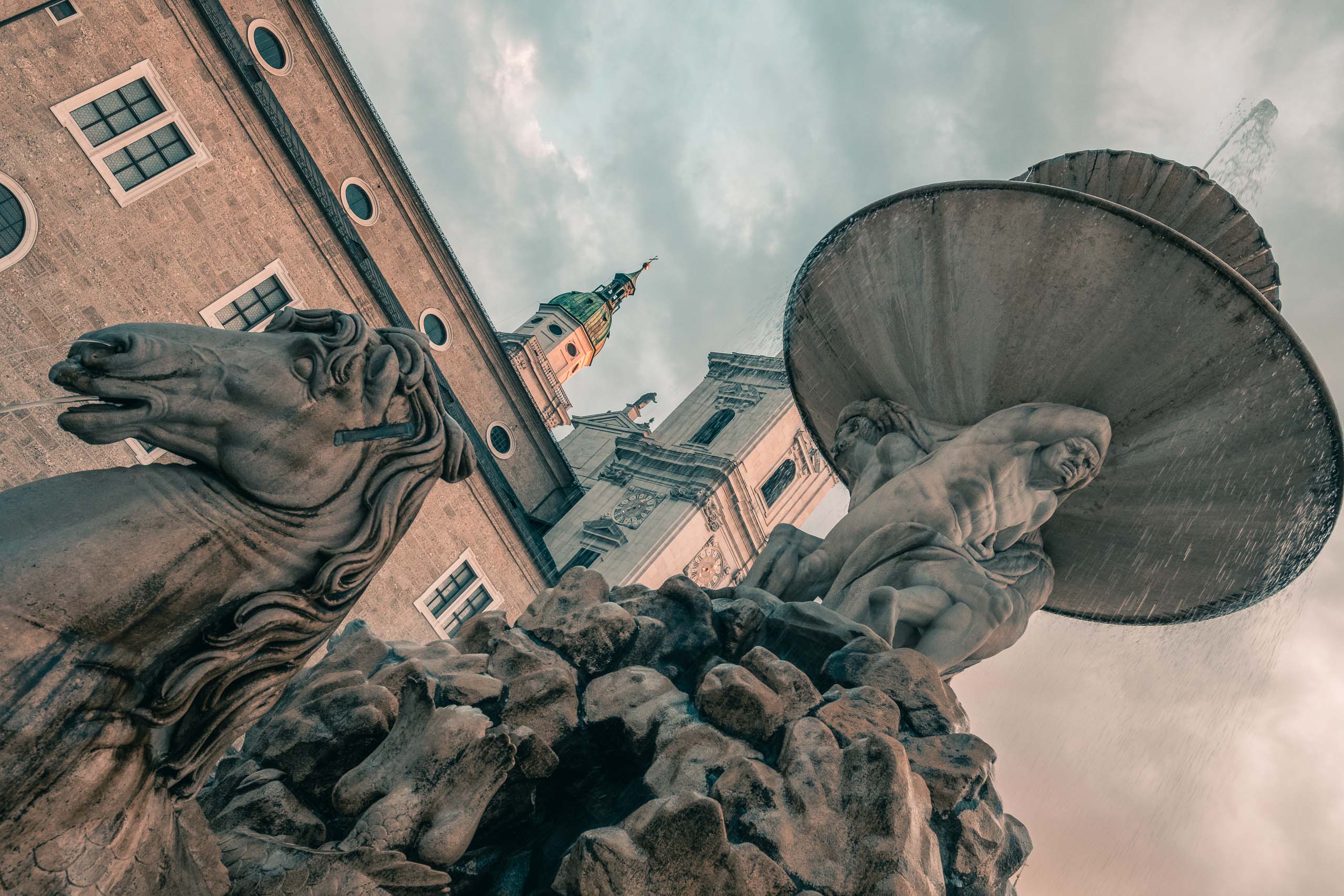
- Horse and triton figures of the Residenzbrunnen fountain with Michaelskirche tower behind in Salzburg. (2 / 8)
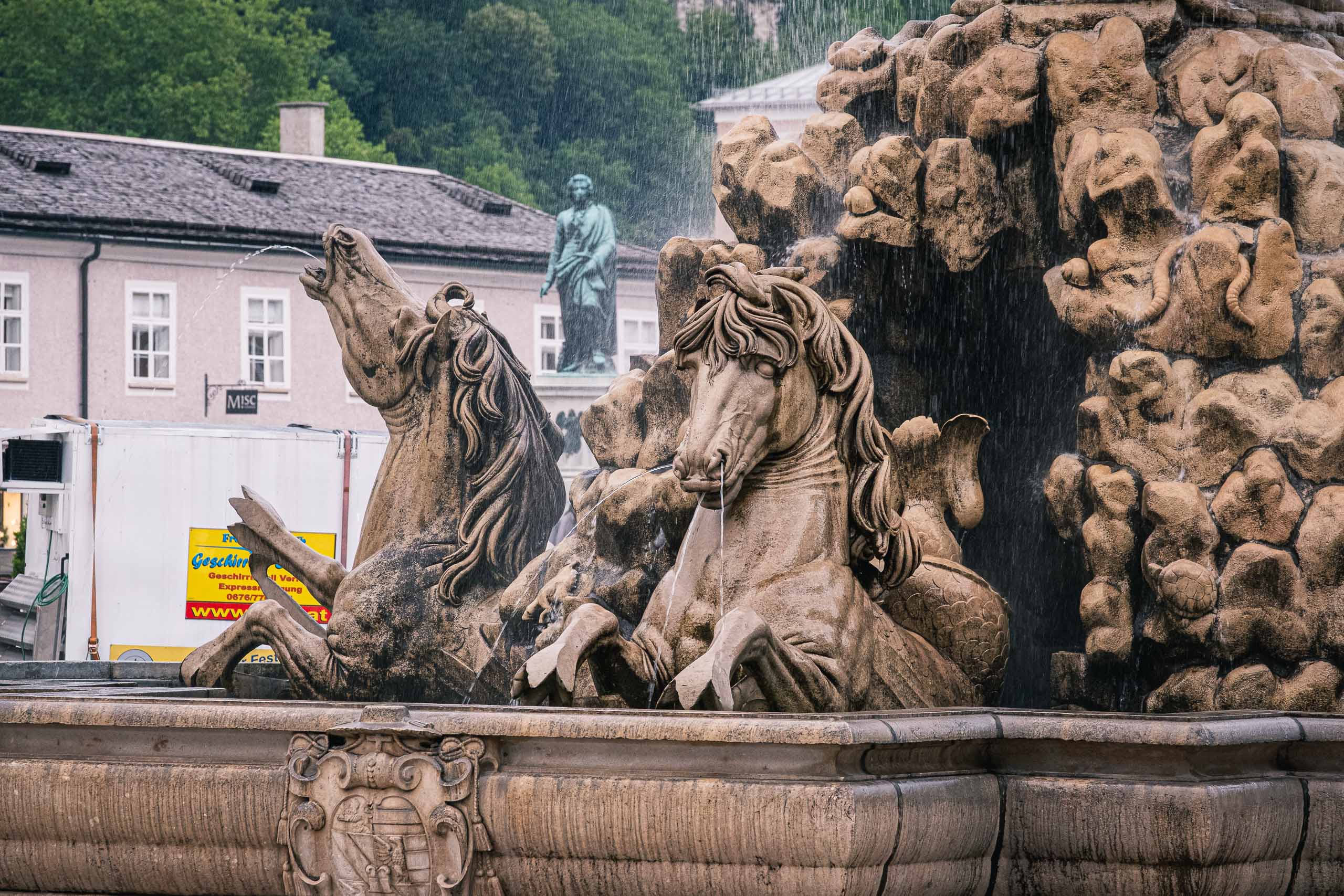
- Rearing horses and tritons with water jets on the Residenzbrunnen fountain in Salzburg old town (3 / 8)
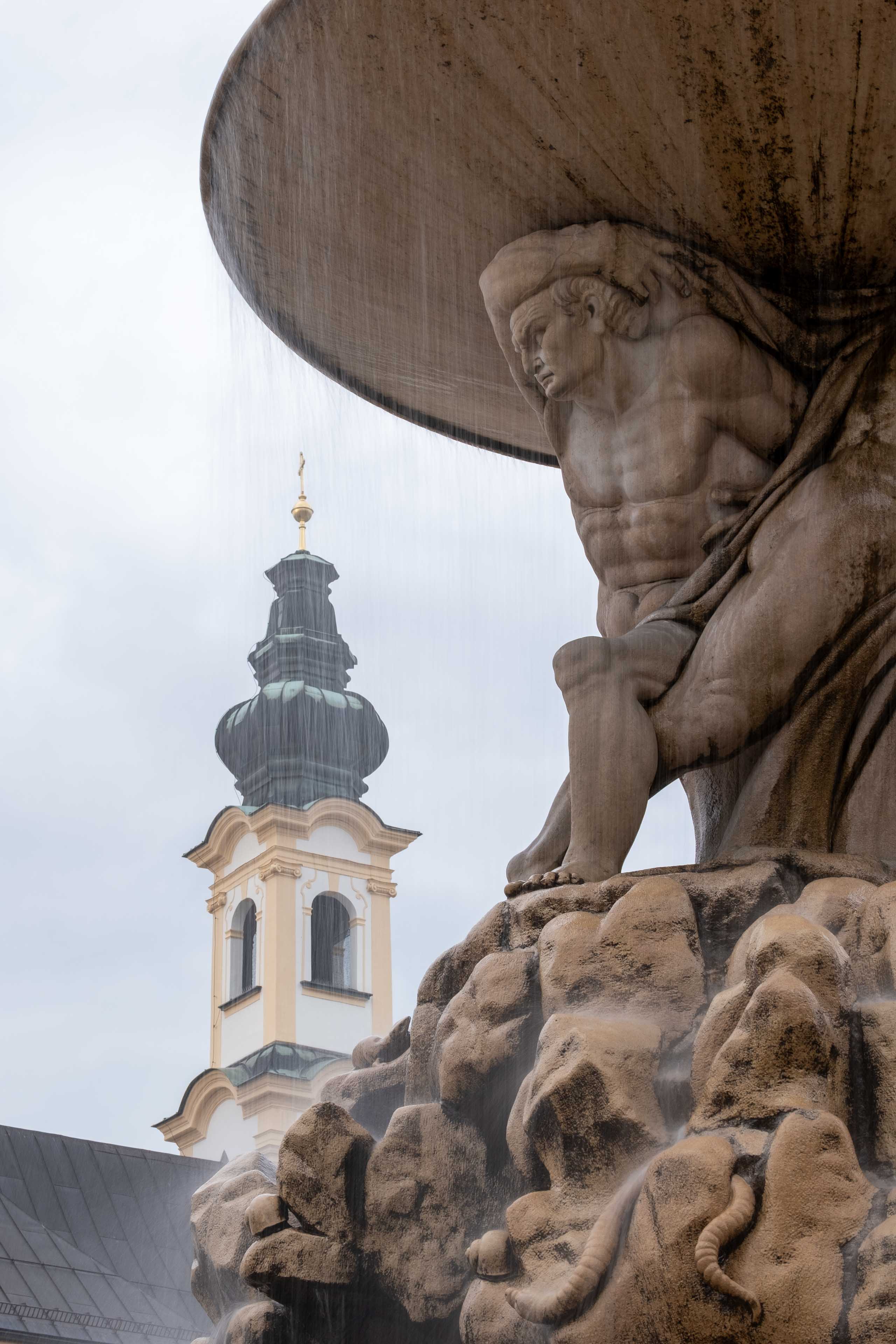
- Atlas figure holding fountain basin on Residenzbrunnen with Michaelskirche tower behind in Salzburg (4 / 8)
- Triton figure of the Residenz Fountain spouts water with the Cathedral dome behind in Salzburg old town. (5 / 8)
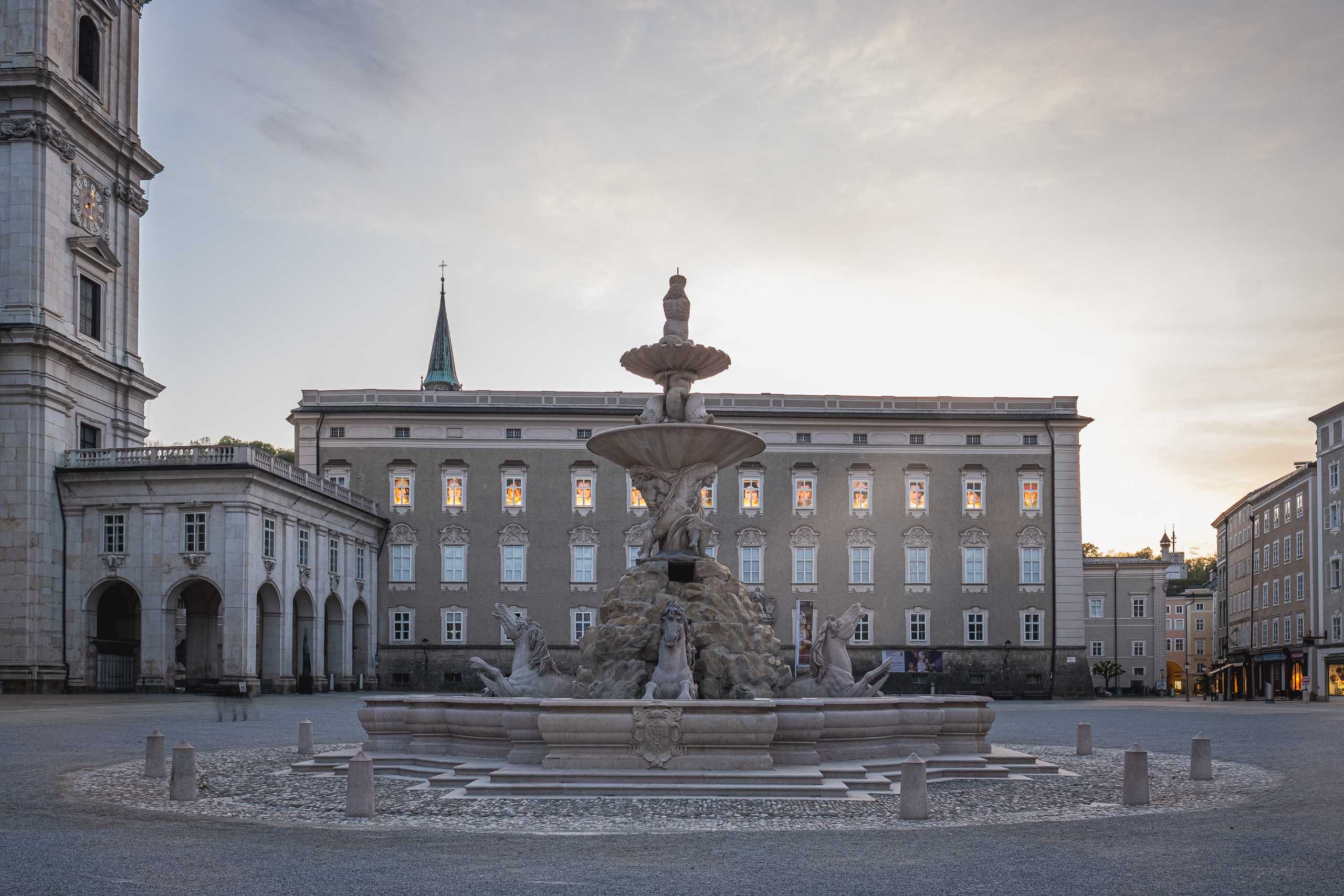
- Residenzbrunnen baroque fountain with horse figures on empty Residenzplatz at dusk in Salzburg (6 / 8)
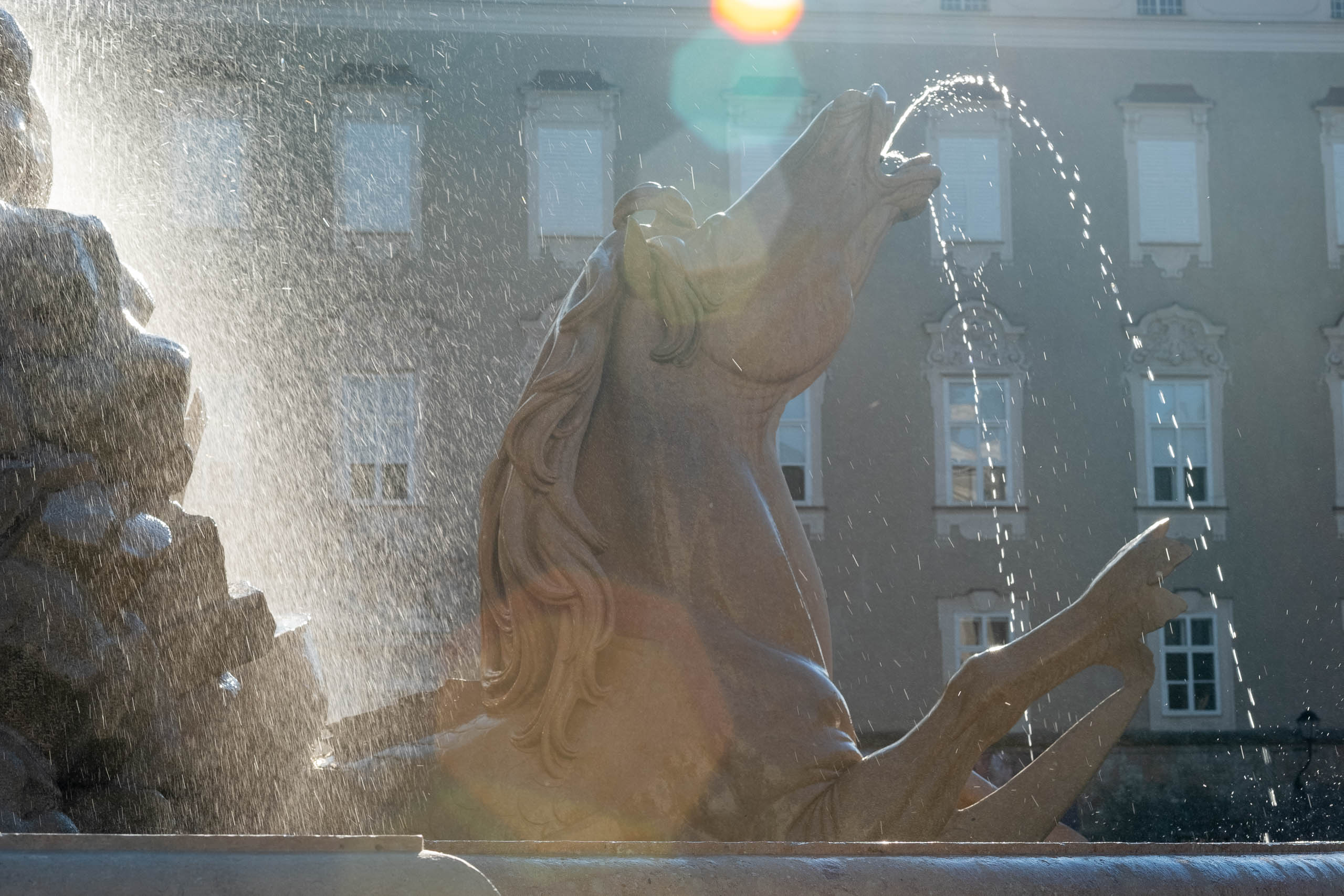
- Baroque horse sculpture spouting water at Residenzbrunnen fountain on Residenzplatz in Salzburg (7 / 8)
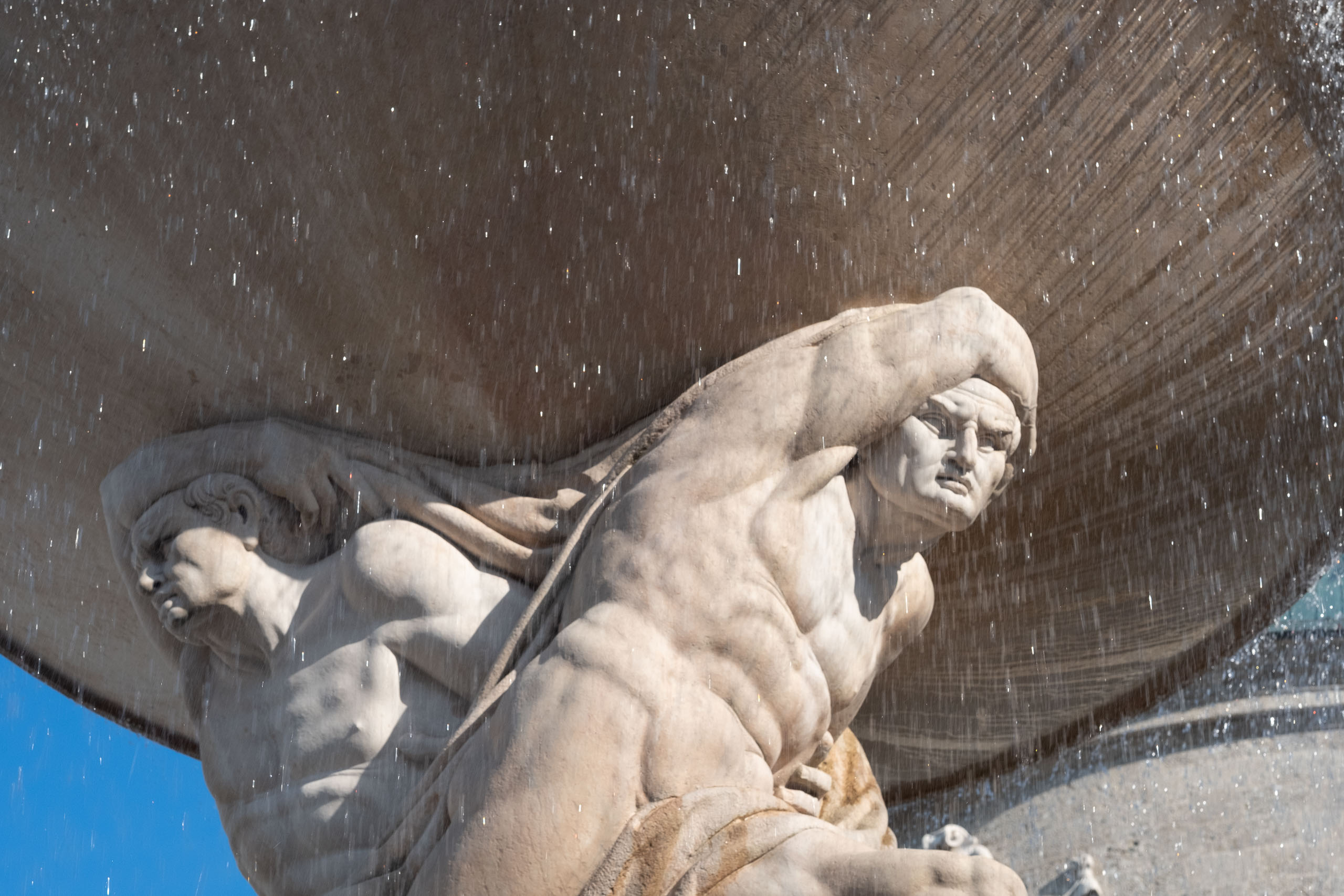
- Muscular Atlas figures supporting basin of Residenzbrunnen fountain on Residenzplatz in Salzburg (8 / 8)
Snapshot
The Residenzbrunnen stands at the centre of Residenzplatz, one of the largest baroque fountains north of the Alps. Commissioned in 1656 and completed in 1661, it is the visual anchor of Salzburg’s grandest square and the point from which the Salzburg Cathedral, the Residenz, and the Glockenspiel can all be seen at once.
The Story
Residenzplatz exists because Archbishop Wolf Dietrich von Raitenau had fifty-five medieval buildings demolished to create it. The space needed a centrepiece worthy of that ambition, and his successor Guidobald von Thun supplied it. In 1656 he commissioned the Italian sculptor Tommaso di Garona to build a fountain that would signal Salzburg’s standing as a northern court city equal to anything in Rome.
The result is over eight metres of Untersberg marble arranged in four tiers. At the base, Atlantes support a broad bowl. Hippocampi spout water from the rock formations. Three dolphins balance the upper basin. At the apex, Triton blows a conch shell. The marine iconography was deliberate: these figures from classical mythology were the visual language of Baroque power, expressing dominion over nature and over the civic sphere alike. The connection to Bernini’s Fontana dei Quattro Fiumi in Rome is not coincidental. Guidobald von Thun wanted a Salzburg version of Rome’s grandest public fountain, and he got one.
The fountain was completed in 1661 but not connected to a water supply until 1692, a thirty-year gap that says something about the relationship between political ambition and engineering reality in Baroque city-building. It has stood ever since. The Salzburg Festival’s outdoor Jedermann performances on Residenzplatz have made it one of the most photographed spots in Central Europe: the place where the Salzburg Cathedral facade, the fountain, and the audience all converge in a single frame.
Visiting
- Access: Free, always accessible; stands in the open square
- Time needed: 5-10 minutes at the fountain; the square warrants longer
- Combine with: Residenz, Salzburg Cathedral, Neue Residenz and Glockenspiel