Snapshot
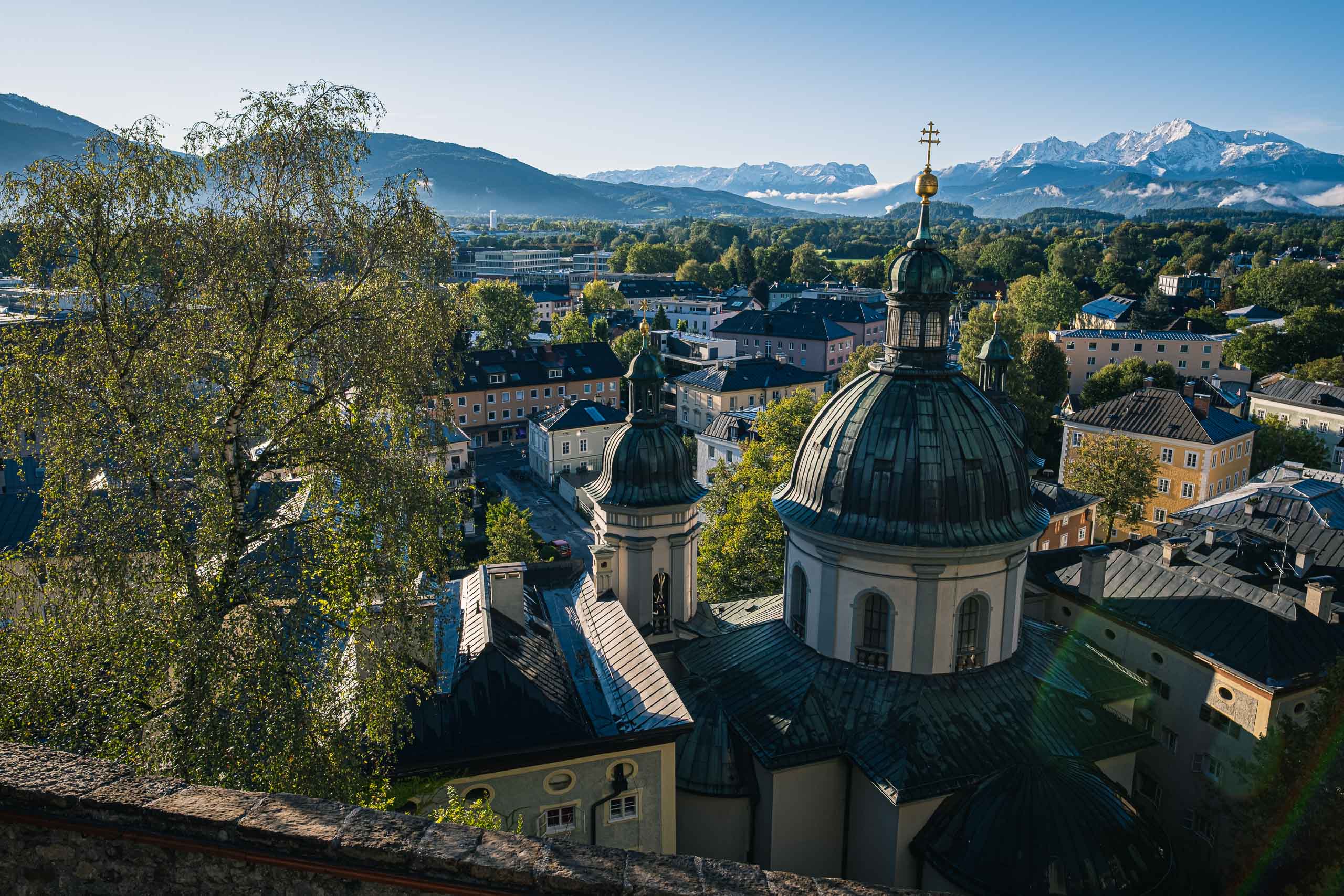
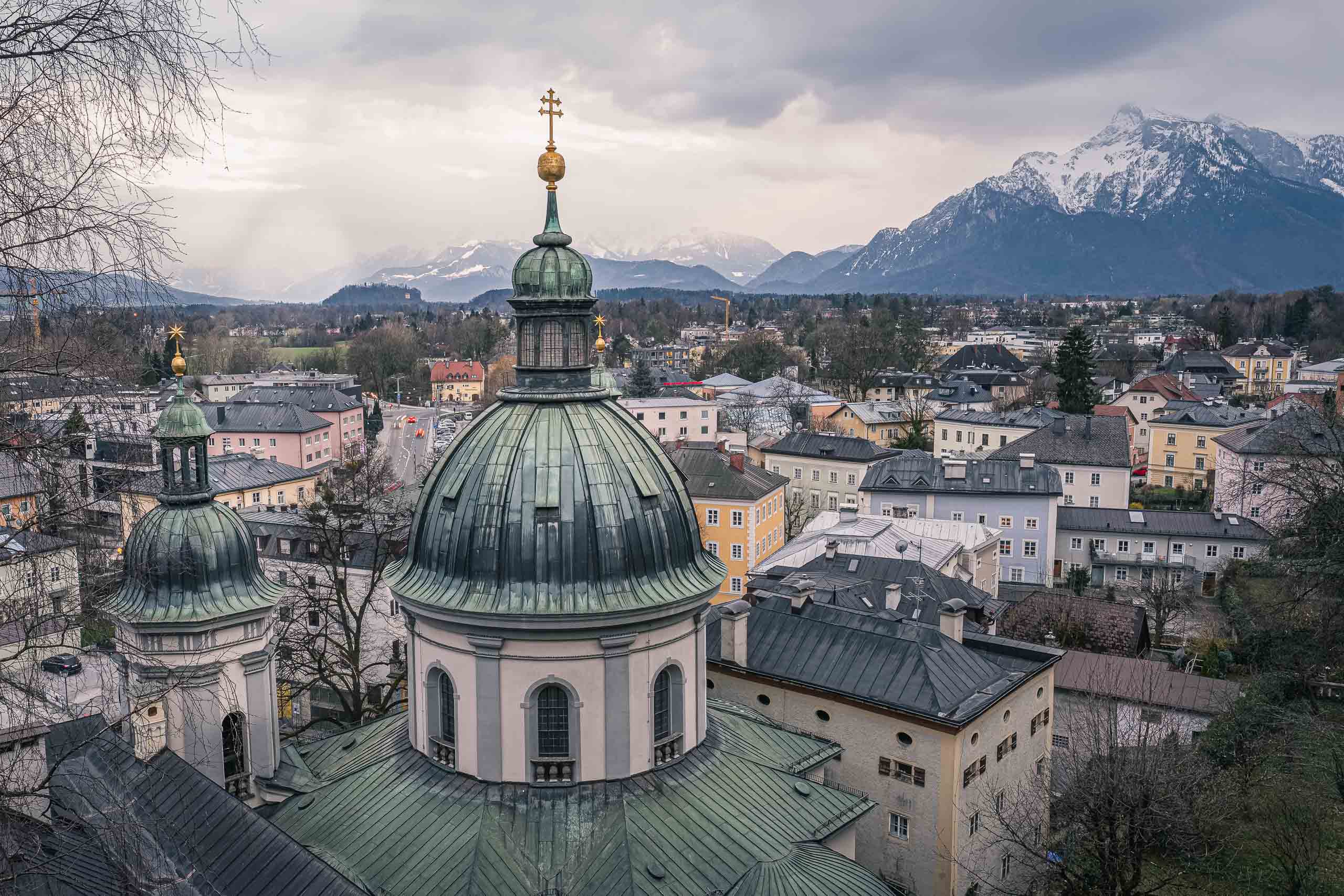
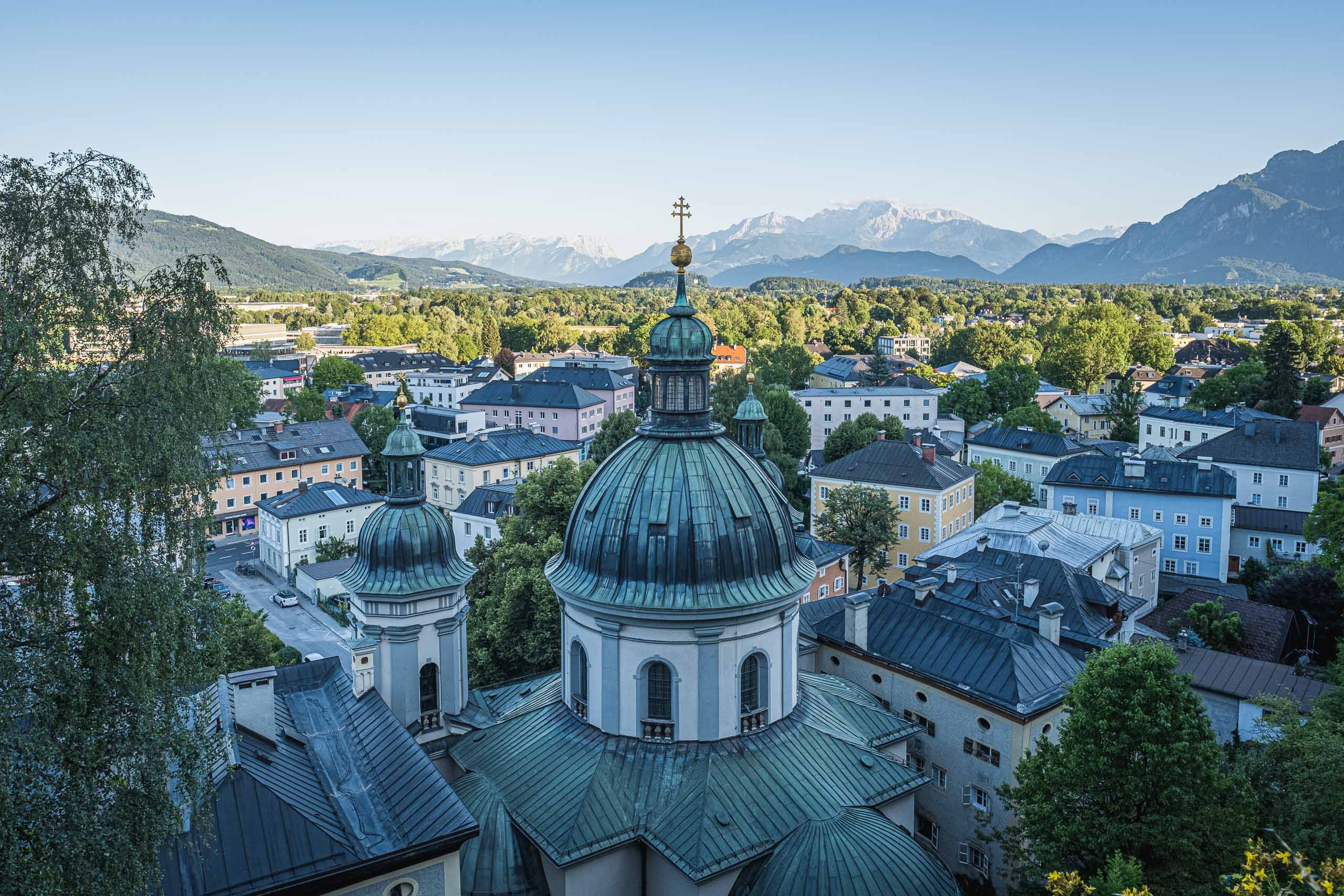
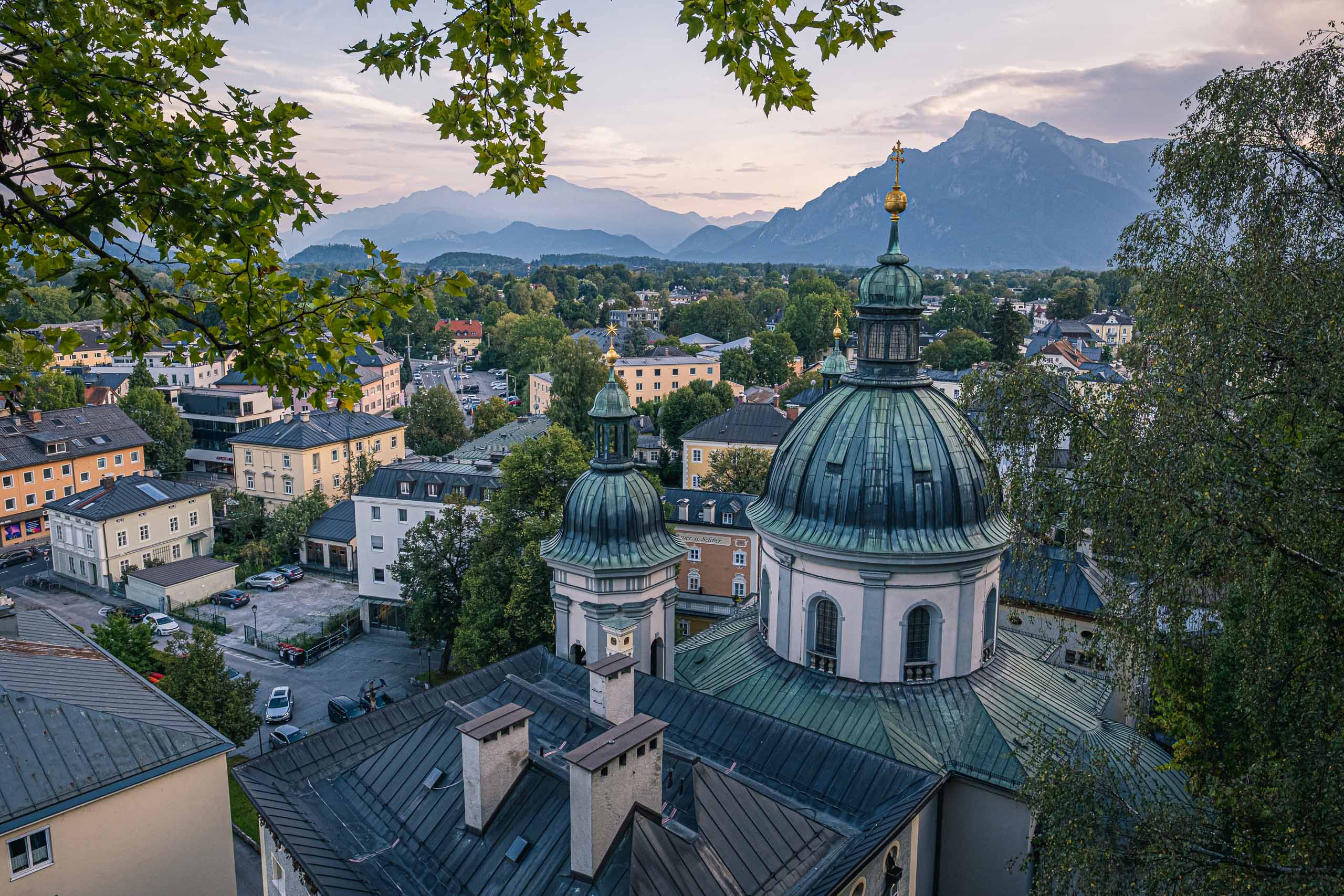
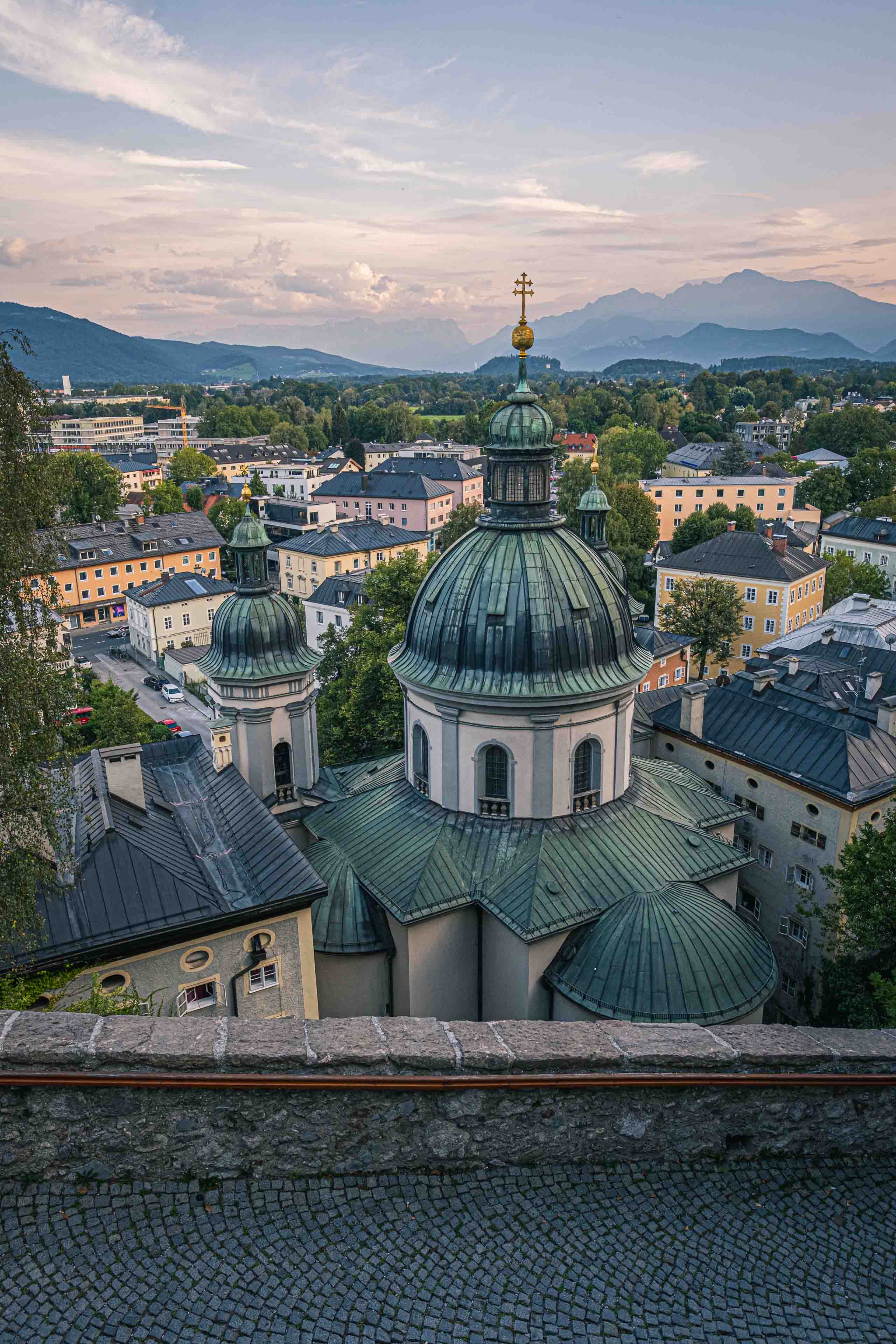
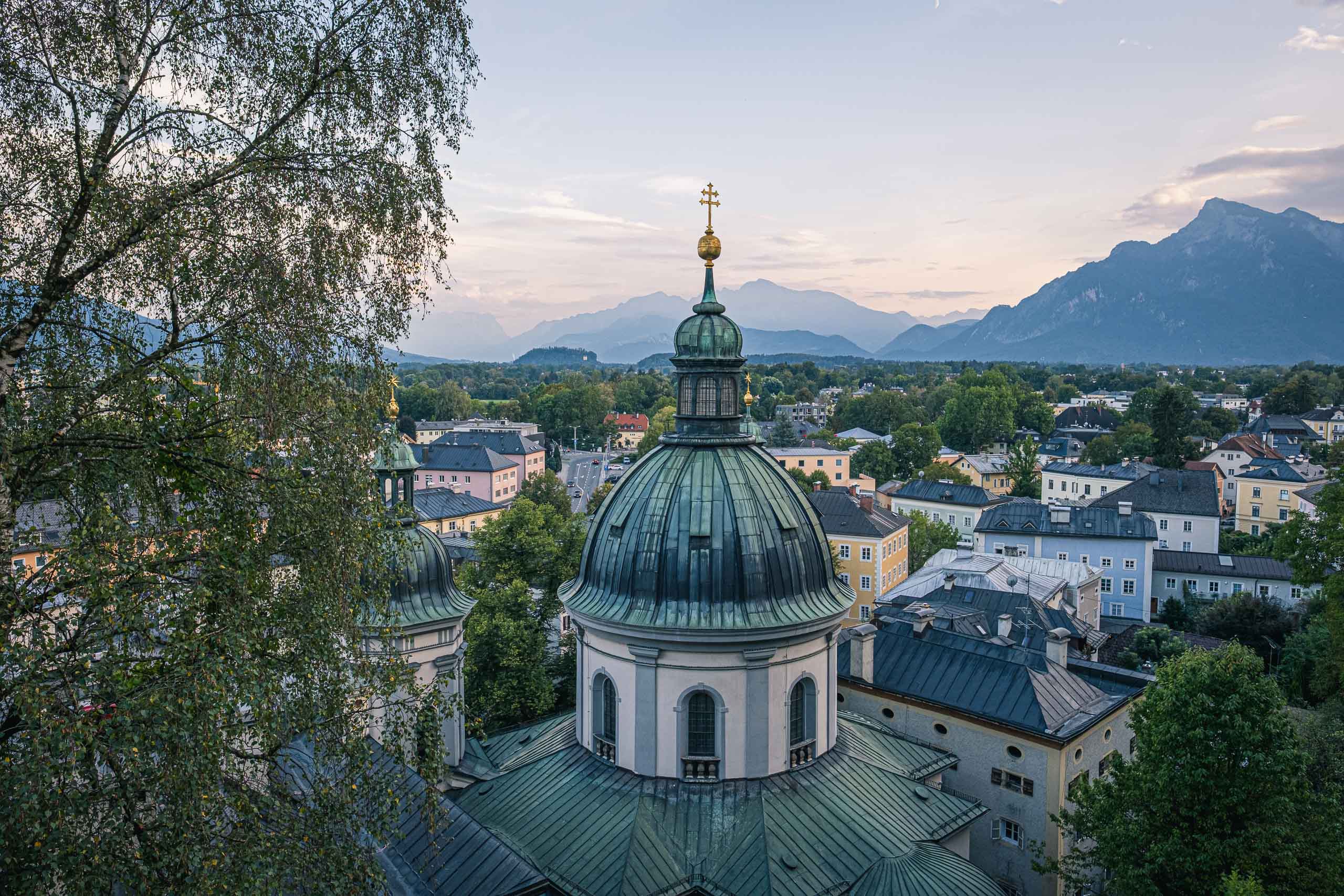
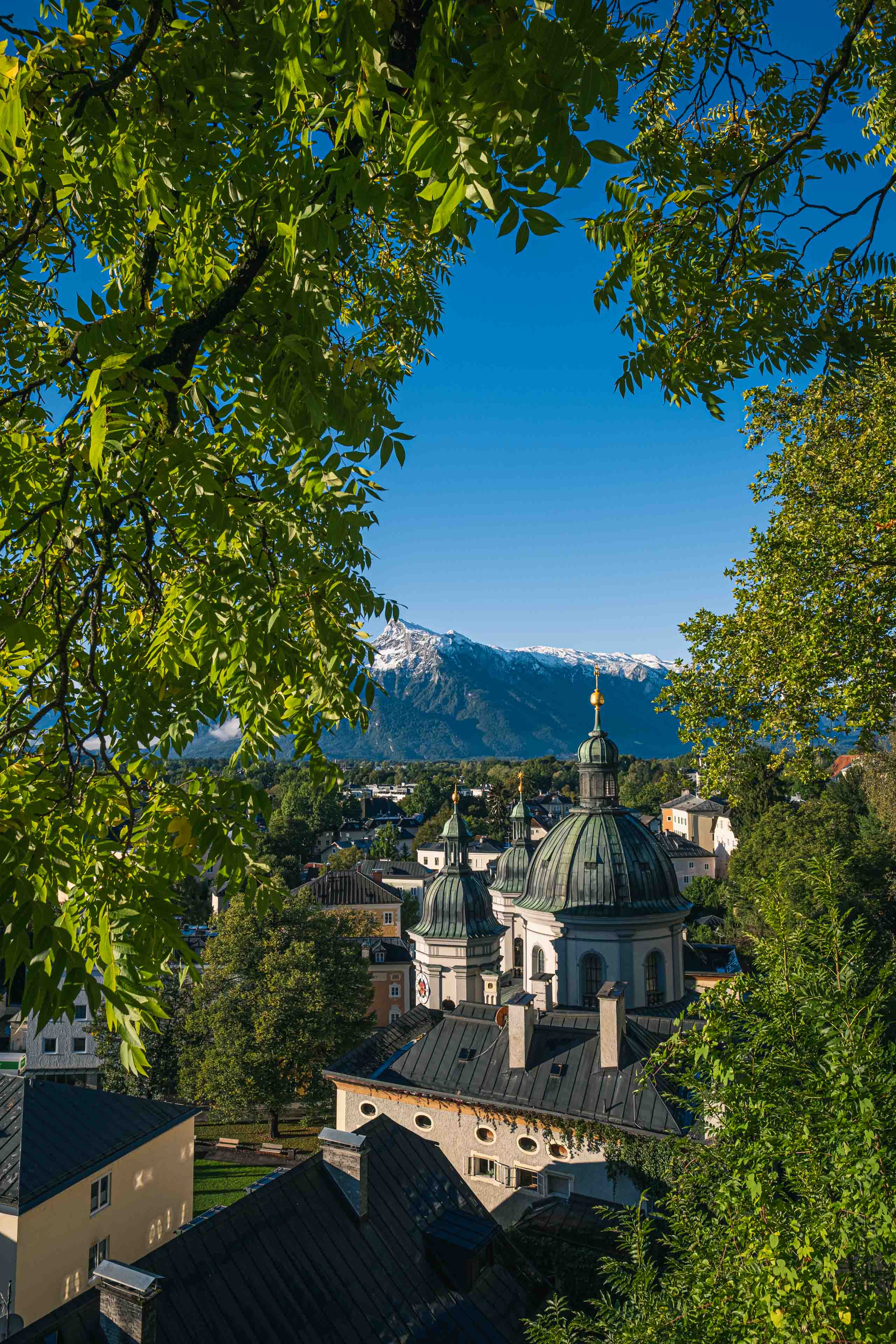
Tucked below Nonnberg Abbey in the Nonntal district, St. Erhard’s is one of the last two Italian-built Baroque churches in Salzburg. Wolfgang Amadeus Mozart composed works for it, and its elevated entrance tells the story of a neighborhood that flooded enough to require a staircase just to reach the door.
The Story
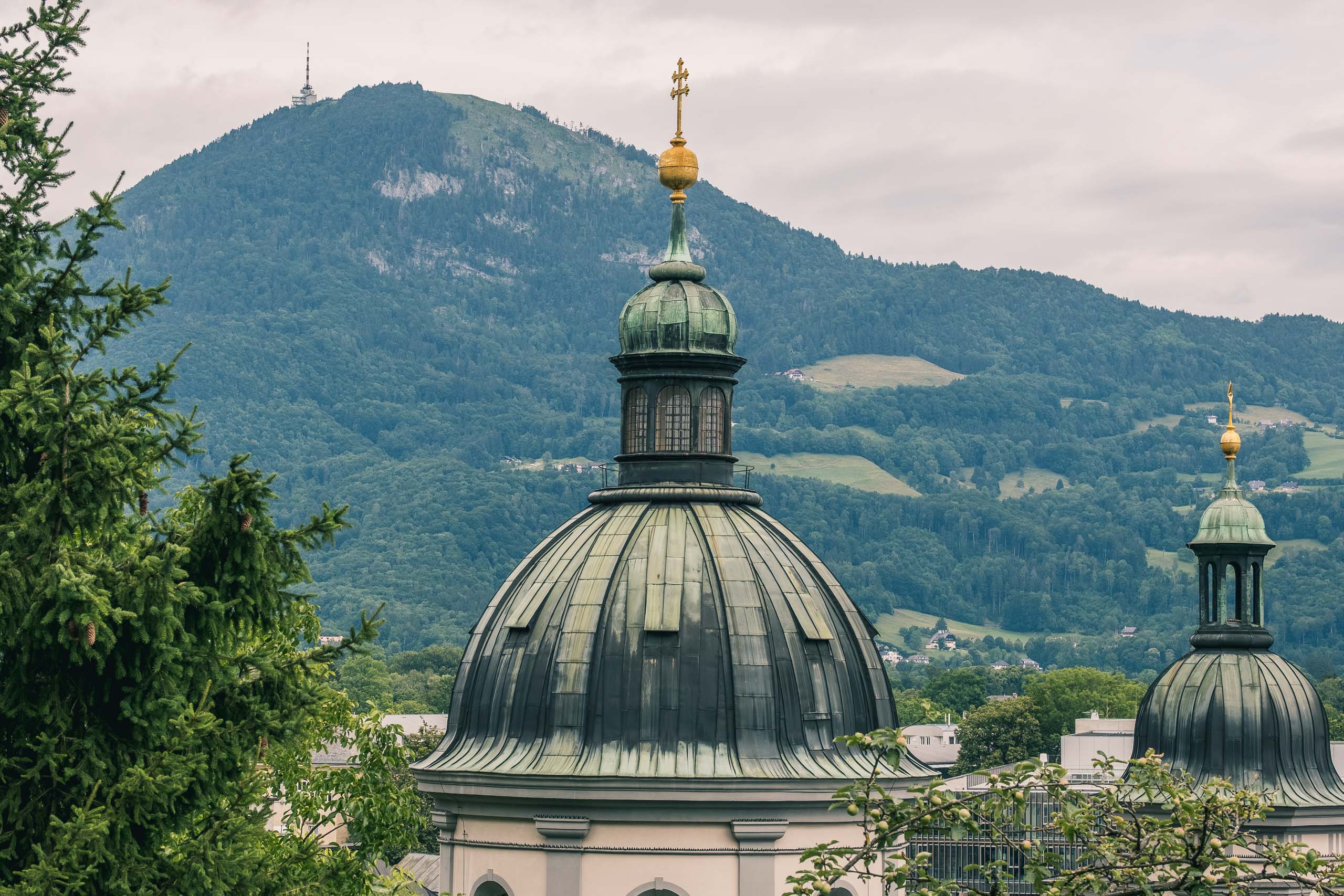
The site has a longer charitable history than the current building suggests. A 13th-century chapel and a 1310 plague hospice stood here before Archbishop Max Gandolph von Kuenburg commissioned Giovanni Gaspare Zuccalli to replace them in 1685. Zuccalli, an Italian-trained architect and cousin of Enrico Zuccalli, used a Greek-cross plan with a circular drum and modest cupola, a compact and elegant form that became quietly influential. Scholars have argued that his design nudged Johann Bernhard Fischer von Erlach’s thinking toward the centrally-planned Baroque churches he would later build in Salzburg and Vienna.
The double-sided entrance staircase was not a decorative flourish. Nonntal flooded regularly, and the raised gate was a functional response. At its base, the 1688 lion-head gargoyle fountain by Andreas Gotzinger still produces water that locals once credited with healing properties, a remnant of the site’s hospital past.
Inside, the high altar from 1692 presents Johann Michael Rottmayr’s “Baptism of St. Ottilia by St. Erhard” on twisted stucco pillars. The dome’s eight medallions narrate St. Erhard’s life; four more depict the cardinal virtues. The sculptor and stucco artists were the Brenno family, brought from the same Italian workshop tradition as Zuccalli himself.
Wolfgang Amadeus Mozart composed the Missa Brevis K. 65 and the Litaniae K. 109 for this church. The building served as a hospital chapel until 1853, when it became a full parish. Alongside the Cajetan Church, it stands as one of the final examples of Italian Baroque church-building in Salzburg.
Visiting
On Nonntaler Hauptstrasse in the Nonntal district, below the slope of Nonnberg Abbey. Free entry. Open during daytime hours, reportedly closed midday in summer. The elevated entrance staircase is the first thing to notice. Look for the lion-head fountain at the base of the stairs. Combine with Nonnberg Abbey directly above and Cajetan Church a short walk away for a complete picture of Salzburg’s Italian Baroque period.