Story
The Original Mozartkugel: A Legal Battle in Chocolate
Published March 25, 2026 · Updated July 25, 2026
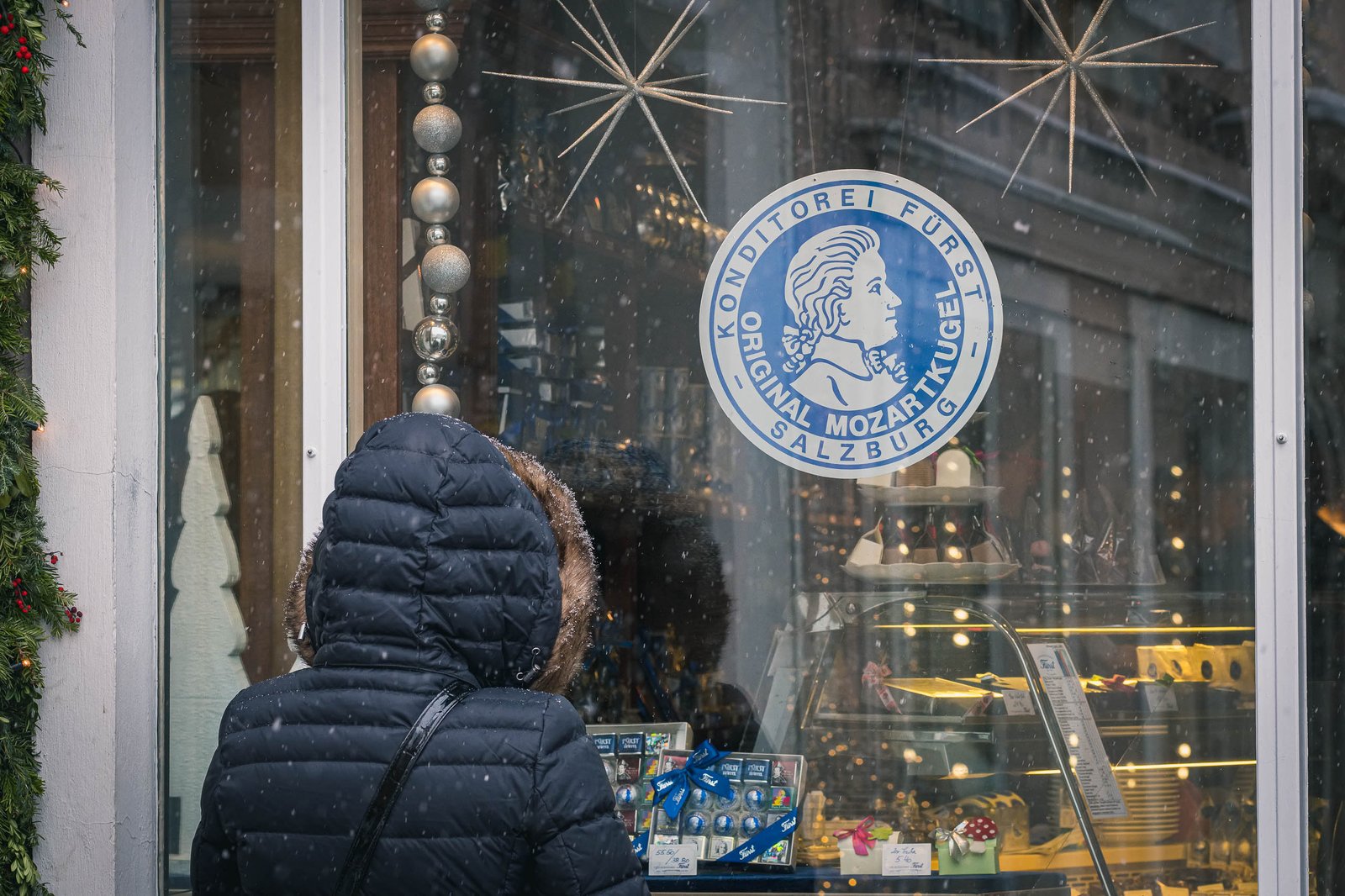
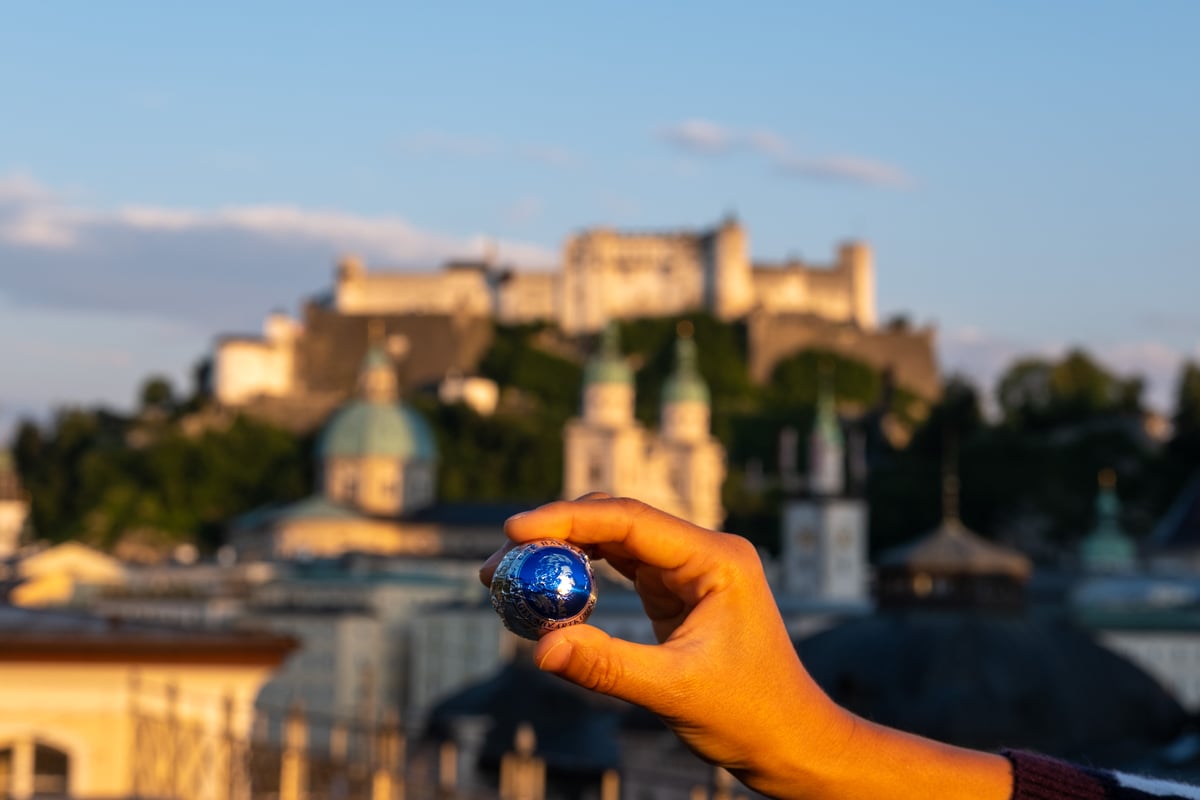
The original Mozartkugel is wrapped in blue and silver foil, made by hand, and sold only in Salzburg. The one you see at every airport and supermarket in Austria, the red and gold version, is a mass-produced copy that has nothing to do with the man who invented it.
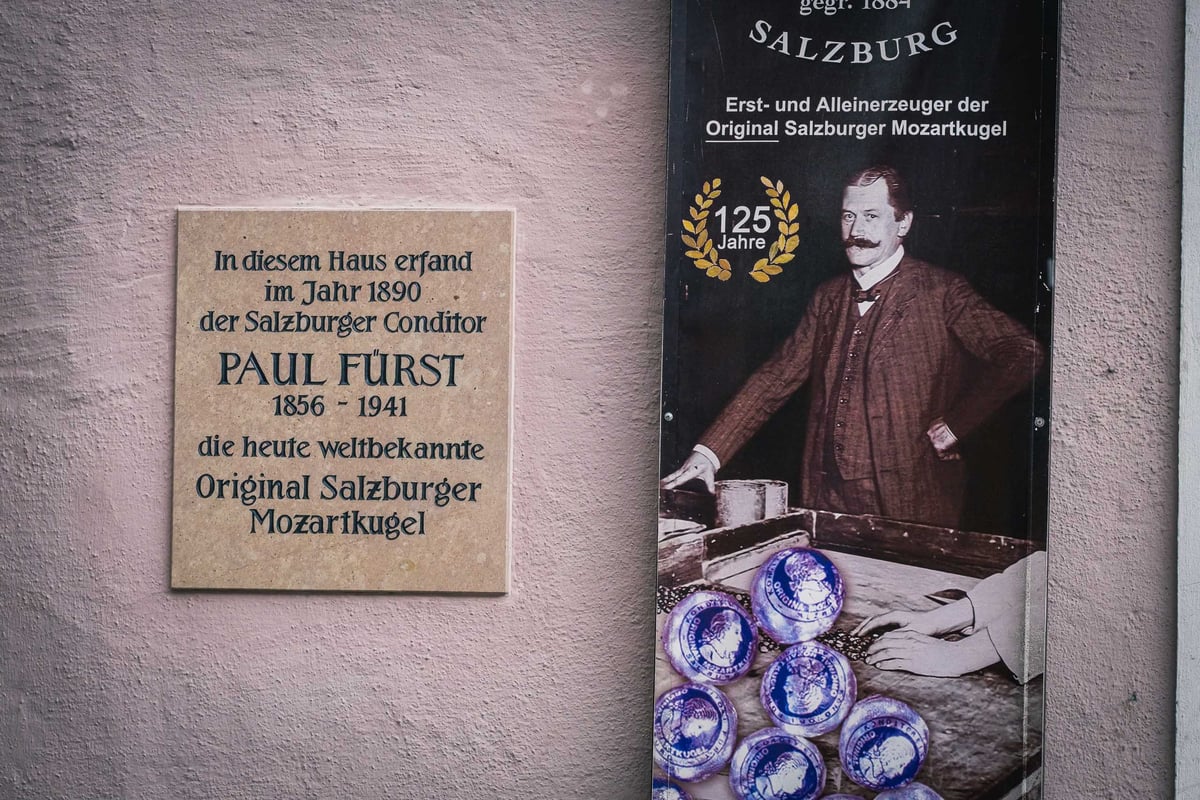
That man was Paul Fuerst, a confectioner from Salzburg. He created the Mozartkugel in 1890 and named it after the composer. He won a gold medal for it at the 1905 Paris exhibition. Then he forgot to register the patent. By the time he returned to Salzburg, everyone was already copying him.
That one mistake turned a handmade chocolate ball into a century-long legal war.
How a Mozartkugel Is Made
The original is not factory chocolate. A ball of pistachio marzipan is wrapped around a core of nougat, placed on a wooden stick, and dipped into dark chocolate by hand. The stick leaves a small hole at the bottom, which is filled with chocolate and sealed with a dot. The result is not perfectly round. That is how you know it is real.
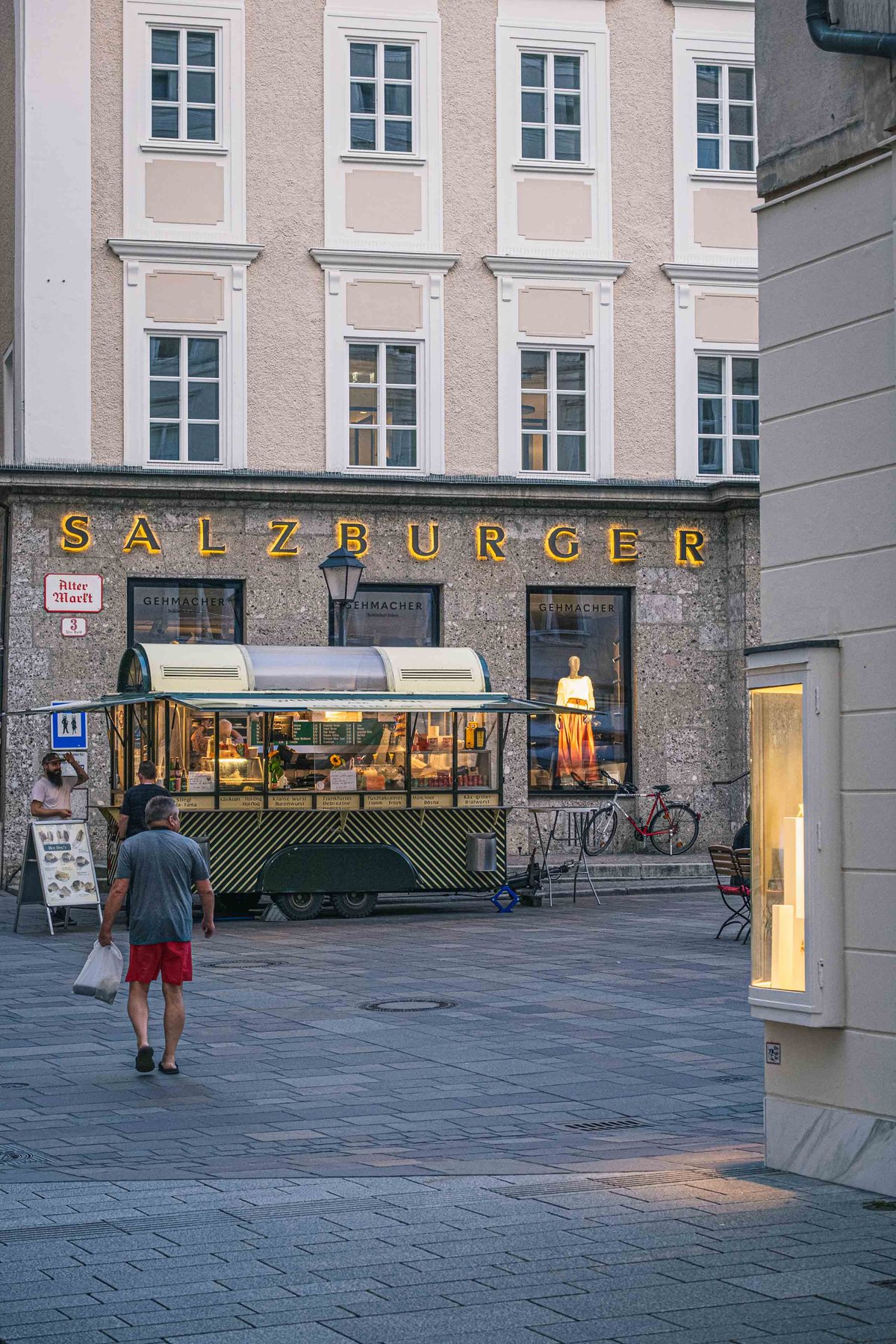
Konditorei Fuerst on Alter Markt still makes them this way. Every single one by hand. No machines. Natural ingredients, which means a shelf life of only a few days. You cannot mail them home and expect them to survive. You eat them in Salzburg or not at all.
The Patent He Forgot
Paul Fuerst presented his invention at the 1905 Paris exhibition and won a gold medal. The chocolate became famous overnight. What Fuerst did not do was register a patent.
Before he even returned to Salzburg, other confectioners had started copying the recipe. Within years, mass producers entered the market. The original handmade product was being undercut by factory versions wrapped in flashier foil and sold at a fraction of the price.
The Fuerst family has been fighting that battle ever since.
The Legal Battles
Fuerst vs Everyone
Since 1996, Konditorei Fuerst is the only company in the world legally allowed to call their product “Original Salzburger Mozartkugeln.” They fought lawsuits to get there, including one against Nestle.
The result is a precise hierarchy of naming rights:
| Company | Allowed Name | Wrapper |
|---|---|---|
| Fuerst (Salzburg) | “Original Salzburger Mozartkugeln” | Blue and silver |
| Mirabell (Austria) | “Echte Salzburger Mozartkugeln” (Real) | Red and gold |
| Reber (Germany) | “Echte Reber Mozartkugeln” | Cannot use “Salzburg” at all |
Mirabell may say “real.” Only Fuerst may say “original.” Reber, the German company that produces around half a million Mozartkugeln per day, cannot even put the city name on the packaging.
The Scale of the Copies
Reber alone produces roughly 180 million Mozartkugeln per year. Eighty percent of those are sold and consumed in Germany. Mirabell adds millions more. The supermarket versions are everywhere: gas stations, airports, hotel lobbies, duty-free shops.
Fuerst produces theirs by hand, one at a time, in a kitchen in Salzburg. There is no comparison in scale. There is no comparison in taste either, but that is for you to verify.
How to Tell the Original
| Feature | Fuerst Original | Mass-Produced |
|---|---|---|
| Foil color | Blue and silver | Red and gold (Mirabell), gold (Reber), various others |
| Shape | Slightly imperfect, not perfectly round | Machine-round, uniform |
| Hole at bottom | Visible dipping stick mark | No hole (machine-dipped) |
| Shelf life | Days (natural ingredients) | Weeks to months |
| Available | Salzburg only (4 Fuerst locations) | Worldwide |
| Price per piece | Approximately 1.50 EUR | 0.40-0.80 EUR |
If the wrapper is red and gold, it is not the original. If it is perfectly round, it is not the original. If you bought it at an airport, it is definitely not the original.
Where to Buy the Real One
Fuerst has four locations in Salzburg. The most famous is on Alter Markt, in the old town square with Cafe Tomaselli across the way.
My recommendation: buy at the Ritzerbogen branch instead. At the Alter Markt cafe, I have witnessed rude behavior from the waiters more than once, which I am allergic to. The Ritzerbogen ladies are always friendly, despite the crowds besieging them.
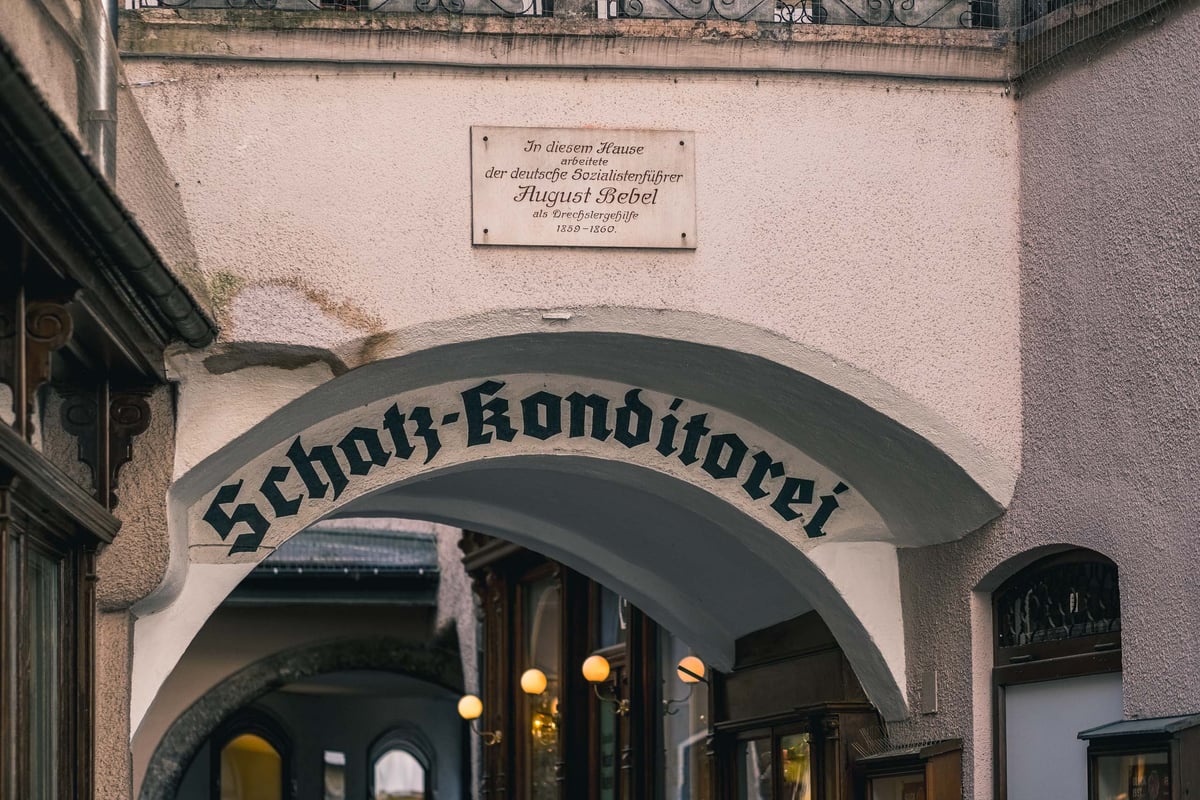
If you want an alternative, Konditorei Schatz is a family business just as old as Fuerst. They started their own chocolate ball production more than a hundred years ago and still handcraft them. I recommend Schatz for the best cakes in Salzburg anyway, so the chocolate is a bonus.
Why They Are Not a Good Gift
This is the part nobody tells you until it is too late. Fuerst uses natural ingredients. No preservatives. The shelf life is days, not weeks. You can buy a cool bag at the shop, but even with the bag, you should eat them within a few days.
If you want to bring Mozartkugeln home as a gift, you are stuck with the mass-produced versions. They last longer. They taste different. But they will survive the flight.
The original is a thing you experience in Salzburg. Like the fortress or the trick fountains. It does not travel well. That is part of what makes it worth seeking out.
What Paul Fuerst Started
Paul Fuerst could not have imagined what his forgotten patent would become. A legal category. A naming hierarchy enforced by courts. A production volume of hundreds of millions per year across dozens of manufacturers. A souvenir industry that generates more revenue than most of Salzburg’s museums.
All from a pistachio marzipan ball on a stick, dipped in chocolate by a confectioner who won a gold medal and forgot to fill out a form.
The original is still on Alter Markt. Still handmade. Still blue and silver. Go to the Ritzerbogen branch. The ladies are nicer.