Story
Mozart's Death: The Skull, the Grave, and What We Actually Know
Published March 25, 2026 · Updated July 25, 2026
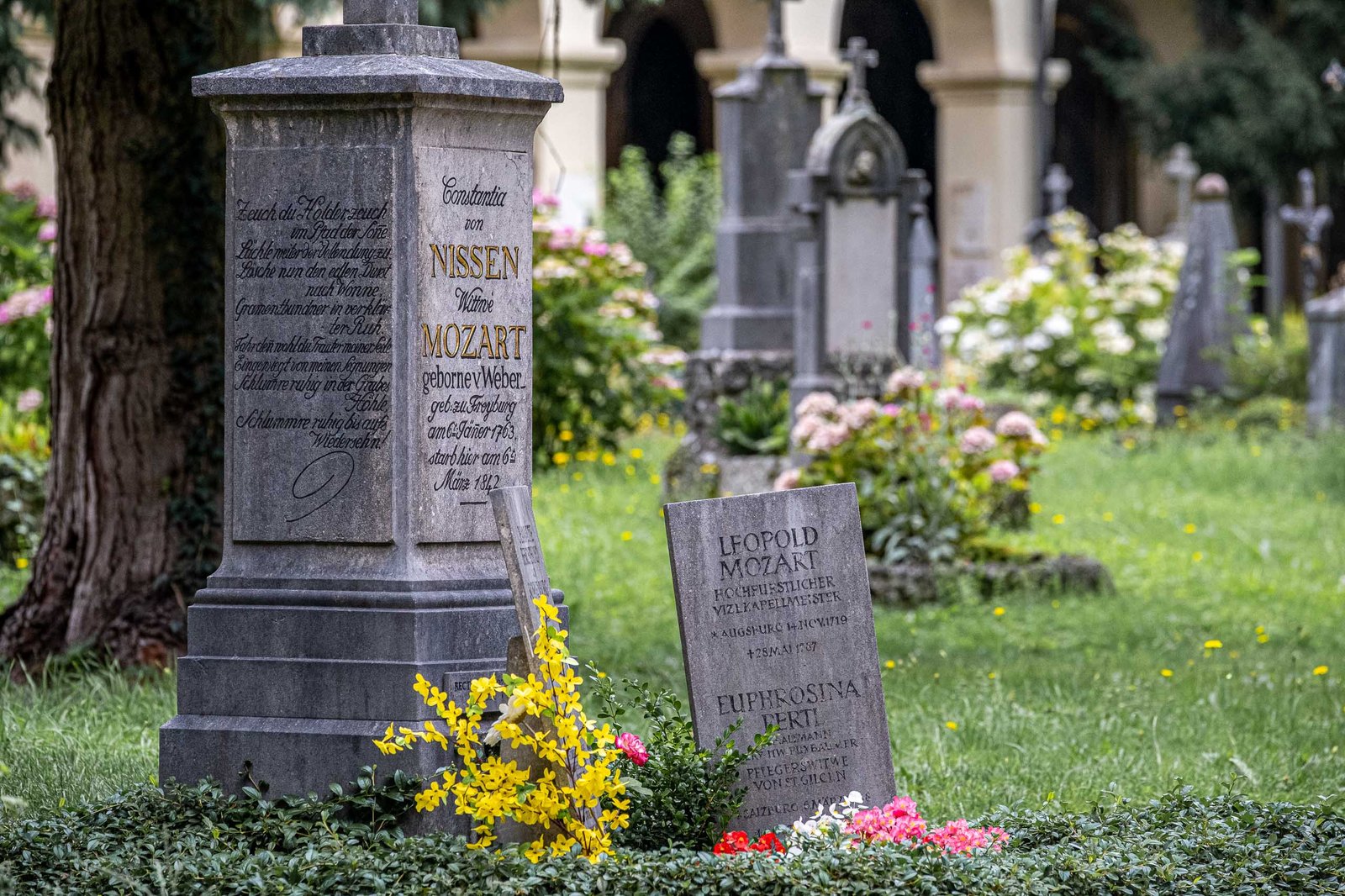
Mozart died in Vienna on 5 December 1791. He was thirty-five. We do not know what killed him. We do not know where he is buried. A skull that spent over a century in the Mozarteum probably is not his. And the family grave in Salzburg contains people who, according to DNA, are not related to each other.
When I tell this part of the story on tours, it is the moment people stop glancing at their phones.
What Happened in December 1791
Mozart had been working on his Requiem, a commission from an anonymous patron. He fell ill in mid-November. By late November, he was bedridden. On 4 December, he reportedly sang parts of the unfinished Requiem with visitors at his bedside. He died shortly after midnight on 5 December.
Constanze was devastated. She climbed into the bed beside him, hoping to catch whatever he had, so she could die too. She did not die. She lived another fifty-one years.
The Requiem was unfinished. Mozart’s student Franz Xaver Sussmayr completed it after his death. Which parts are Mozart’s and which are Sussmayr’s is still debated.
What Killed Him
Nobody knows. Mozart himself believed he was being poisoned. He told Constanze so near the end. He did not name a suspect. The Salieri theory was invented decades later by Alexander Pushkin and turned into global truth by the film Amadeus. Salieri had no motive, was more successful than Mozart at the time, and taught Beethoven, Schubert, and Liszt after Mozart’s death. The poisoning theory has no medical or historical support.
What medical historians have proposed instead: rheumatic fever, kidney disease, streptococcal infection, mercury poisoning from medical treatment, or a combination. The symptoms described in contemporary accounts, swelling, fever, rash, immobility, fit several conditions. None fit perfectly. After 230 years, the diagnosis will probably never be settled.
The Lost Grave
Mozart was buried at St. Marx Cemetery in Vienna. The popular version treats this as a scandal: the greatest composer in history thrown into a pauper’s grave, forgotten by his own city.
The reality is bureaucratic, not tragic. Emperor Joseph II had reformed Viennese burial practices in the 1780s. Individual grave markers were discouraged for all but the aristocracy. Communal burial plots were standard for the middle class. Mozart’s funeral and burial followed the norm for someone of his social standing. It was not a comment on his value. It was the law.
What is genuinely strange is that nobody recorded where exactly he was buried. When interest in Mozart grew in the 19th century, the specific location could not be recovered. A memorial was placed at St. Marx in 1859, but it marks an approximate area, not a confirmed grave. The angel statue that tourists photograph is a monument to uncertainty.
We do not know where Mozart is. That is not a myth or a tragedy. It is a fact.
The Skull
A skull entered the collection of the Stiftung Mozarteum in the 19th century with the claim that it was Mozart’s. The story of how it was obtained involves a gravedigger, a sexton, and a chain of custody that would not survive five minutes in a modern courtroom.
The skull was studied, displayed, debated, and gradually accepted as probably authentic. It became one of the most examined skulls in history.
Then DNA testing arrived.
In 2006, researchers tested the skull against remains from the Mozart family grave at Sebastiansfriedhof in Salzburg, where Leopold Mozart, Constanze, and other family members are buried.
The result: the skull does not match anyone in the family grave. But the investigation uncovered something even more unsettling. The people buried in the family grave are not genetically related to each other either. The grave that is labeled “Mozart family” at Sebastiansfriedhof does not contain a coherent family.
Nobody faked anything. Graves in 18th and 19th-century cemeteries were reused. Bones were moved. Records were lost. The family grave is a genuine historical site, but it is not a reliable genetic archive.
The skull remains in the Mozarteum collection. It might be Mozart’s. It probably is not. We will likely never know.
What Constanze Did Next
Constanze Mozart did not disappear into grief. She organized concerts of Wolfgang’s music to pay his debts. She sold manuscripts. She also gave away and destroyed works she considered unfinished or unworthy, which means that some of Mozart’s music is gone forever because his widow decided it was not good enough.
She remarried in 1809, to a Danish diplomat named Georg Nikolaus von Nissen. Together they wrote the first major Mozart biography. She returned to Salzburg and spent her final decades there, the city her husband had hated, building the legacy that would turn him into a brand.
The Mozart monument on Mozartplatz was scheduled for 1841, the fiftieth anniversary of his death. Roman remains were found during construction, delaying the project. It was unveiled in 1842, with both of Mozart’s surviving sons, Franz Xaver Wolfgang and Karl Thomas, present.
Constanze was alive. She was eighty years old and too frail to see the finished statue. She died later that same year. She is buried at Sebastiansfriedhof, in the family grave that the DNA says is not really a family grave.
The Extinct Line
Mozart and Constanze had six children. Four died in infancy. The two surviving sons, Karl Thomas and Franz Xaver Wolfgang, both died childless.
Nannerl had three children, but only one reached adulthood. That son had a daughter who also died childless.
The Mozart bloodline is extinct. No living person is a descendant of Wolfgang Amadeus Mozart or his sister. The name survives on the square, the bridge, the university, and the chocolate. The family does not.
What You Can Visit
The relevant Salzburg sites:
- Sebastiansfriedhof: The family grave. Leopold, Constanze, and the disputed remains. Free to enter. A quiet baroque cemetery on Linzergasse.
- Petersfriedhof: Where Nannerl is buried, separately. Also free. Against the Monchsberg cliff.
- Stiftung Mozarteum: Custodian of the skull and the world’s most important Mozart archive.
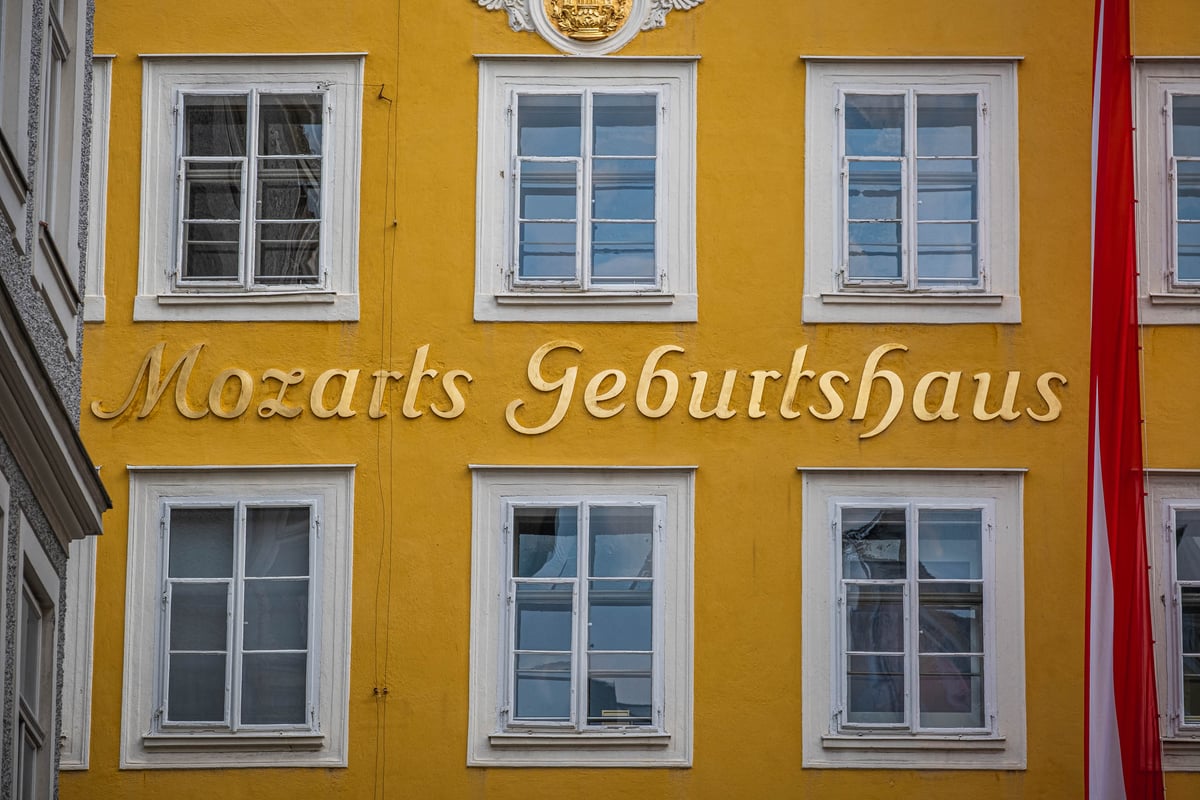
- Mozart’s Birthplace and Residence: Where his life in Salzburg began. The Birthplace at 15 EUR. The Residence at 15 EUR. Combo ticket 23 EUR.
Mozart’s actual grave is in Vienna. We do not know where. The memorial at St. Marx is an approximation. It is one of the most famous graves in the world, and it is in the wrong place.