Snapshot
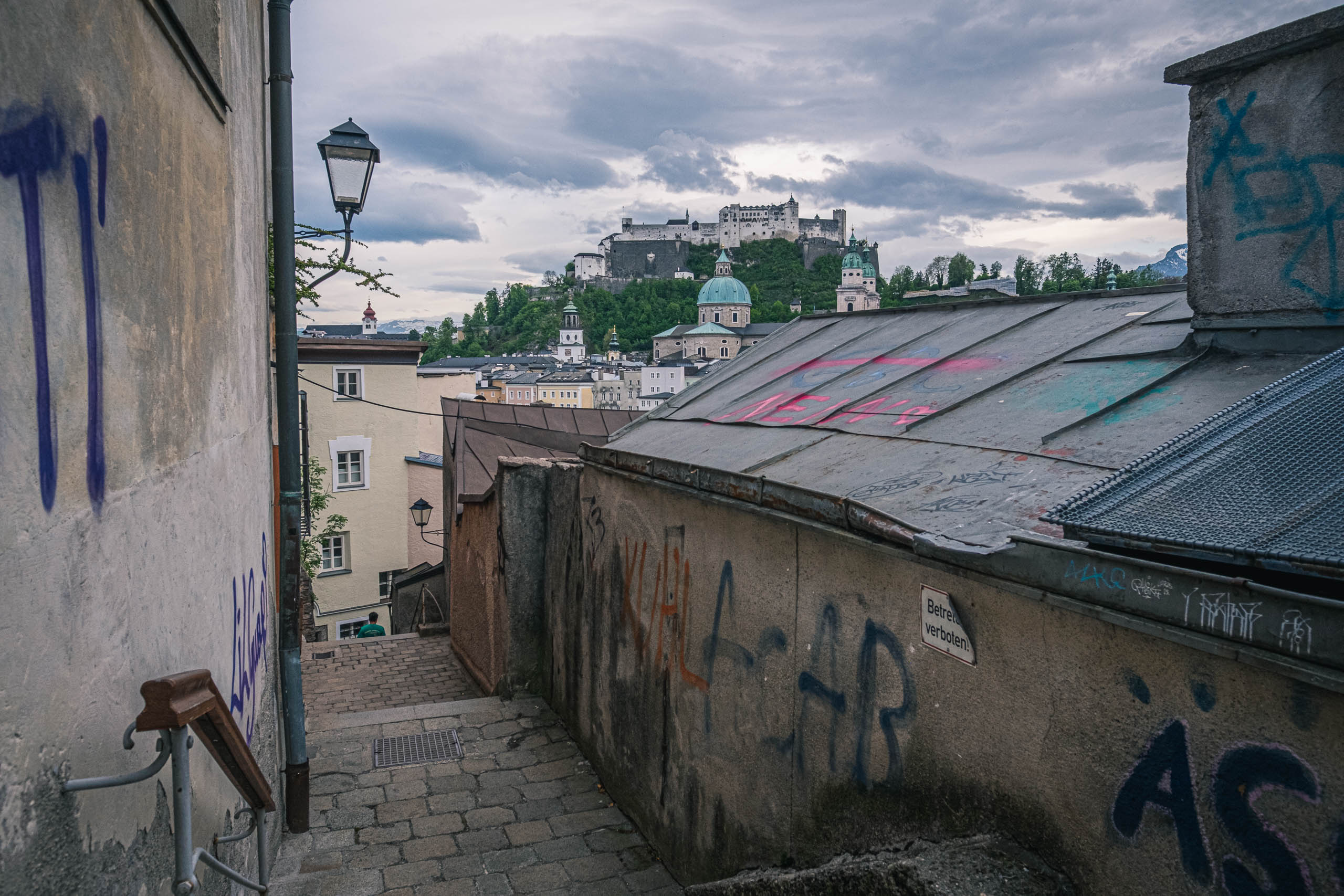
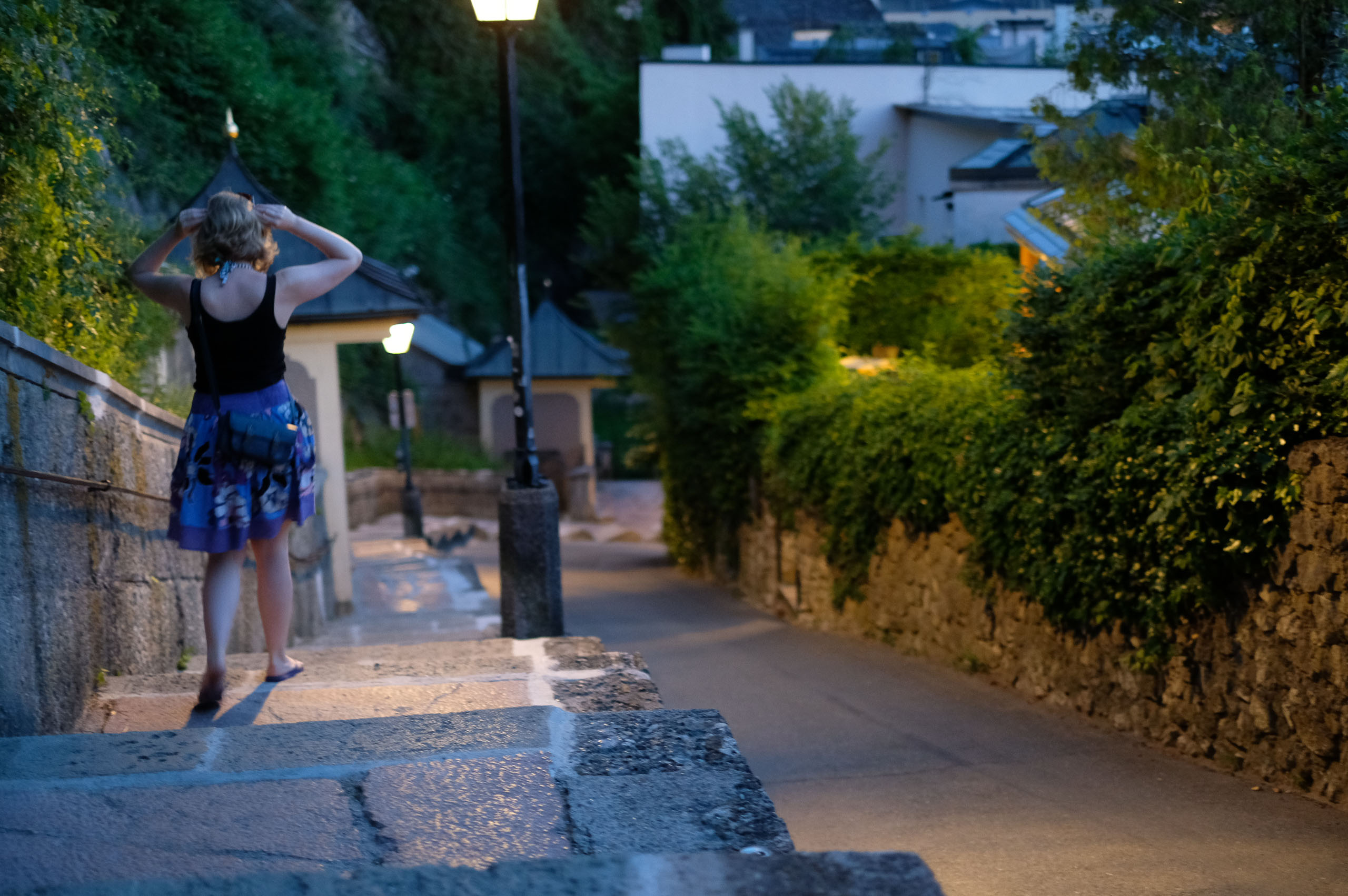
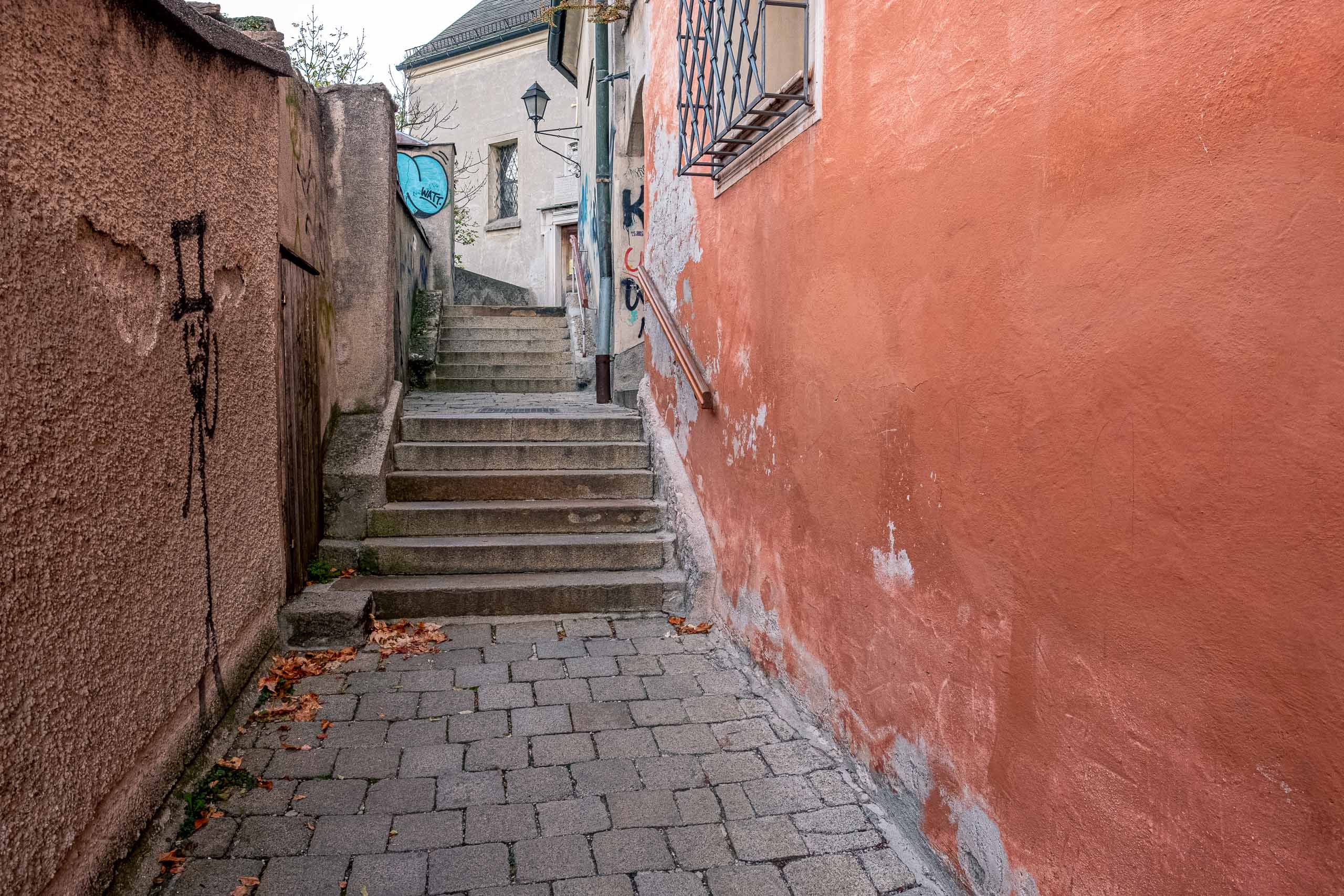
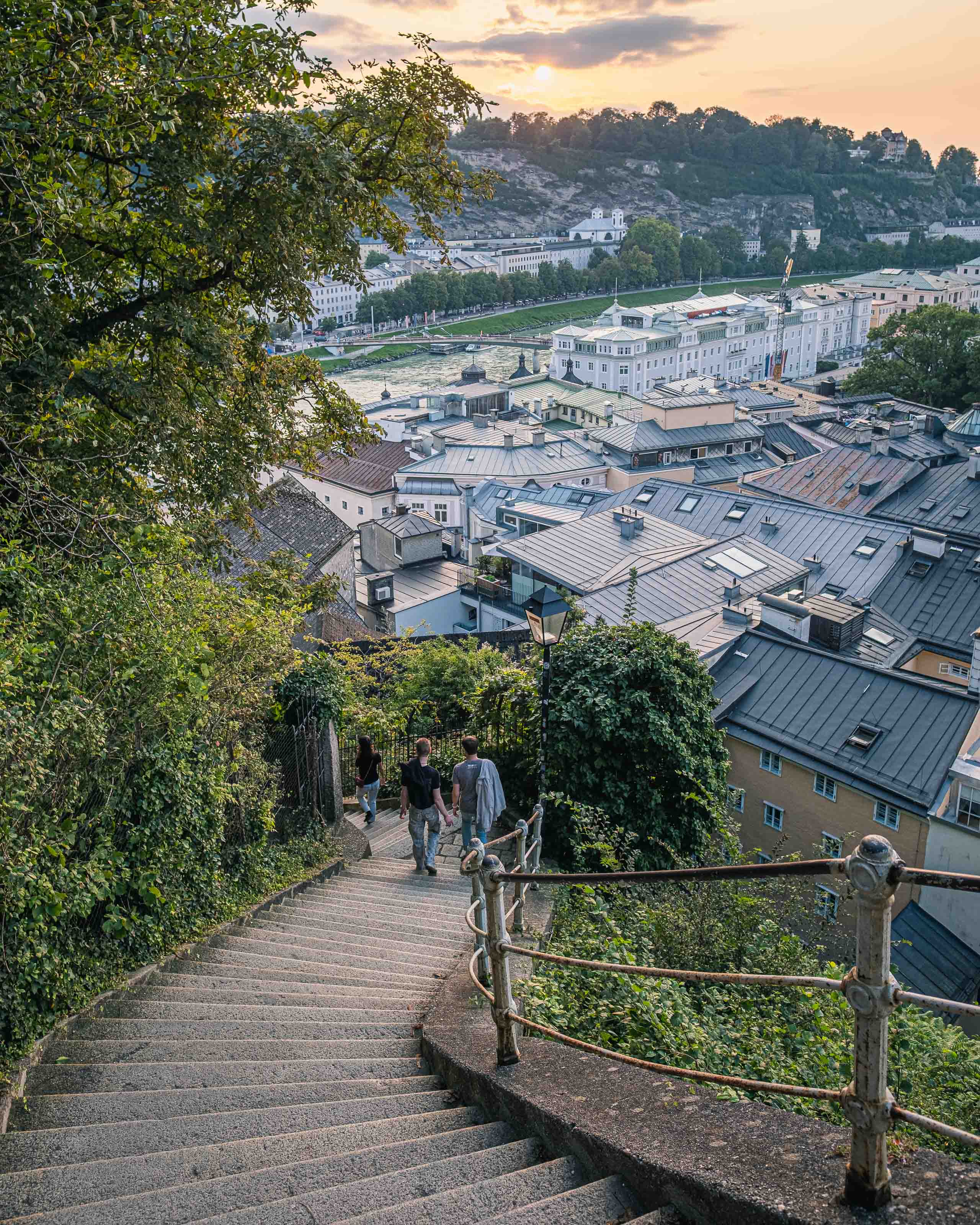
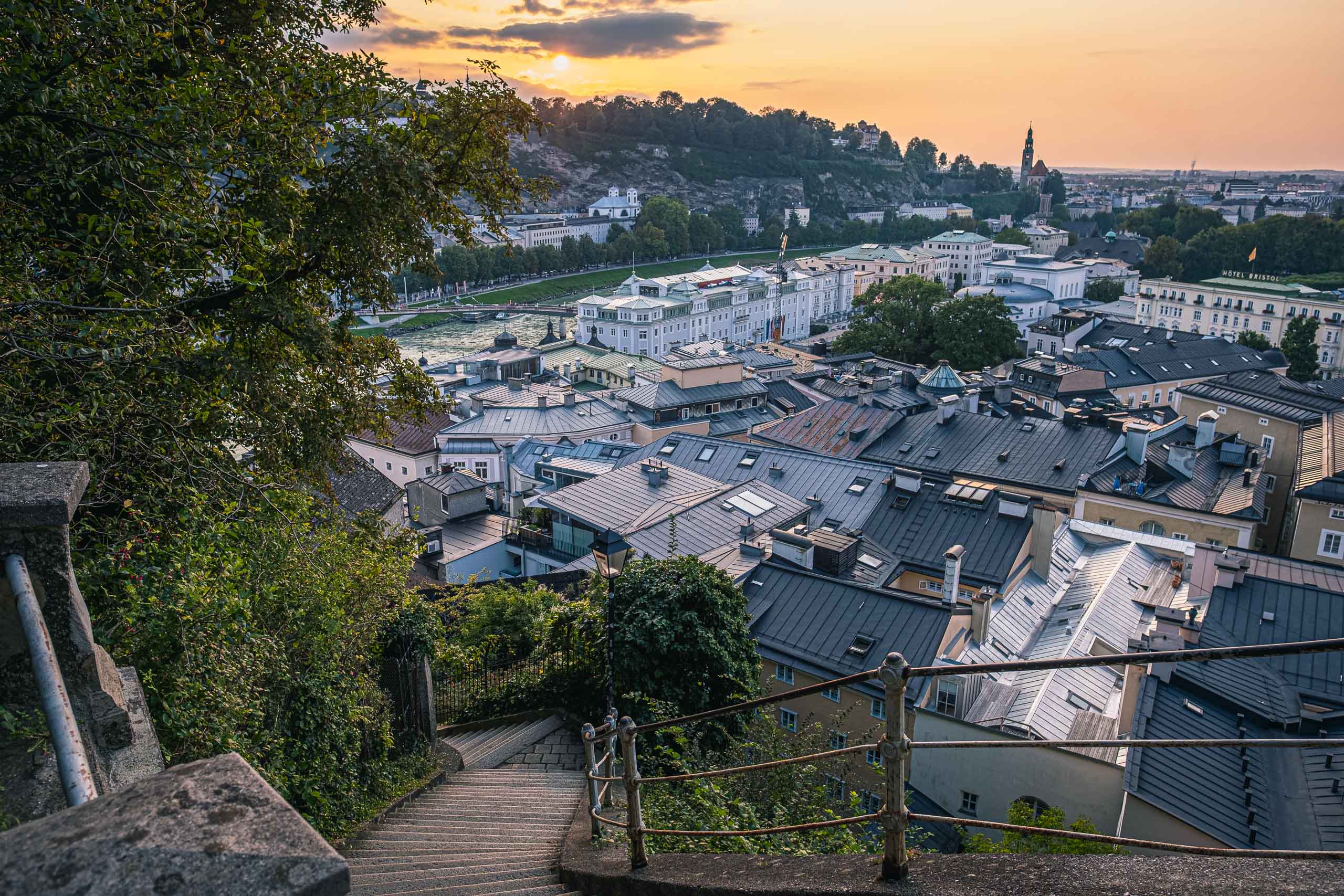
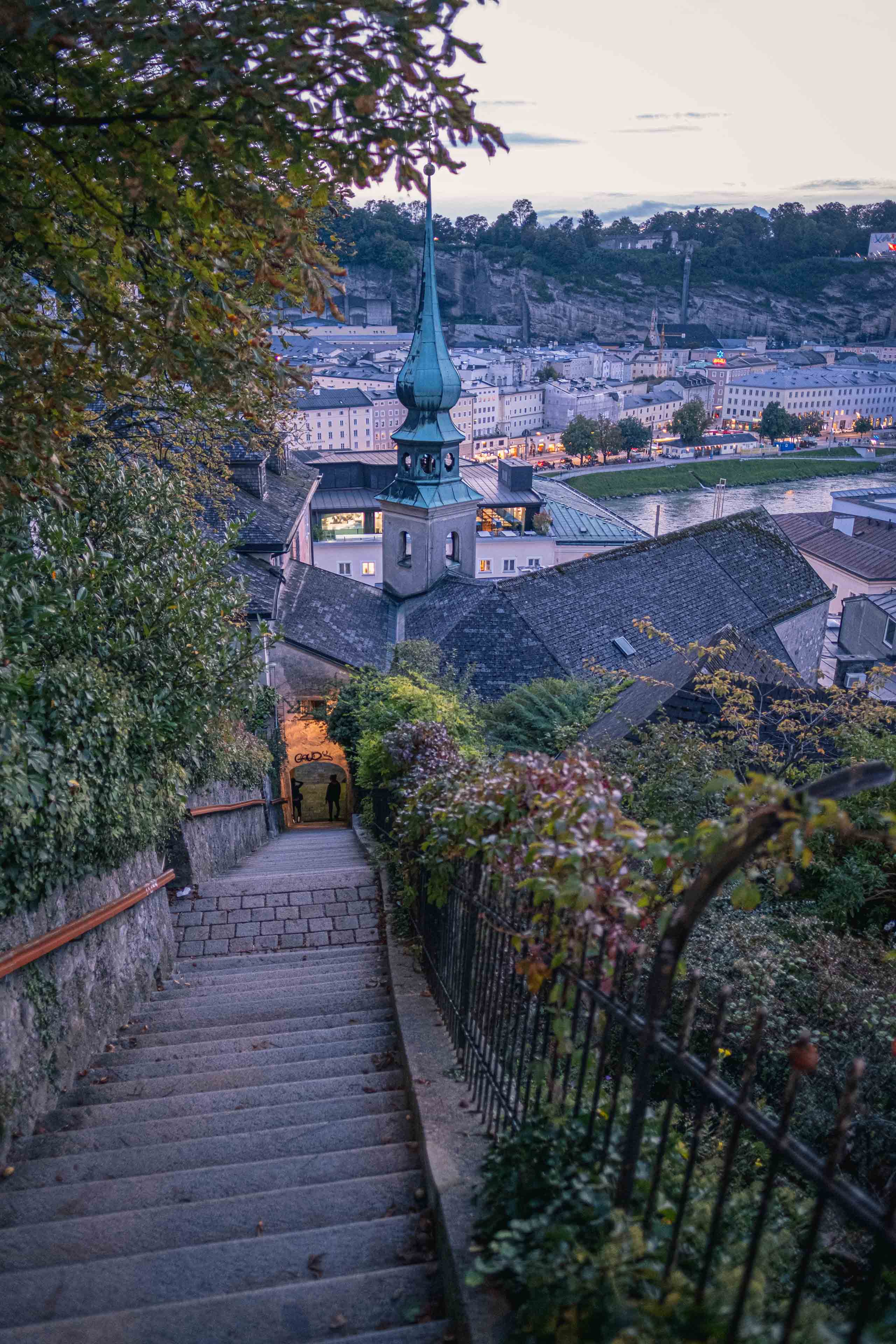
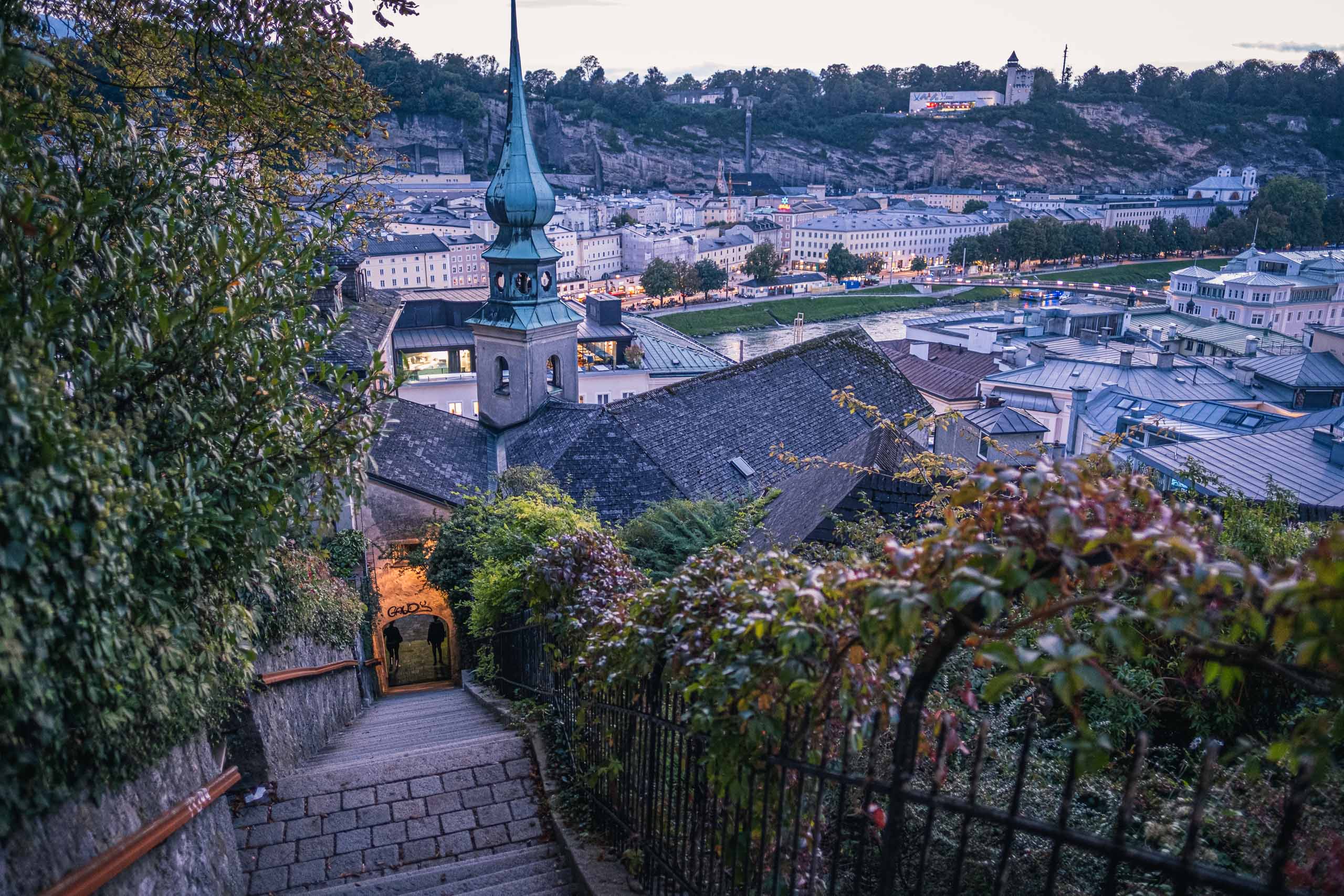
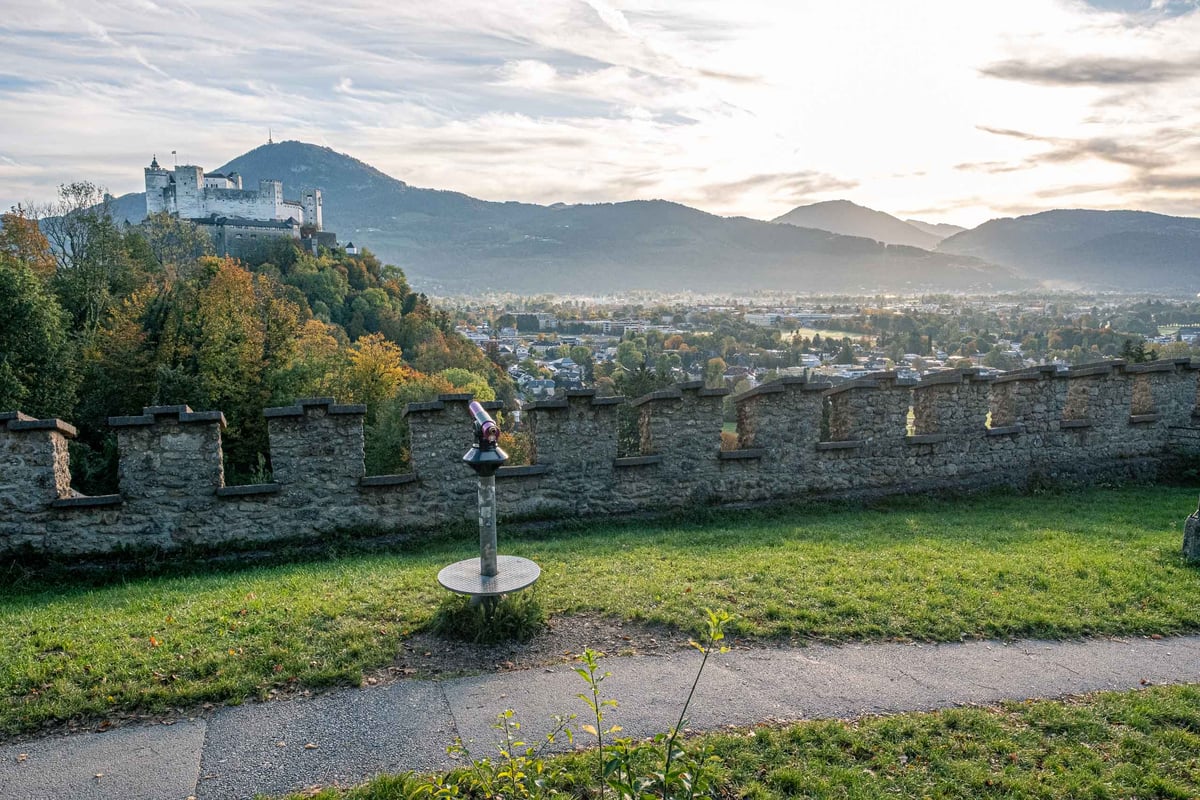
The Imbergstiege is the right-bank answer to the Nonnbergstiege: a steep staircase of 261 stone steps climbing from Steingasse up the western slope of Kapuzinerberg. The version you walk today is an 1888 rebuild in Bohemian granite, put in after the previous wooden staircase collapsed under a pilgrim crowd in 1756 and killed six people. At the top, two viewpoints open, one toward the fortress and old town, one toward the new town and the main train station.
The Story
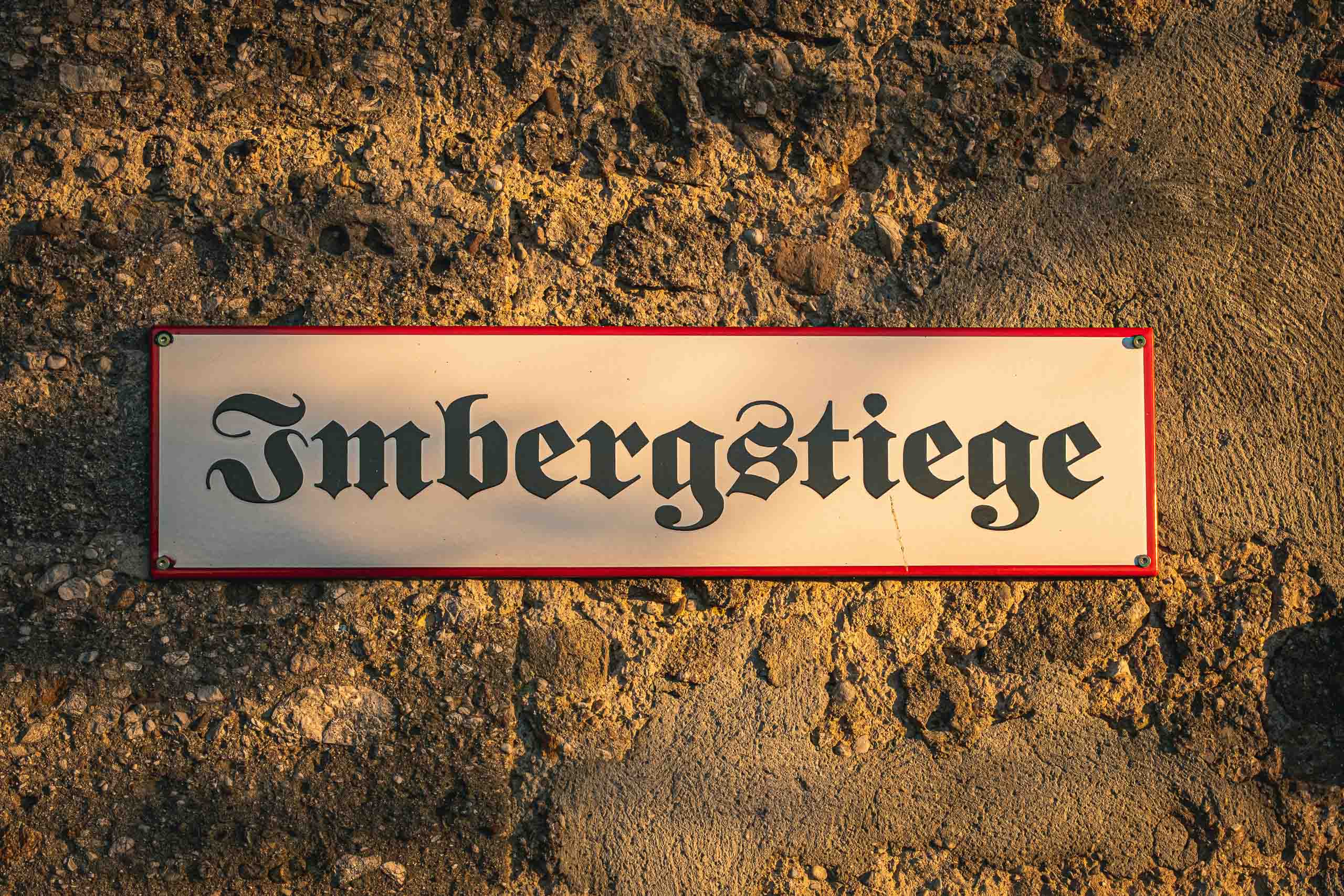
Salzburg has two central hills with old public staircases climbing them. On the left bank, Nonnbergstiege carries Sound of Music tourists up to Nonnberg Abbey. On the right bank, Imbergstiege does the same work with almost none of the attention. “Imberg” is the older local name for this hill, now more commonly called Kapuzinerberg after the Capuchin Monastery at its top. “Stiege” is the Austrian word for staircase. The name is older than the monastery.
The staircase was first mentioned in the 14th century, repaired in 1620 and again in 1671, and for most of its history was a covered wooden construction under a heavy roof on timber pillars. On 2 August 1756, during the Portiuncula indulgence at the Capuchin church, pilgrims crowded the staircase and the whole wooden frame gave way. Six people were killed. A memorial plaque at the base records it.
What visitors climb today is not that structure. By the late 19th century the replacement wooden stair had rotted again, and in 1888 it was demolished and rebuilt in Bohemian granite. The 261 current steps are Gründerzeit-era stonework, worn but solid, and they trace the same line they have traced since the Middle Ages. A crucifix from 1730, restored in 2004, still stands above the first steps.
The climb begins in Steingasse, one of the oldest streets in the city, and emerges on the Stefan-Zweig-Weg, the footpath along the Kapuzinerberg ridge. Two viewpoints sit a few steps apart, pointing in different directions. One faces west across the Salzach River to Hohensalzburg Fortress and the Altstadt skyline. This is the postcard angle. The other faces north, toward the new town, the main train station, and on clear days the first ridge of the Bavarian border beyond.
Most visitors stop at the monastery and turn back. Beyond it, the Basteiweg runs along the remains of the old city wall with much quieter views and considerably fewer people. It also passes the Paschinger Schlössl, the villa where Stefan Zweig lived from 1919 until 1934, when he left Salzburg to escape the Nazis. He never came back, and took his own life in Brazil eight years later. The path the staircase feeds into is named for him.
Visiting
The Imbergstiege is always accessible, free, and takes roughly ten to fifteen minutes to climb at a steady pace. Start at Steingasse on the right bank and follow the stairs up. Wear real shoes; the 1888 stone is uneven in places. At the top, both viewpoints are worth the short detour. Combine the climb with Steingasse at the base and the Basteiweg walk past the Capuchin Monastery once you reach the ridge.