Concert Hall

Mozarteum

Snapshot

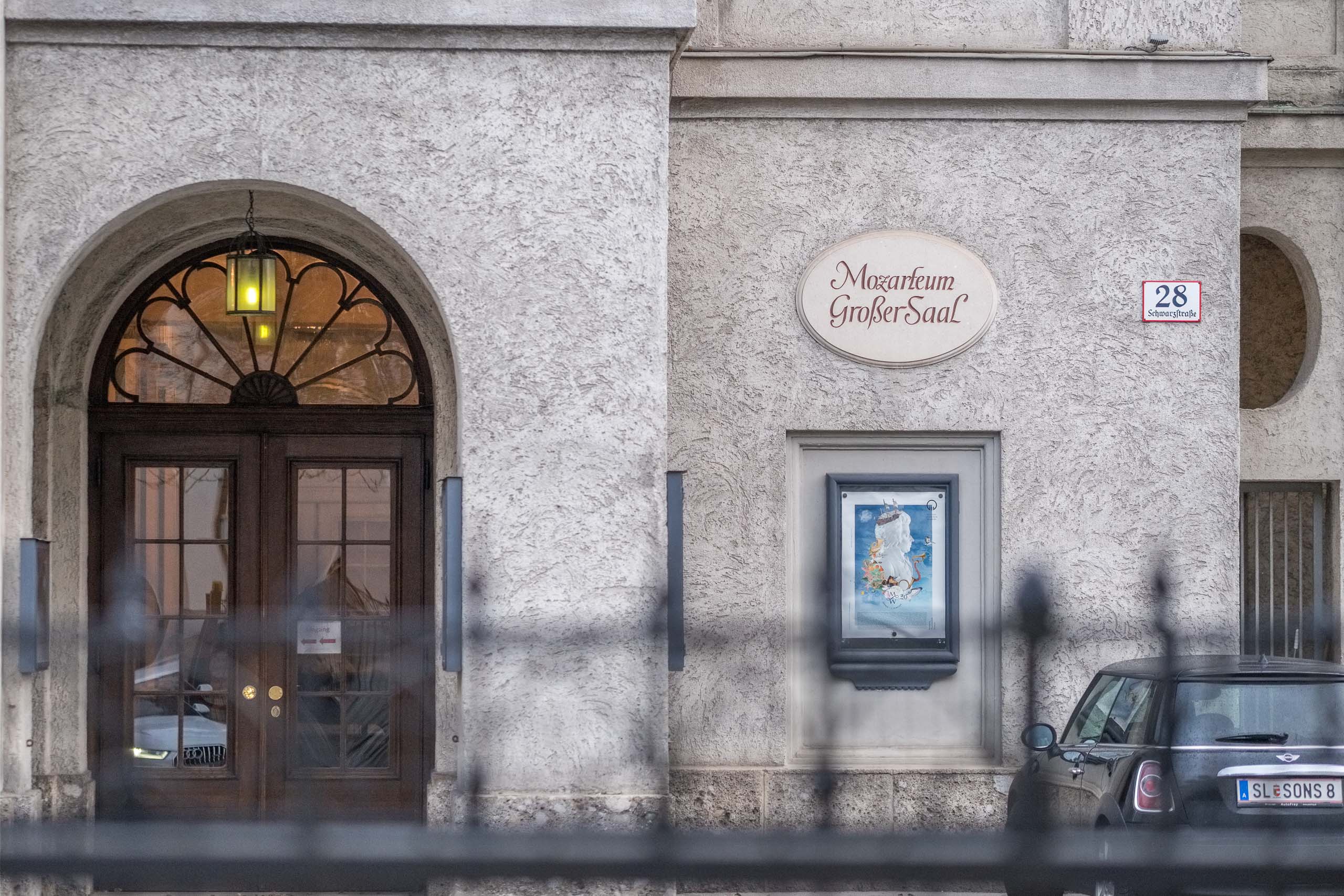
Concert hall complex of the International Mozarteum Foundation at Schwarzstraße 26, right bank near Mirabell Palace. Built 1910-1914. Paid entry for concerts; garden free.

The Story

The Mozarteum’s origins go back to 1841, when Salzburg citizens founded a Cathedral Music Society on the 50th anniversary of Mozart’s death. The society grew into the International Mozarteum Foundation, which by 1870 had split off as a dedicated institution with a mandate to run concerts, maintain archives, and build a proper performance venue.

The current building was designed by Munich architect Richard Berndl, who won the 1909 competition with a plan that separated the public concert halls from the teaching and archival functions. The foundation stone was laid on 6 August 1910. The building opened on 14 September 1914, weeks after the First World War began. The Großer Saal’s interior mixes late-Historicist structure with neoclassical detailing: white walls, gold leaf on balustrades, and green velvet seating. The 1914 organ in the hall was replaced in 2010 by a 51-stop instrument by Hermann Eule.

The Foundation holds the world’s largest collection of Mozart primary sources, including autograph manuscripts, letters, and instruments, accumulated partly through the 1844 bequest of Franz Xaver Mozart (Wolfgang’s son).

In the garden stands the Zauberflötenhäuschen, a small wooden summerhouse where Mozart is said to have worked on Die Zauberflöte (The Magic Flute) in Vienna in 1791. The structure was moved from Vienna to Salzburg in 1875 and placed in the garden here. It is visible from the garden path but not open to the public. Whether Mozart actually used it is part of Mozarteum mythology that the foundation’s own guides openly acknowledge as unverified.

The adjoining Universität Mozarteum is one of the leading music conservatories in the German-speaking world. Bernhard Paumgartner shaped the institution’s identity for decades as director.

Visiting

  • Hours: concert schedule varies; check mozarteum.at for the current calendar
  • Cost: EUR 20-80 per concert depending on programme; Mozartwoche (January) tickets can be higher
  • Duration: 1.5-2.5 hours per concert
  • Getting there: Schwarzstraße 26, right bank; walking distance from Mirabell Palace or Mirabellplatz
  • Book ahead: recommended for Mozartwoche and Salzburg Festival events; regular season often available without advance booking
  • Combine with: Salzburger Landestheater, Mirabell Palace, Mozarts Residence
  • Tips: the Mozartwoche each January is one of Salzburg’s most concentrated Mozart events, less crowded and more focused than the summer Festival

Do it here

See it on a tour

These experiences include this place in their authored route.

Mozartwoche

One of the world's great chamber music festivals, entirely Mozart, each January around his birthday (27 January). Organised by the Stiftung Mozarteum. January is low season in Salzburg: a genuine insider reason to visit outside the crowds.

Salzburg3 stops

People

People connected to this place

Each person below explicitly names this place in their authored connections.
  • Bernhard Paumgartner

    conductor1887 - 1971

    The man who shaped the Mozarteum and the early Salzburg Festival more durably than almost anyone else. Director of the Mozarteum for over four decades (1917-1959), bridging the Festival's founding generation and the Karajan era.

  • Juan Diego Flórez

    singerb. 1973

    The finest bel canto tenor of his generation and the face of Mozartwoche in Salzburg. His connection to Mozart's birthplace city is deep and ongoing. In 2007 at La Scala, he became the first singer in 74 years to be granted an encore mid-performance.

  • Lilli Lehmann

    singer1848 - 1929

    The single most important figure in the prehistory of the Salzburg Festival. Not to be confused with Lotte Lehmann. From 1901, Lilli Lehmann organised the Salzburg Mozart Week, the annual series that directly laid the groundwork for the permanent Festival that Hugo von Hofmannsthal, Max Reinhardt, and Richard Strauss would formally establish in 1920.

  • Richard Berndl

    architect1875 - 1955

    Munich architect who designed the Mozarteum main building on Schwarzstrasse (completed 1914), the physical centre of Salzburg's concert life and music education for over a century.

Organizations

Organizations connected here

These organizations explicitly list this place in their authored location connections.
  • Internationale Sommerakademie des Mozarteums

    One of Europe's oldest summer arts academies. Founded 1953 by Oskar Kokoschka ("School of Vision"). Under Universität Mozarteum. 70+ courses. Music, visual arts, composition. July-August. Adds emerging talent to Festival atmosphere.

    arts academyFounded 1953
  • Mozarteumorchester Salzburg

    Salzburg's civic orchestra. Distinct from the Vienna Philharmonic. Performs year-round. House orchestra for the Mozartwoche. For visitors outside Festival season, the primary way to hear live orchestral music in Salzburg.

    orchestraFounded 1841
  • Stiftung Mozarteum

    Custodian of Mozart's legacy. Founded 1841. Manages Mozarts Birthplace and Mozarts Residence. World's most important Mozart archive. Organises the annual Mozartwoche. Bernhard Paumgartner shaped its identity for decades.

    foundationFounded 1841
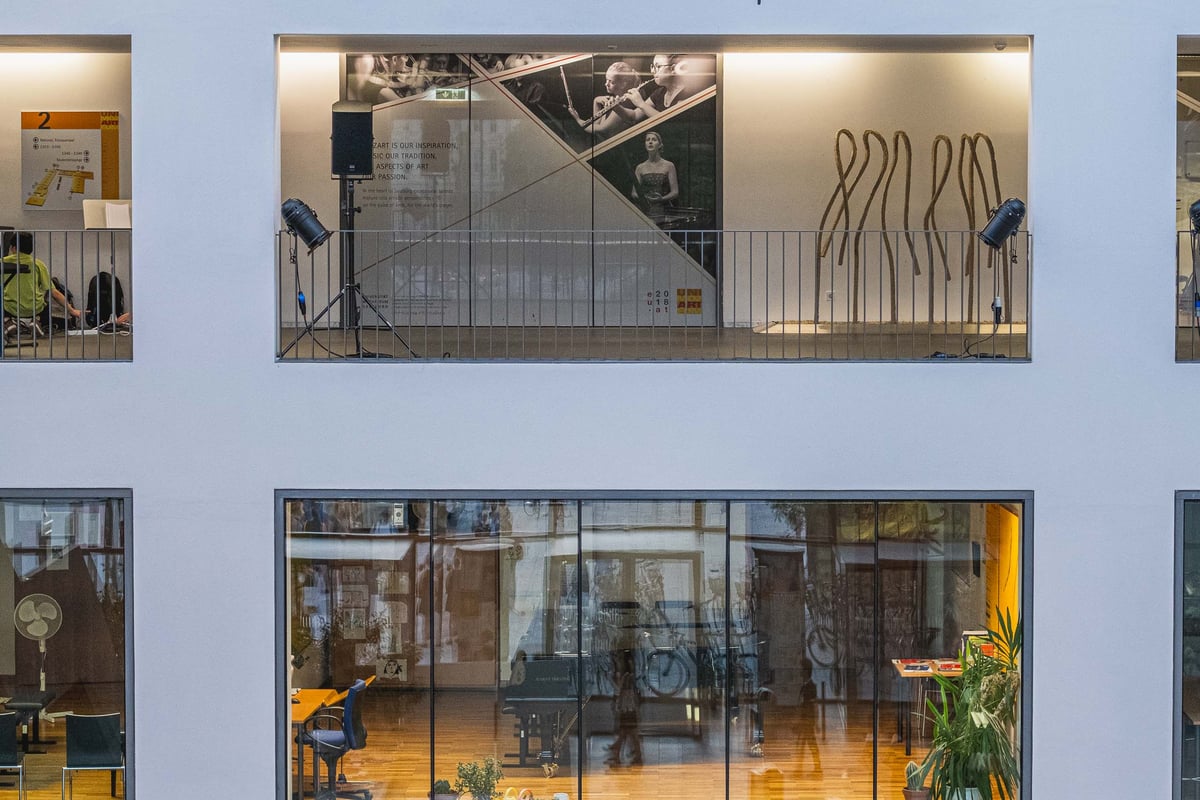
  • Multi-level interior of the Universitaet Mozarteum atrium with glass walls performance posters and stage lighting equipment in Salzburg

    Universität Mozarteum

    One of the world's leading conservatoires. Founded 1841, university status 1970. Musicians, conductors, stage directors, visual artists. Oskar Kokoschka's "School of Vision" runs under its auspices as the Internationale Sommerakademie.

    educational institutionFounded 1841

Read more

Stories that go deeper

The longer pieces where this comes up.

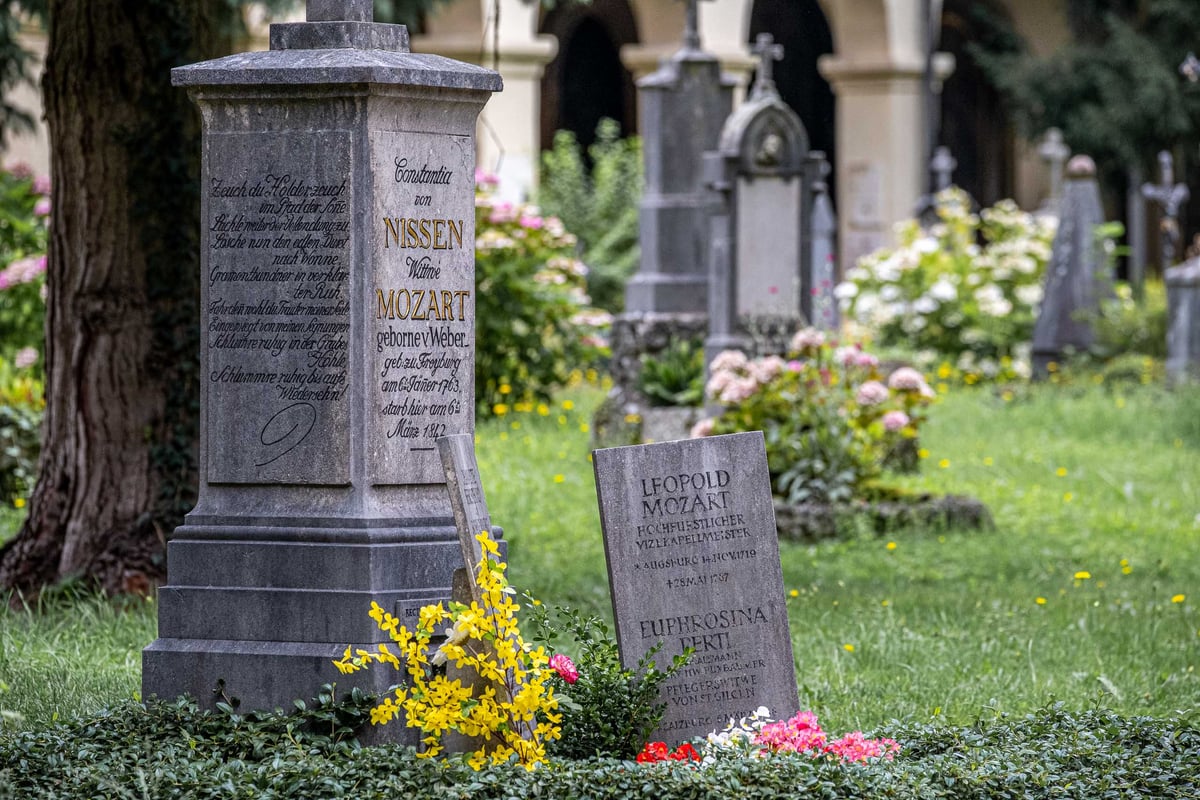
  • The Mozart family grave in the Sebastiansfriedhof
    Mozart

    Mozart's Death: The Skull, the Grave, and What We Actually Know

    Mozart died in Vienna on 5 December 1791. He was thirty-five. We do not know what killed him. We do not know where he is buried. A skull that spent over a century in the Mozarteum probably is not his. And the family grave in Salzburg contains people who, according to DNA, are not related to each other.