Story
Why Mozart Hated Salzburg
Published March 25, 2026 · Updated July 5, 2026
Mozart did not leave Salzburg quietly. He was kicked out. Literally. Count Arco, the Archbishop’s chamberlain, kicked him in the backside and threw him out of the room. Mozart was twenty-five. He never came back.
That is the story you will not find on the souvenir chocolates or the concert posters. Salzburg’s most famous son could not stand the place. He said so repeatedly, in letters that survive to this day. The city that now prints his face on everything from airport signs to rubber ducks once treated him as a servant who ate below the valets.
I have told this story on my tours for over a decade. It is the part of the Mozart biography that makes visitors stop walking and actually listen.
Salzburg Was Too Small
Mozart knew it early. At fifteen, writing from Milan in 1771, he told his father: “I have no longer any fancy for Salzburg. I am afraid I might go mad too.”
He was not being dramatic. Between the ages of six and seventeen, Leopold Mozart had taken him across Europe. Munich, Vienna, Paris, London, Italy. Multiple times. Wolfgang had performed for kings, emperors, and the Pope. He had seen what the world’s major musical cities offered. Then he came back to Salzburg: a city of 16,000 people with one employer for musicians.
That employer was the Archbishop.
The Archbishop
Hieronymus von Colloredo became Prince-Archbishop of Salzburg in March 1772. He was elected on the thirteenth ballot, with pressure from the imperial court in Vienna. He was a man of the Enlightenment: sober, frugal, strict. He demanded discipline and constant presence from his musicians. He was not interested in indulging a young composer’s desire to travel.
In the court hierarchy, musicians ranked alongside domestic servants. Mozart was expected to eat with the household staff, wait in the antechamber with the valets until called, compose on demand, and perform when told. He needed permission for everything. Permission to travel, permission to give concerts, permission to earn money on the side.
Colloredo reportedly said that Mozart “knew nothing, and that he ought to go to the musical training school in Naples to learn music.” This about a man who had been composing since the age of five.
Mozart called the Archbishop “the Mufti H.C.” in his letters. A fool. An incompetent.
The Breaking Point
In March 1781, Colloredo summoned Mozart to Vienna, where the Archbishop was attending celebrations for the accession of Emperor Joseph II. Mozart arrived on 16 March. He was immediately seated at the servants’ table for lunch, placed below the valets. He wrote to his father: “I guess I at least sat above the cooks.”
He was not allowed to give his own concerts. He was not allowed to perform at Countess Thun’s weekly salon, which the Emperor himself attended. He was trapped in the richest musical city in Europe and forbidden from being a musician in it.
Mozart asked to leave. Colloredo refused.
On 9 May 1781, it exploded. The Archbishop summoned Mozart and called him “the most dissolute fellow he knew.” He said Mozart served him “worse than anyone else.” He called him a scoundrel, a rascal, a vagabond.
Mozart asked what he could do about this. Colloredo replied: “What, you dare to threaten me, you scoundrel? There is the door. Look out, for I will have nothing more to do with such a miserable wretch.”
Mozart replied: “Nor I with you.”
As he left the room, he said: “This is final. You shall have it tomorrow in writing.”
The Kick
Mozart submitted his written resignation. For a month, Count Karl Joseph Felix Arco, the Archbishop’s chief chamberlain, refused to accept it. He hoped to change Mozart’s mind.
On or around 8 June 1781, Mozart submitted his final petition. Arco responded by physically throwing him out of the room. Mozart wrote to his father the next day: he “kicked me out of the room with a kick in my ass.”
Mozart suspected the Archbishop ordered it: “I should not bandy such words with me as clown and saucy fellow, and turn me out of the door with a kick. But I forget that this was probably by archiepiscopal command.”
He also wrote about the broader injustice: “All the injustice with which the Archbishop has treated me from the very beginning of his reign, his incessant abuse, all the impertinences and insults which he lavished on me to my face, and the undeniable right I have to leave him.”
After the incident: “So now, the affair is at an end. I am so sick of the whole affair that I never want to hear anything more about it.”
He never went back.
Leopold’s Side
This is where the story gets painful. Leopold Mozart sided with the Archbishop. He urged Wolfgang to reconcile with Colloredo and return to Salzburg. Leopold had a permanent court position. His livelihood depended on staying in the Archbishop’s good graces. His son’s rebellion put everything at risk.
Leopold’s actual letters from this period have not survived. We only have Wolfgang’s defensive replies, which tell us enough. Leopold accused him of trusting the wrong people. Wolfgang responded: “You trust more the gossip and writings of other people than me, which means that you don’t trust in me at all.”
Leopold pressured him about money. He opposed Wolfgang’s marriage to Constanze Weber a year later, giving permission late, reluctantly, and under duress.
Mozart’s resignation was not just a break from a bad employer. It was a break from his father. The man who had created him as a musician, who had sacrificed everything for his career, who had toured him across Europe as a child. Wolfgang chose freedom over obedience. Leopold never fully forgave him.
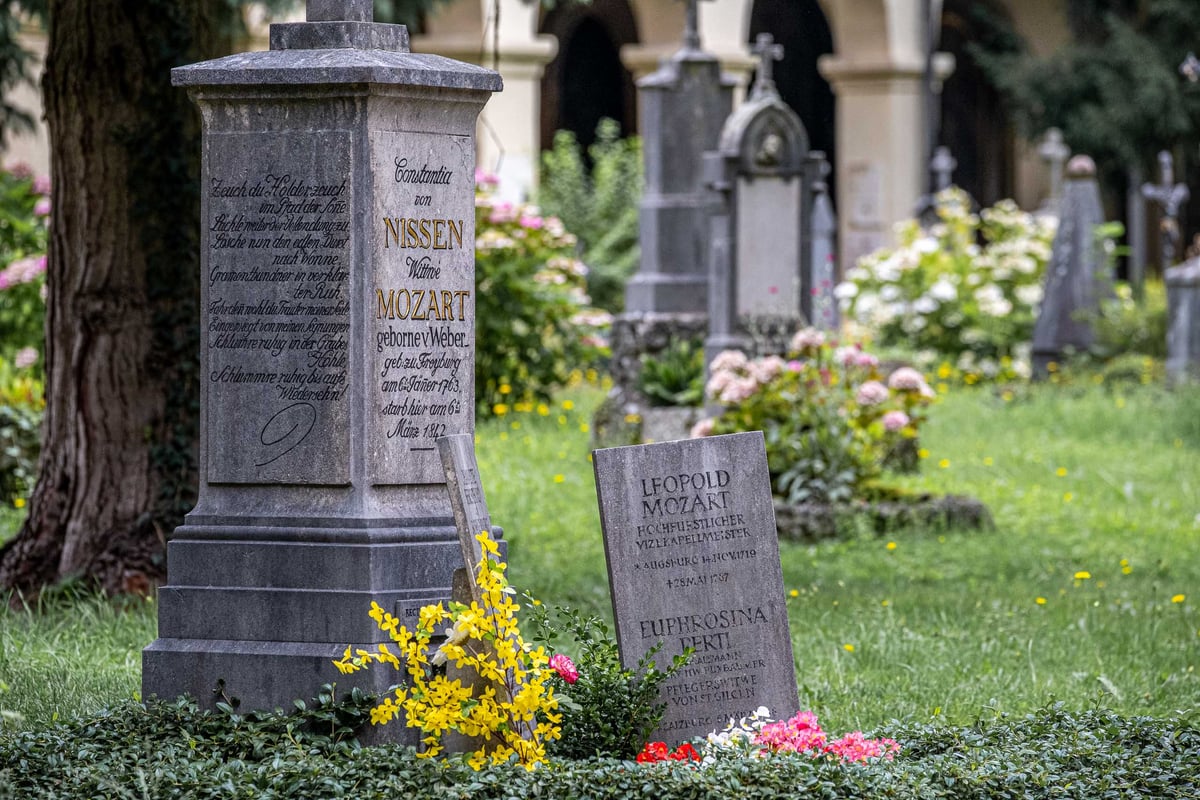
Leopold died in Salzburg in 1787. Wolfgang did not come back for the funeral. He was buried at Sebastiansfriedhof.
What Salzburg Lost
When Mozart left for Vienna in 1781, Salzburg lost the greatest composer of the 18th century. Everything that followed, The Marriage of Figaro, Don Giovanni, Cosi fan tutte, The Magic Flute, the Requiem, was written in Vienna. The freelance independence that Colloredo tried to prevent is what made those works possible.
Mozart died in Vienna in 1791, at thirty-five. He was buried in a common grave. We do not know where it is.
His sister Nannerl stayed in Salzburg. His wife Constanze eventually returned to Salzburg and spent decades building the legacy industry: organizing concerts, managing manuscripts, laying the groundwork for what became the Stiftung Mozarteum. The city that kicked him out began the long process of claiming him back.
What You See Today
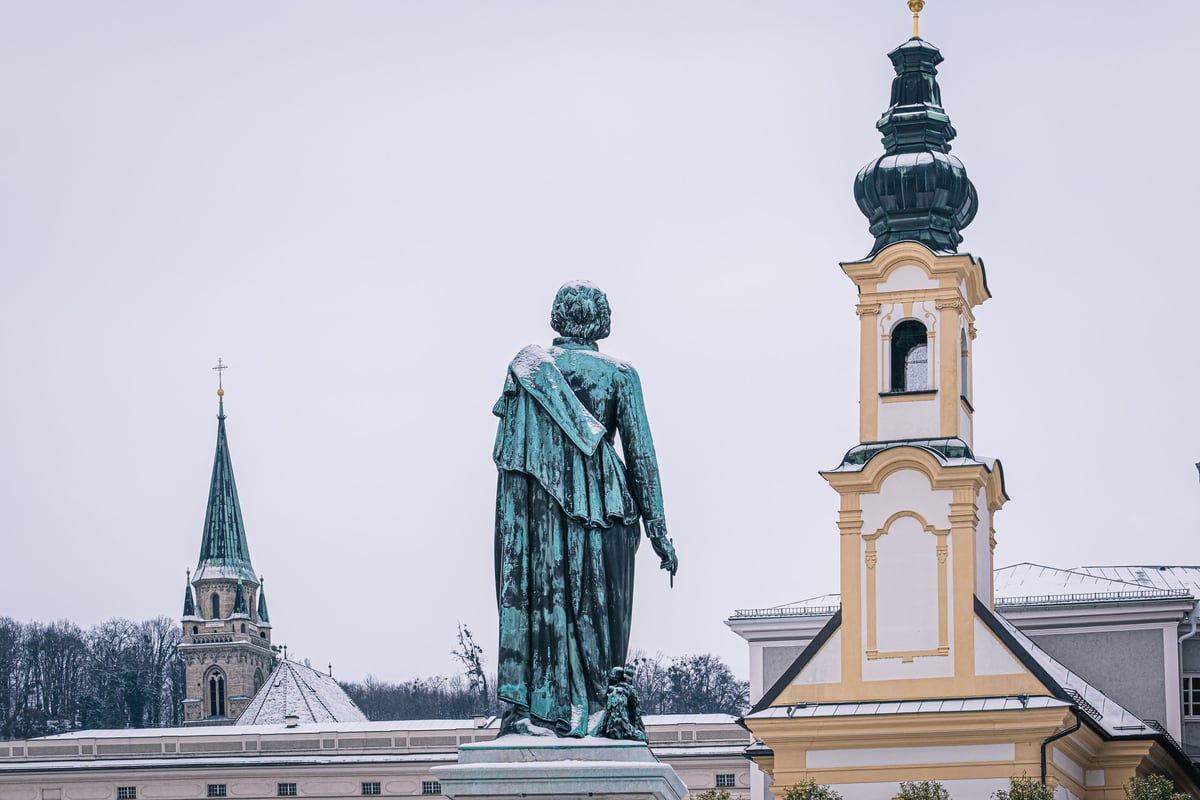
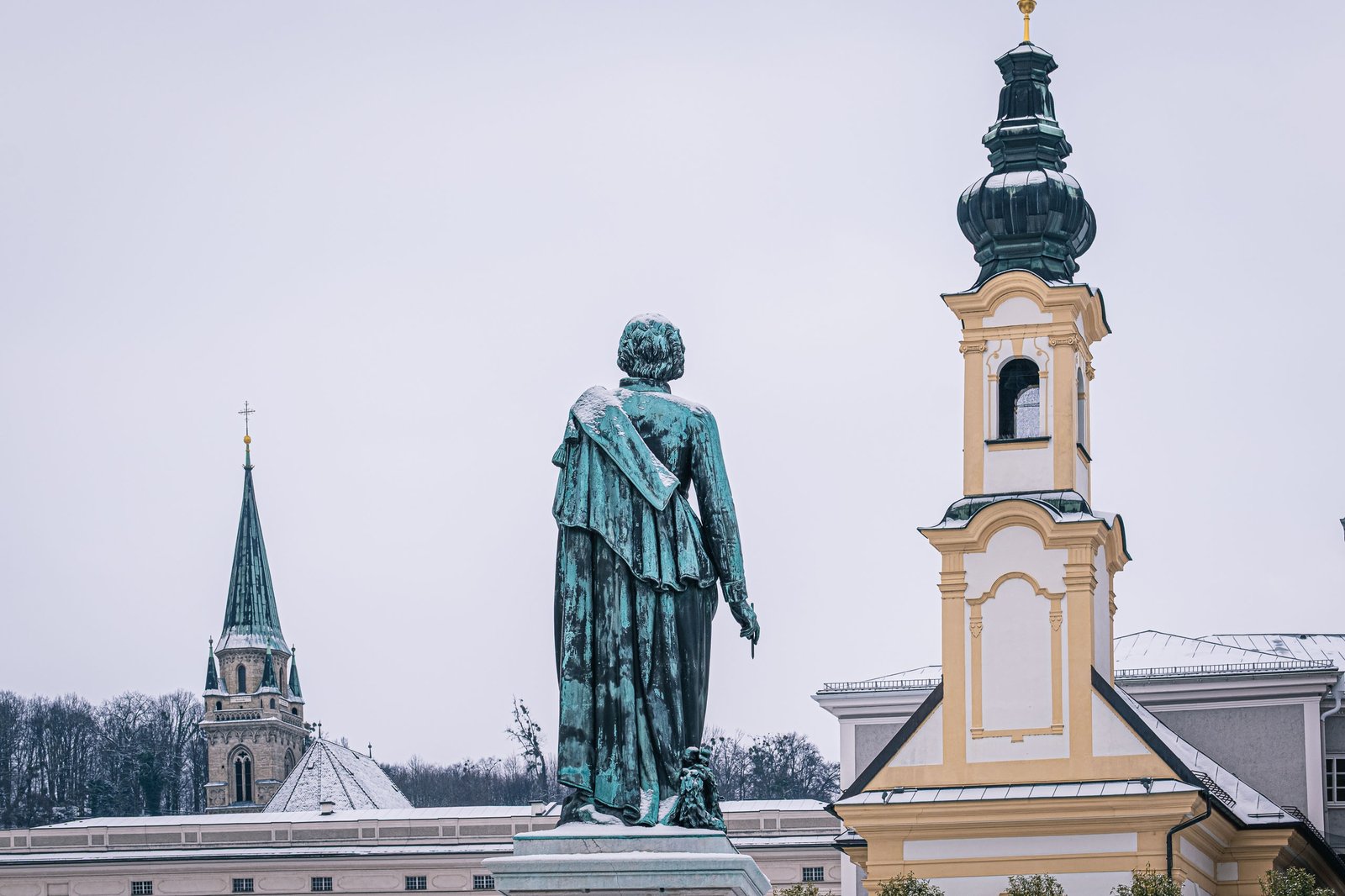
Walk through Salzburg and you walk through Mozart’s rejection. Getreidegasse 9 is where he was born. The Residenz is where he performed as a child and where the Archbishop humiliated him. Mozartplatz has the monument that was unveiled in 1842, fifty-one years after his death, with both his surviving sons present and Constanze too frail to see the finished statue.
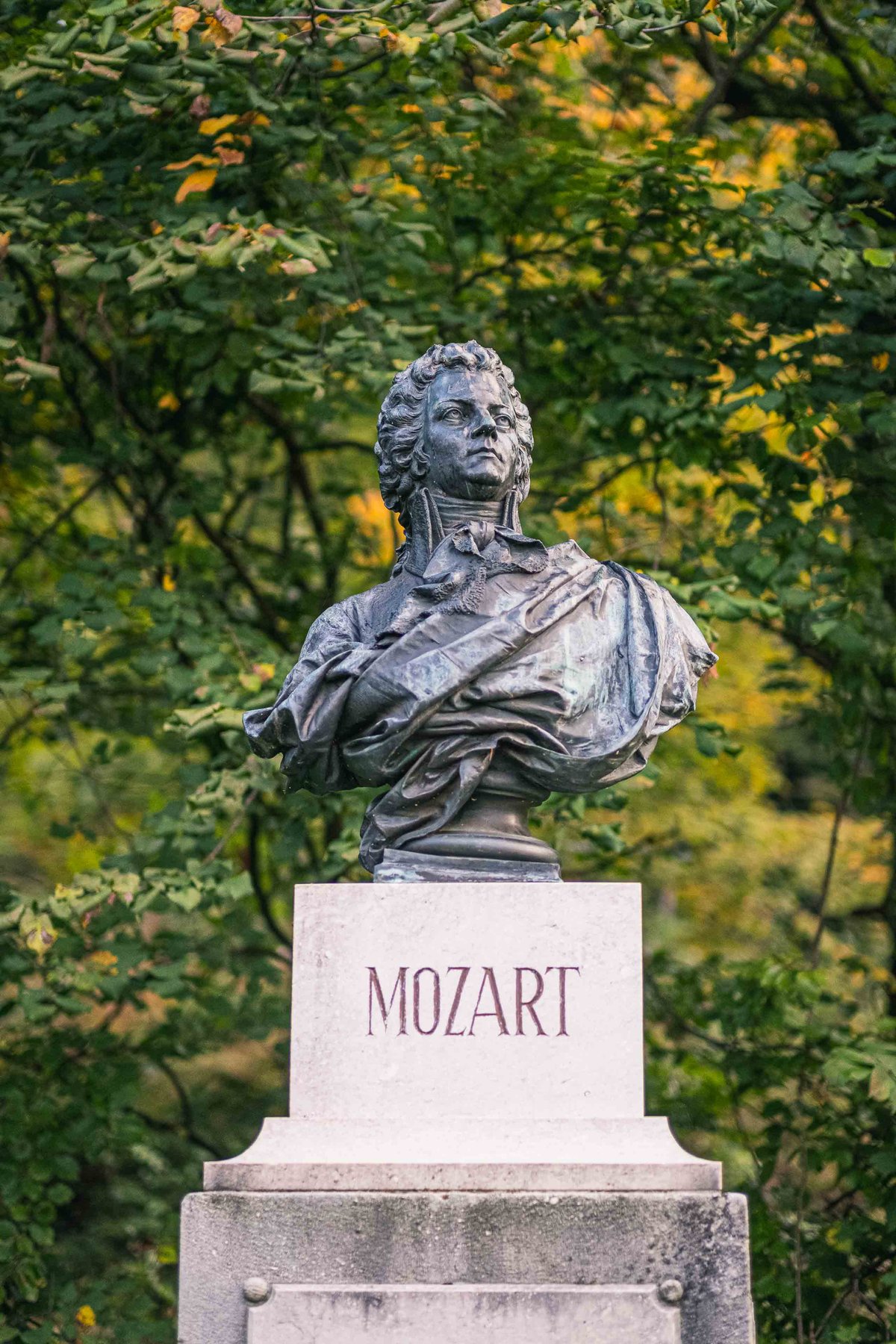
His name is on the bridge, the square, the university, the concert halls, the opera house, the chocolate, and the airport.
He hated it here. He said so in every letter.
And that is what makes the story worth telling. Not the genius. Not the music. The fact that a city can reject someone completely and then spend two centuries building an entire identity around him. Salzburg did not love Mozart. Salzburg needed Mozart. The difference matters, and it is the first thing I explain on every tour.