Story
The Prince-Archbishops: How Salzburg Ruled Itself for 1000 Years
Published March 25, 2026 · Updated July 5, 2026
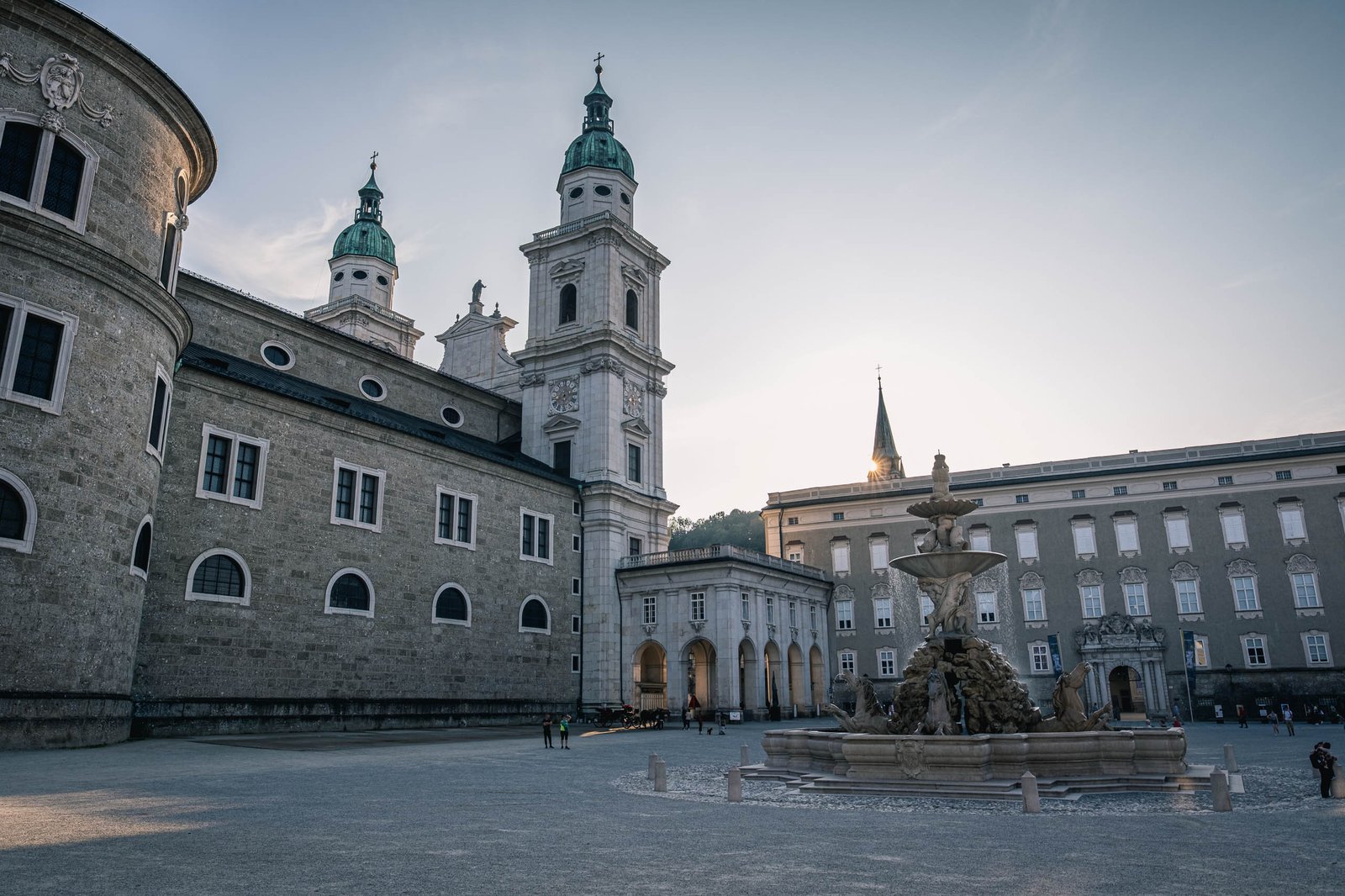
Salzburg was not part of Austria for most of its history. That single fact explains nearly everything about the way the city looks, why it feels different from Vienna, and why there is a fortress on the hill.
For roughly a thousand years, Salzburg was an independent state within the Holy Roman Empire, ruled by its archbishops. These men were not just religious leaders. They were absolute princes with their own army, their own courts, their own foreign policy. They answered to the Pope, not to the Emperor. And they were funded by one thing: salt.
Every building you walk past in the old town is a monument to that power. I explain this on every tour because without it, the architecture is just pretty. With it, every facade tells a story of ambition, wealth, and control.
The Salt That Built a City
The word Salzburg means “salt castle.” That is not poetic. It is literal. The Durrnberg above Hallein, fifteen minutes south of Salzburg, has been mined for salt since at least 600 BC. The Celts extracted it. The Romans let production lapse. In the 12th century, the archbishops revived the mines and rediscovered salt as a source of enormous wealth.
Salt was medieval Europe’s most valuable commodity after gold. It preserved food, it was taxed at every border, and whoever controlled the mines controlled the region’s economy. The archbishops of Salzburg controlled the mines. That revenue funded everything: the fortress, the cathedral, the palaces, the churches, the university. Salzburg’s baroque skyline is salt turned into stone.
I was born in Hallein. The salt mines hold a special place for me. As a child, we visited them on weekends. The mines are still there, still open to visitors. The wealth they generated is still visible in every direction.
The System: Prince-Archbishop
The title tells you everything. A prince-archbishop was both the spiritual head of the diocese and the secular ruler of the territory. Two roles in one person. He collected taxes, maintained an army, judged legal disputes, and said Mass on Sundays.
This system lasted from roughly 798, when Salzburg became an archbishopric, until 1803, when Napoleon’s reorganization of Europe dissolved it. For a thousand years, Salzburg governed itself. It was not Austrian. It was not Bavarian. It was its own state, with its own laws, its own currency, and its own ambitions.
That independence explains the fortress. Gebhard von Helfenstein started building it in 1077 during a civil war between Pope and Emperor. The fortress was not decorative. It was a statement: this territory belongs to the Archbishop, and he will defend it.
The Three Builders
Three archbishops in less than eighty years transformed Salzburg from a medieval town into the baroque city you see today.
Wolf Dietrich von Raitenau (ruled 1587-1612)
The visionary. Wolf Dietrich had been to Rome. He came back with Italian tastes and Italian architects and a plan to rebuild Salzburg as a northern Rome.
He demolished the old Romanesque cathedral. He tore down dozens of medieval houses to create Residenzplatz, the grand square that anchors the city. He rebuilt the Residenz as a proper baroque palace. He built Altenau Palace for his mistress Salome Alt, with whom he had fifteen children. It was later renamed Mirabell.
Wolf Dietrich was ambitious, reckless, and ultimately overreached. He picked a fight with Bavaria over salt trade rights and lost. His own nephew, Marcus Sitticus, deposed him. Wolf Dietrich spent his last five years imprisoned in the fortress he had ruled from. Rumor has it he was not unhappy about the cathedral fire in 1598, because it gave him the excuse to demolish what remained and build something grander.
He is buried at Sebastiansfriedhof, in a mausoleum he designed for himself.
Marcus Sitticus von Hohenems (ruled 1612-1619)
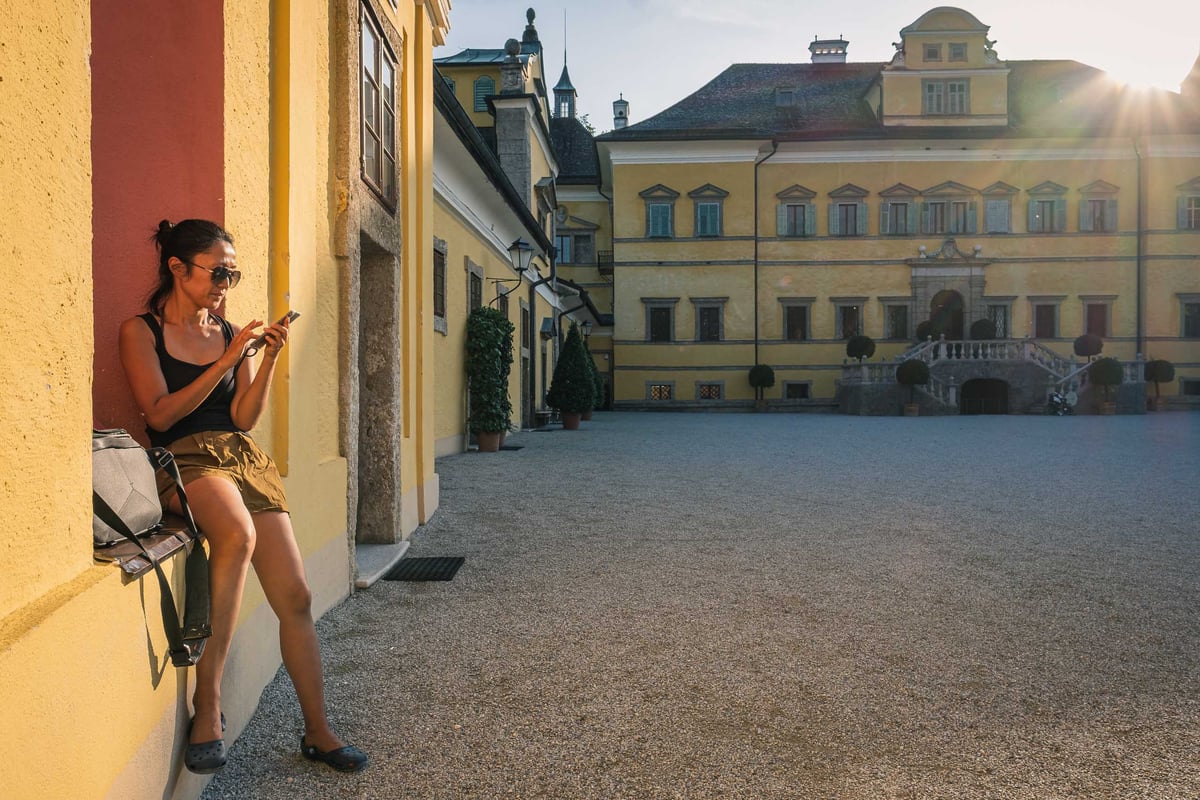
The nephew who imprisoned his uncle and continued the building program. Marcus Sitticus commissioned Santino Solari to design a new cathedral and to build Hellbrunn Palace, the summer residence with no bedrooms.
Hellbrunn was built in three years. Marcus Sitticus designed it as a place for daytime entertainment: eating, drinking, and soaking his guests with the trick fountains that still spray visitors today. He also brought the first opera performances north of the Alps to Salzburg, staged in the Stone Theatre at Hellbrunn.
He was the builder with a sense of humor. Everything he commissioned has a playful streak.
Paris Lodron (ruled 1619-1653)
The diplomat. Paris Lodron took over during the Thirty Years War, the conflict that destroyed half of Central Europe. Through careful neutrality, he kept Salzburg entirely out of it. Not one battle was fought on Salzburg territory. Not one building was damaged.
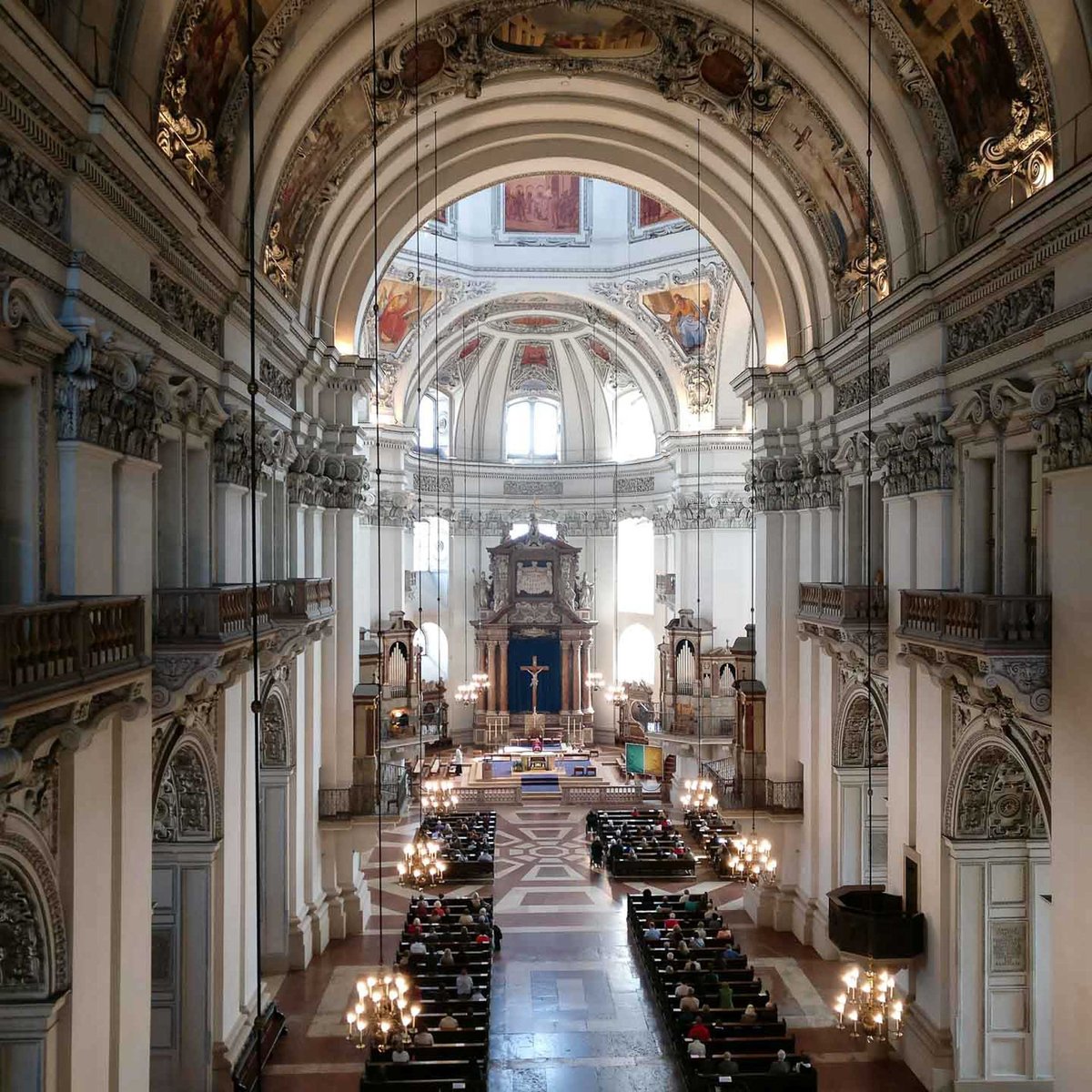
He oversaw the consecration of the Salzburg Cathedral in 1628, the first major baroque cathedral north of the Alps. He founded the University of Salzburg in 1622. He expanded the city’s fortifications. He completed what Wolf Dietrich had started and Marcus Sitticus had continued.
Paris Lodron is called the “Father of the Fatherland.” Of the three, he was the most effective. He did not tear things down or soak his guests. He finished the job and kept the city safe during the worst war Europe had seen.
The Architect: Santino Solari
The Italian master builder behind both the Cathedral and Hellbrunn. The Cathedral took from 1614 to 1628. Hellbrunn took from 1613 to 1619. Solari was working on both simultaneously. He is buried in Petersfriedhof, the same cemetery where Nannerl Mozart and Michael Haydn would later rest.
How Independence Ended
Napoleon dissolved the old order. In 1803, Salzburg lost its status as an independent prince-archbishopric. The last Archbishop, Hieronymus von Colloredo, the same man who drove Mozart out, had already fled to Vienna in 1801 ahead of Napoleon’s troops. He never returned. Salzburg passed through Bavarian and French hands before joining Austria permanently in 1816.
A thousand years of independence ended in fifteen years of chaos.
Why This Matters When You Visit
Without this context, Salzburg is a pretty baroque town. With it, you understand why the fortress exists (defense of independence), why the cathedral is so large for such a small city (archiepiscopal power), why the Residenz has state rooms rivaling Vienna’s (because the archbishops were princes, not just priests), and why the streets are lined with baroque facades (salt money, spent by three ambitious men in eighty years).
Salzburg looks the way it does because three archbishops turned salt into architecture. Everything else follows from that.