ONE FULL DAY
One Day in Salzburg: A Local Guide’s Itinerary
One day in Salzburg is enough, if you start early, skip the wrong things, and trust that everything worth seeing sits inside a twenty-minute walk. This is the route a local guide actually walks: one river crossing, one native street food, one attraction you pay for, and a four-hundred-year-old beer garden at the end. Salzburg, honestly.
One day, hour by hour
The Route in a Day
Morning: before the buses arrive
Midday: the center squares
Lunch: the Bosna rule
Afternoon: the one thing you pay for
Late afternoon: the quiet side
Evening: Augustiner Braeu
The route, hour by hour
One day in Salzburg is enough if you start early, skip the wrong things, and trust that everything worth seeing is inside a twenty-minute walk of everything else. I have walked this city with thousands of visitors over more than a decade as a licensed guide. The people who leave satisfied after a single day are not the ones who tried to see it all. They are the ones who picked a route, walked it, paid for one thing, and sat down at the end with a cold drink. This is that route.
The ground rules
Two rules before you leave the hotel.
First, start early. The main streets of the old town start filling up from about 9:30 am, when the first tour buses arrive from Munich. Mirabell Gardens, Getreidegasse, and Residenzplatz are not the same place at 8:30 am as they are at 11:00 am. If your only day in Salzburg happens in July or August, this is not a suggestion. It is the entire plan.
Second, if your accommodation charges the nightly city tourist fee, you already have a Guest Mobility Ticket covering buses, trams, and regional trains for your whole stay. Since 2025 every overnight visitor gets this automatically. You will not need public transport inside the pedestrianised old town, but you will be glad of it if you add Augustiner at the end. Ask at reception.
If you are coming off the train from Vienna or Munich, you have two options from Hauptbahnhof: the Obus line 1 or 3 to the old town edges, about ten minutes, or a twenty-minute walk straight down Rainerstrasse to Mirabell. I would walk. You are about to do a lot more of that anyway. And if you want a proper Austrian coffeehouse breakfast first, Cafe Bazar on Schwarzstrasse is my favourite in the city. It is quieter than the more famous Tomaselli, and the river-facing tables catch the fortress over the water. An hour here with a Melange costs about 6 EUR.
Morning: before the buses arrive
8:00 am, Mirabell Gardens
Start here. It is free, it is open at dawn, and you can walk it properly in forty-five minutes while it is still half empty. Wolf Dietrich von Raitenau built Mirabell Palace in 1606 for his mistress Salome Alt and their fifteen children. His successor renamed it after he drove Wolf Dietrich out of power and into the fortress as a prisoner. Salzburg's baroque architecture is almost never separate from its baroque politics.
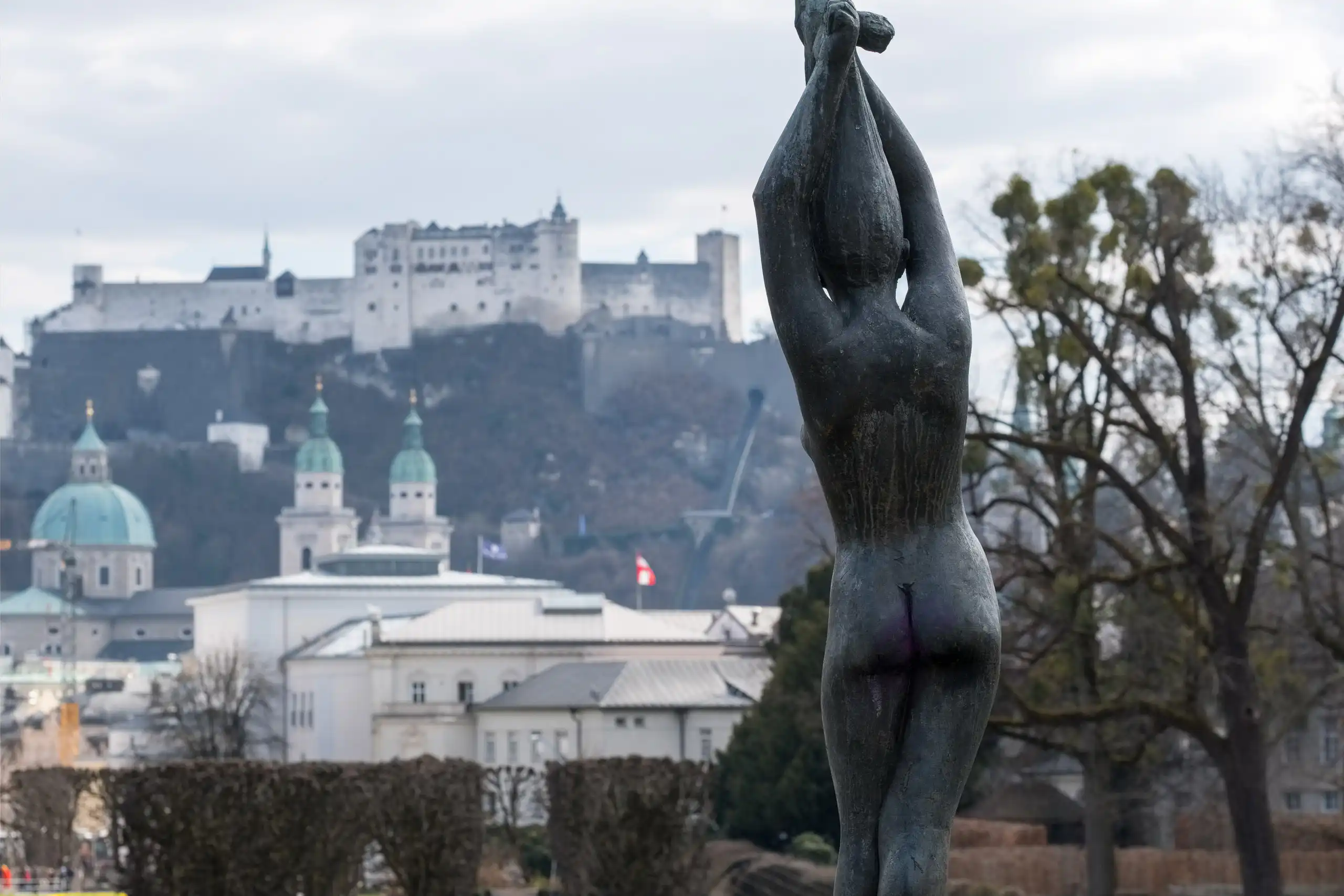
Walk from the Mirabellplatz entrance toward the fountain and stop. The sightline through the roses and the lion statues across the river to the fortress is the best postcard view in Salzburg, and you do not pay for it. The Sound of Music "Do-Re-Mi" sequence was filmed on the staircase up from the rose garden. Before you leave, find the Zwergerlgarten in the corner: seventeen grotesque marble dwarfs carved from Untersberg stone around 1690, all that survive of an original twenty-eight, which most visitors walk straight past.
9:00 am, across the river
Leave Mirabell at the southern gate. Makartplatz is two minutes away, and Mozart's Residence stands at number 8. On a one-day visit I would not go inside; the Birthplace tells the story better and the two museums repeat each other. Pause at the plaque and head for the river. The pedestrian bridge is the Makartsteg, renamed in 2019 for Marko Feingold, a Holocaust survivor who lived to 106 and spent decades helping Jewish refugees transit through Salzburg after the war. Cross slowly. On a clear morning you will see Hohensalzburg Fortress rising over the rooftops. You will be up there in about four hours.
9:30 am, Getreidegasse
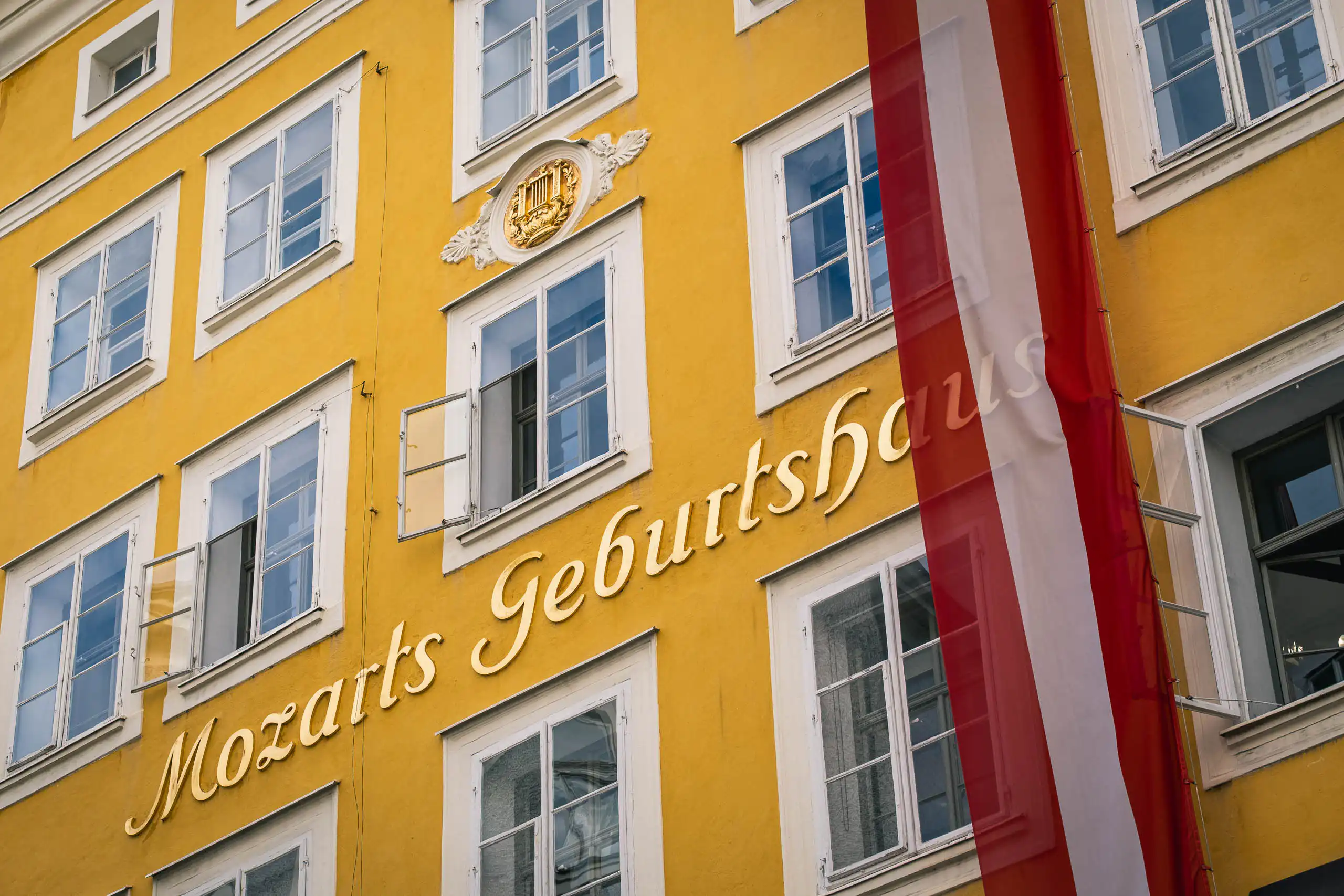
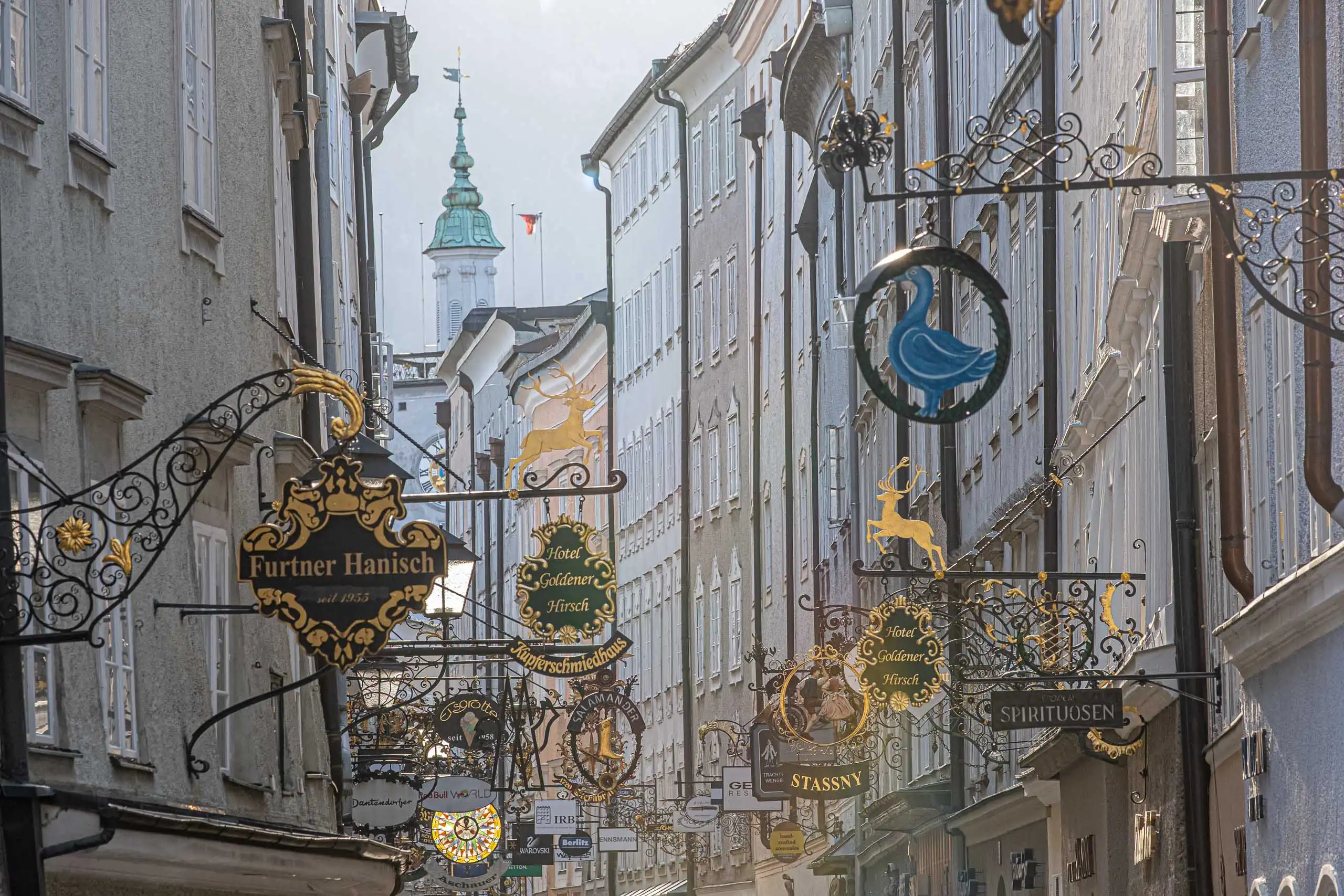
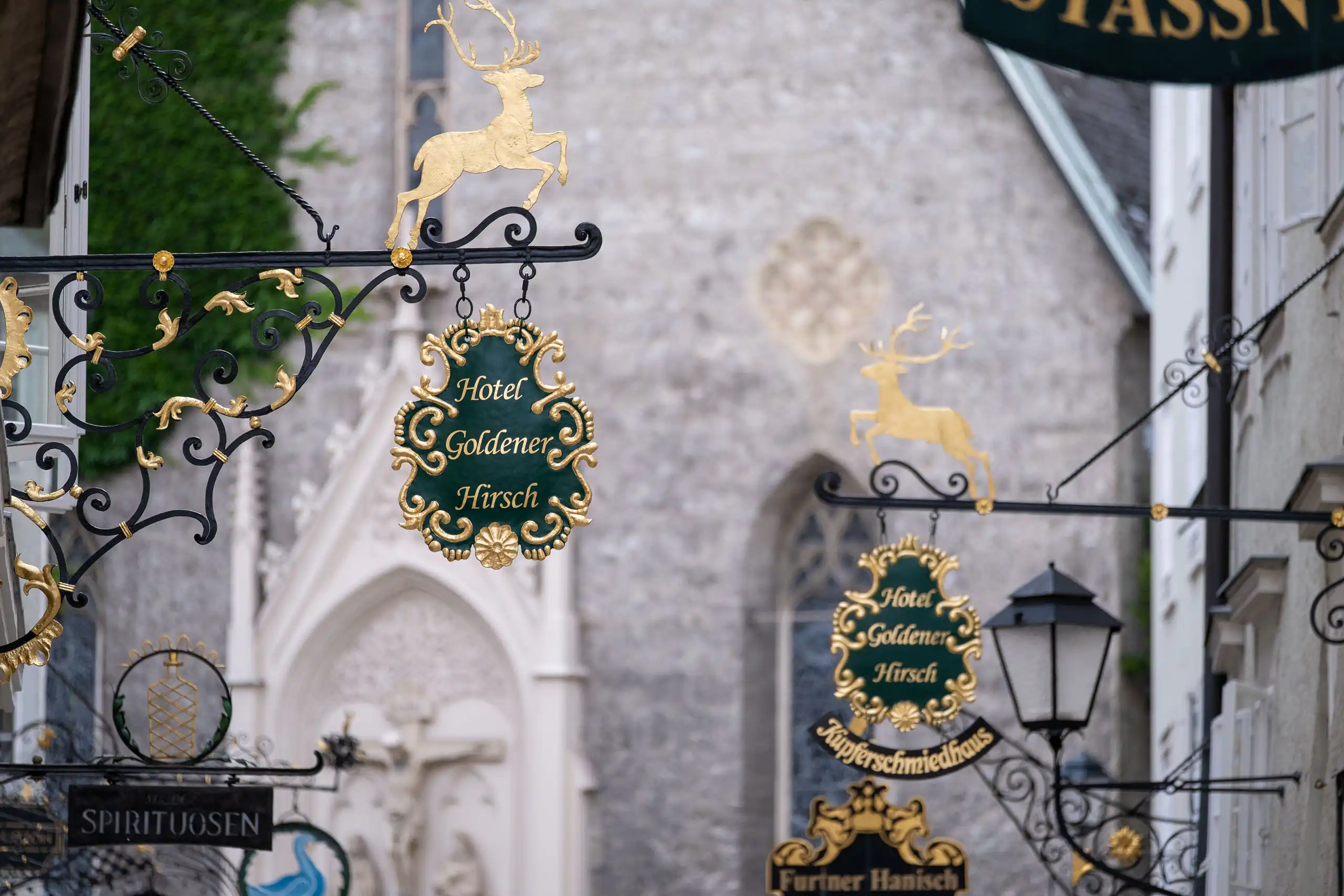
Getreidegasse is the shopping street and the most photographed in the city, wrought-iron guild signs hanging above every shop. Look up, not in. Mozart's Birthplace is at number 9, the yellow building with the flag, where he was born on 27 January 1756. The museum costs 15 EUR. Honest answer: unless you have the Salzburg Card or Mozart is the specific reason you came, the interior is not essential. I have known locals who have never been inside. Take the photo, keep walking.
Midday: the center squares
10:30 am, Alter Markt
Alter Markt was the city's main trading square from the thirteenth century. Two things here are worth your time. Cafe Tomaselli has served coffee since 1705, older than most countries; the coffee is fine, the atmosphere is the point, and a melange costs about 5 EUR. Diagonally across is Konditorei Furst, where the original Mozartkugel was invented in 1890. Buy one here, hand-dipped, about 1.50 EUR. The red-and-gold version everywhere else is a different product. This is one of the small decisions that separates a one-day visit done right from one done on autopilot.
11:00 am, Residenzplatz and the Cathedral
Two minutes south the buildings open into Residenzplatz, where Wolf Dietrich demolished fifty-five medieval buildings in 1587 to build something that looked like Rome. The fountain is the largest Baroque fountain outside Italy. If it is close to 11:00 am, wait for the Glockenspiel on the north side; thirty-five bells, a few minutes of Mozart. The Salzburg Cathedral is free to enter the nave, though there is an optional paid museum. I used to call it a must-see and stopped when the museum charging started. The exterior tells you the important part for free: three numbers, 774, 1628, 1959, one consecration for each fire or bomb. The DomQuartier next door at 15 EUR is the deeper option for people actively interested in the prince-archbishop story, and on a one-day visit I would skip it unless a Wednesday aligns.
Lunch: the Bosna rule
12:30 pm, Balkan Grill
Do not eat a main meal on Getreidegasse. The restaurants on the main street exist for people who will never come back. Here is the rule: a Bosna at Balkan Grill on Getreidegasse 33, in the passageway, about 4 EUR, five minutes start to finish. A spiced sausage in a toasted bun with onion, parsley, curry, and mustard, invented in Salzburg in 1949 by a Bulgarian immigrant. You only find the original here. Step aside to eat, do not sit down, you have the fortress in an hour. If you want to sit, walk ninety seconds to Universitatsplatz and graze the Gruenmarkt for 8 or 9 EUR.
Afternoon: the one thing you pay for
1:15 pm, up to the fortress
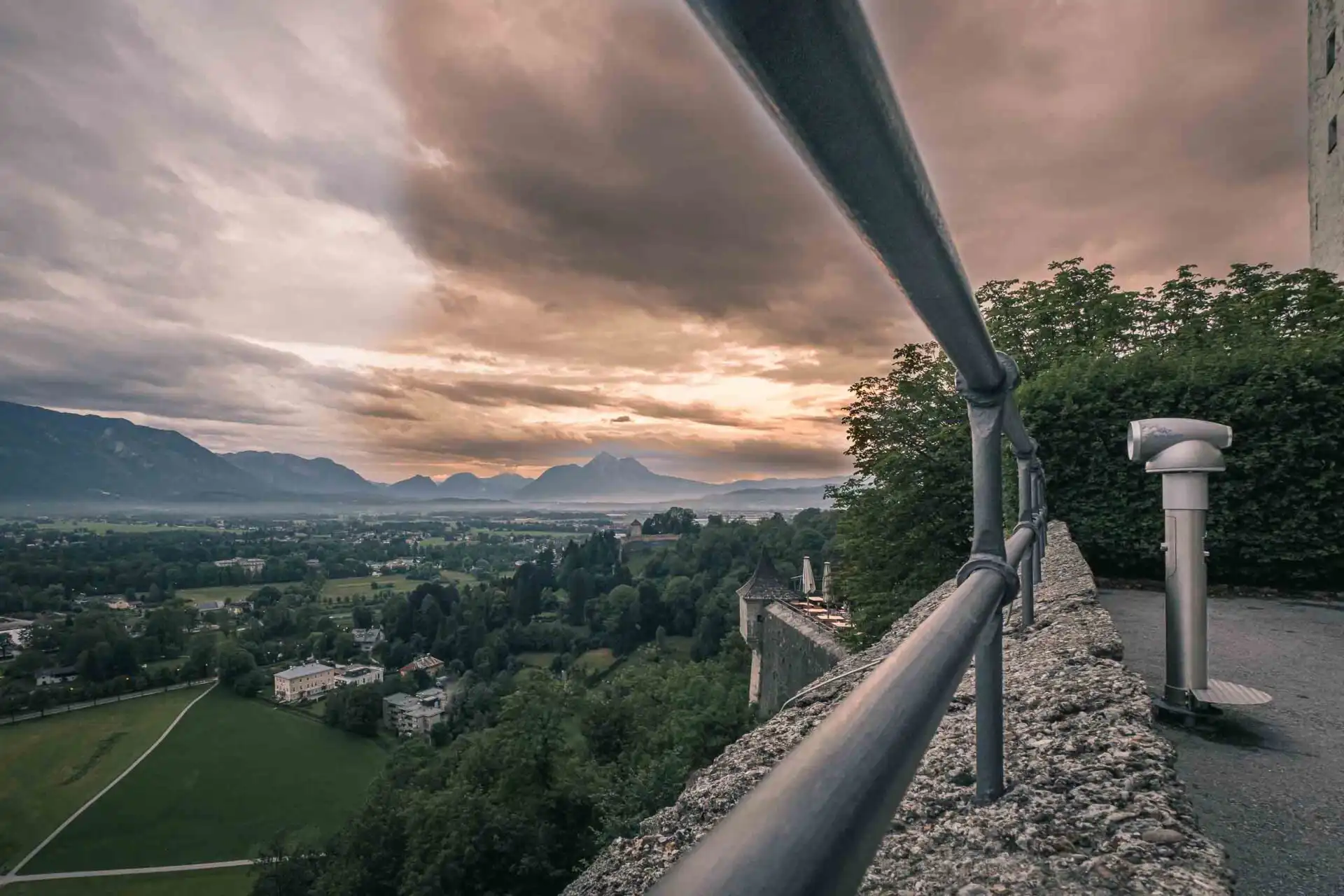
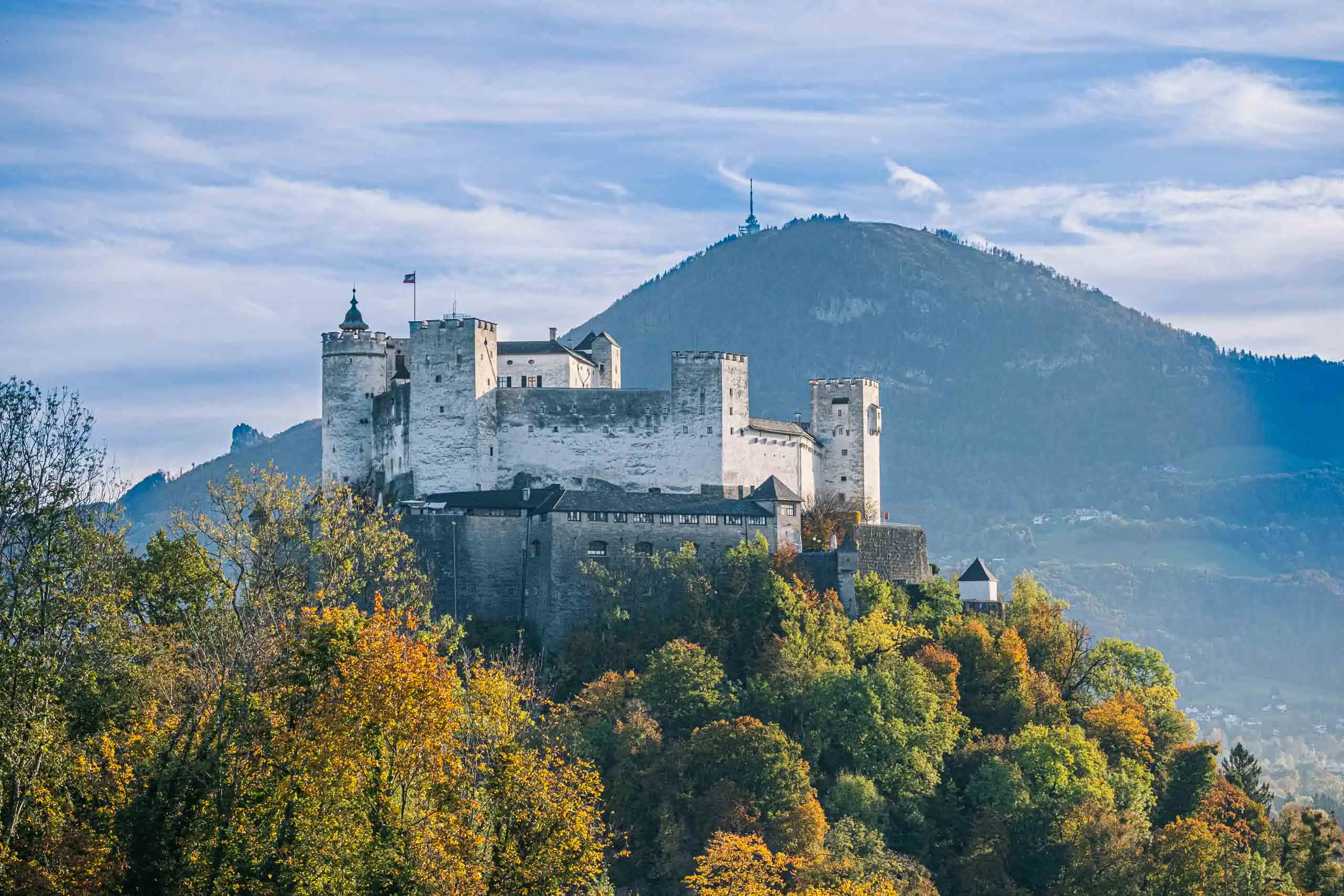
If you only pay for one attraction in Salzburg, make it Hohensalzburg. I say this on every tour and I mean it every time. The all-inclusive ticket is 19.20 EUR and covers the funicular, the princely rooms, the museums, and the audio guide; the basic footpath ticket is 12.00 EUR. The funicular has run since 1892, the oldest still operating in Austria. Take it up and save your legs for the fortress itself. Zero-budget alternative: skip the entry and take the Monchsberg Lift for 3.40 EUR one way to one of the best free views in town.
1:30 to 3:00 pm, inside
Construction began in 1077. In almost a thousand years of continuous use it has never been taken by force, and it is one of the largest intact medieval fortress complexes in Europe. Ninety minutes is right. See the Goldener Saal and Goldene Stube, among the last intact late-Gothic secular interiors in this part of Europe, then walk the ramparts. North over the rooftops to Kapuzinerberg, south toward the Alps, and on a clear day the Watzmann across the Bavarian border. Climb the Reckturm for the full circle. You walked the route you see from up here; the fortress is where one day in Salzburg starts to make sense as a place, not a list.
3:00 pm, coming down
Take the small path off the southern side down to the Stift St. Peter complex, about ten minutes on foot and free. It delivers you into the monastery cemetery.
Late afternoon: the quiet side
Petersfriedhof is the oldest continuously used Christian cemetery in the German-speaking world, graves back to 1288, individual plots still tended by local families. Mozart's sister Nannerl is buried here, and Michael Haydn. The catacombs cut into the Monchsberg cliff cost about 2 EUR. This is the most atmospheric free place in Salzburg. Two minutes north, Franziskanerkirche is free and fuses a squat Romanesque nave into a soaring Gothic choir; the contrast is violent in the best way. Ten minutes, worth it.
Early evening: Augustiner Braeu
4:30 pm, walk to Muelln
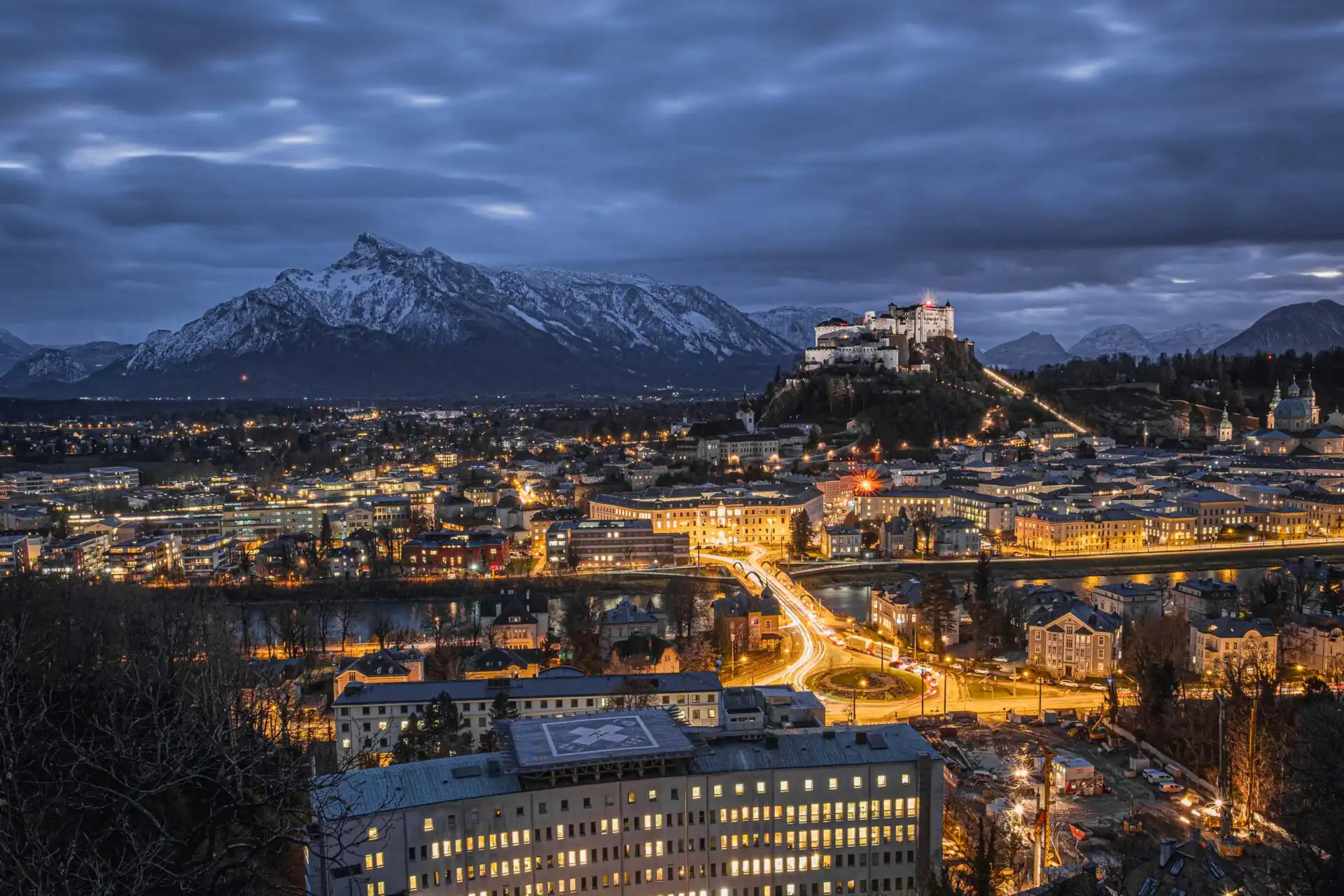
Cross back over the Salzach and walk the water north to Augustiner Braustuebl, about twenty-five minutes, the right ending to this day. Monks have poured beer here since 1621 and the system has barely changed: grab a stone mug, rinse it at the fountain, hand it to the man at the barrel, pay, and carry your beer into the chestnut garden that seats over a thousand. A small beer is about 3.10 EUR.
I have to be honest, I do not like beer, never developed a relationship with it. Augustiner is still one of my favourite places in Salzburg and I recommend it on every tour, because the place works because of the system, not the drink. Local trick: buy a half-litre and a lemonade at the cashier, mix your own Radler. Stay as long as you want and watch the light change over the chestnut trees. You walked it. You earned it.
Is one day enough
For the essentials, yes. You walked both sides of the river, ate the city's only native street food, paid for the one attraction that earns its price, and ended at the four-hundred-year-old beer garden. That is a real visit to Salzburg. For anything else, one day is not: you did not see Hellbrunn, walk the Monchsberg ridge, cross to Kapuzinerberg, or take a day trip. All are worth a day of their own. If you can add a second day, do. If you cannot, the day you just walked is the right one.
My Free Walking Tour Salzburg covers the cathedral quarter and Mirabell in about two hours, twice daily, tip-based. If you want a local voice on the ground for the first half of the route above, start the day there.
If You Have More Time
A second day in Salzburg
Day trips from Salzburg